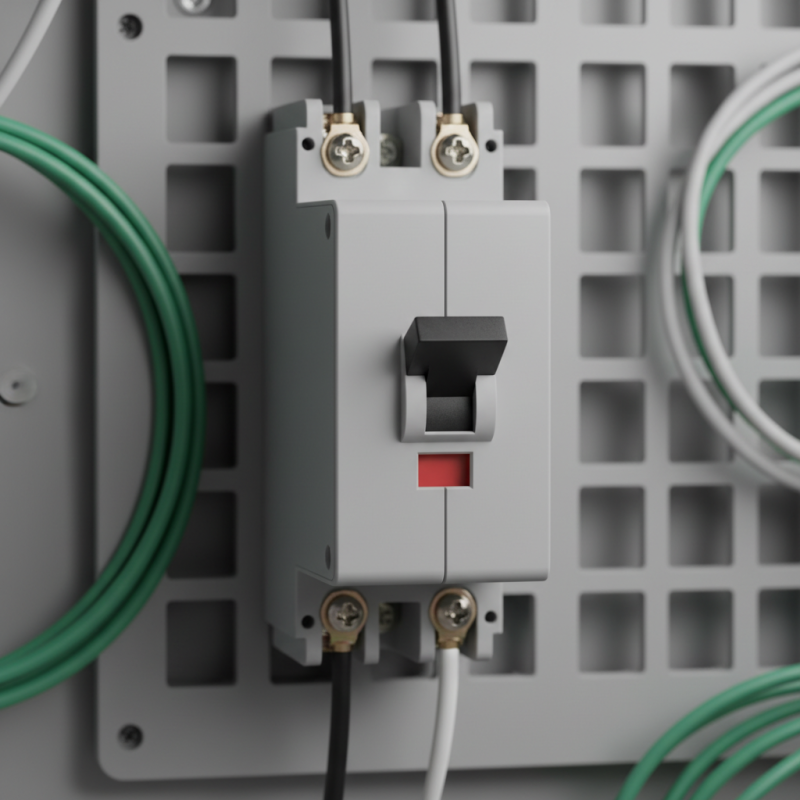
What is a 1 Pole Circuit Breaker and How Does It Work?
Understanding electrical devices can be complex. One important component is the 1 Pole Circuit Breaker. This device plays a crucial role in safety. It protects circuits from overloads and short circuits.
A 1 Pole Circuit Breaker works by interrupting the electrical flow. It shuts off power when it detects a fault. This action prevents potential hazards. Imagine a sudden surge in electricity. Without a breaker, devices can get damaged or even catch fire.
However, not everyone understands its importance. Some may overlook it during home inspections. This oversight can lead to dangerous situations. It emphasizes the need for education on electrical safety. Knowing how a 1 Pole Circuit Breaker functions could save lives. Understanding its role is not just useful; it's essential.
What is a 1 Pole Circuit Breaker?
A 1 pole circuit breaker is an essential device. It protects electrical circuits by interrupting the flow of electricity. Imagine a switch that can sense overloads. When the current exceeds safe levels, it trips. This prevents potential fires or damage.
These breakers are common in residential settings. They typically control lighting circuits or outlets. Their design is straightforward, featuring a lever for easy operation. When you flip the lever, you either connect or disconnect the power. A small reset button typically allows for quick restoration after tripping.
However, understanding their limitations is crucial. A single pole breaker can only manage specific loads. If you connect too many devices, it may fail. Regular maintenance is also important. Dust and wear can impact performance. Homeowners should regularly check their breakers. It’s worth taking time to ensure safety in your home. Proper knowledge and care can make a difference.
1 Pole Circuit Breaker Ratings and Functions
This chart represents sales data for various ratings of 1 pole circuit breakers. The units sold are shown in thousands, illustrating the popularity of different amperage ratings among consumers.
Components of a 1 Pole Circuit Breaker
A 1 pole circuit breaker is a simple yet vital electrical device. It serves to protect circuits from overloads and short circuits. The main components include a switch, bimetallic strip, and an electromagnet. These elements work together to interrupt the electrical flow when needed.
The switch is easily accessible for manual operation. It lets users turn the circuit on or off. The bimetallic strip bends when it gets hot, triggering the mechanism. This bending is crucial in protecting the circuit. If too much current flows, the strip will deform and disconnect the load.
Another key part is the electromagnet. When high current passes through, it generates a magnetic field. This field pulls the switch open, ensuring safety. The design is straightforward, but users often overlook its maintenance. Regular checks can prevent unexpected outages. It’s important to reflect on how often these devices are tested. Ignoring them can be risky.
How a 1 Pole Circuit Breaker Operates
A 1 pole circuit breaker is essential in home electrical systems. It protects a single circuit from overload or short circuits. When current flows beyond safe limits, the breaker trips. This action interrupts the electricity supply, preventing damage.
How does it work? Inside, there’s a mechanism that detects excess current. It can operate in a few milliseconds. This quick response is crucial for safety. Moreover, resetting the breaker is easy once the issue is resolved. Just flip the switch back to the "on" position.
Tips: Regularly check circuit breakers. Dust can affect performance. Make sure they are not blocked. It’s wise to label each circuit breaker for clarity. Knowing what each one controls can save time during an overload. Finally, when in doubt, consult an electrician. Working with electricity can be risky.
Common Applications of 1 Pole Circuit Breakers
1 pole circuit breakers play a crucial role in various electrical applications. They protect against overloads and short circuits. Commonly found in residential and commercial buildings, these devices ensure safety and reliability. According to a report by the Electrical Safety Foundation International (ESFI), using breakers can reduce electrical fires by up to 95%.
In homes, 1 pole breakers often serve lighting circuits and general-purpose outlets. They are ideal for low-voltage applications. The typical amperage ranges from 15 to 30 amps, making them versatile. In commercial settings, these breakers ensure machinery operates without risk and minimize the chance of equipment damage during faults.
However, not all installations are flawless. Some users encounter nuisance tripping due to sensitive equipment, which can disrupt business operations. Regular evaluations are essential. While 1 pole breakers provide safety, relying solely on them might not be enough. Balancing their use with other protective devices enhances overall electrical safety.
Benefits and Limitations of 1 Pole Circuit Breakers
1 Pole Circuit Breakers serve essential roles in electrical systems. They protect circuits from overloads and short circuits. Understanding their benefits and limitations is important for safe electrical management.
One key benefit of 1 Pole Circuit Breakers is their simplicity. They are designed for single-phase circuits, which makes installation straightforward. This simplicity also leads to lower costs. They are compact and can fit in tight spaces. However, they are limited to protecting one circuit only. This means larger installations may require multiple breakers.
Another limitation is their inability to handle high power loads effectively. For commercial use, this can become a significant issue. Users may find themselves regularly replacing them due to overload. Additionally, in some cases, a single pole may not provide sufficient protection for sensitive devices. Reflecting on these points can guide proper installations.
What is a 1 Pole Circuit Breaker and How Does It Work? - Benefits and Limitations of 1 Pole Circuit Breakers
| Dimension | Description |
| Type | Single Pole Circuit Breaker |
| Function | Protects a single circuit from overloads and short circuits |
| Amperage Ratings | Commonly available in 15A, 20A, 30A |
| Voltage Rating | Typically rated for 120/240V systems |
| Benefits | Cost-effective, easy to install and replace, compact size |
| Limitations | Only protects a single circuit, may not be suitable for multi-phase systems |
| Common Applications | Lighting circuits, small appliances, residential electrical systems |