2026 Best Scaffolding Equipment for Global Buyers
scaffolding equipment is not a one-size-fits-all purchase. A frame system suited to a low-rise renovation may be inefficient on a coastal infrastructure project, where wind, corrosion, and long spans shape the specification. For global buyers, the right choice balances safe access, verified load capacity, assembly time, transport volume, and local service support. Small details matter: a locking pin that fits securely, a clearly marked platform, or a replacement brace available near the jobsite.
Market growth adds pressure to make informed decisions. Grand View Research’s Scaffolding Market Size, Share & Trends Analysis Report estimated the global market at USD 55.3 billion in 2023 and forecast a 5.7% compound annual growth rate through 2030. These figures are estimates, not a promise of demand in every region. The International Labour Organization has also highlighted construction’s serious safety burden, reporting that the sector accounts for about one in five work-related deaths worldwide. Safety documentation deserves close attention.
This guide compares equipment types, materials, configurations, and supplier considerations for buyers planning projects in 2026. It focuses on practical questions: What loads will the platform carry? How often will crews assemble and relocate it? Can the supplier provide traceable test documents, spare parts, and clear instructions? Requirements differ by project and jurisdiction, so buyers should confirm applicable standards with qualified local professionals. There is no perfect shortlist. A careful comparison can still prevent costly mismatches.
What Scaffolding Equipment Includes and How It Supports Work at Height
Scaffolding equipment is a connected system, not just a raised platform. It can include frames or tubes, braces, couplers, work decks, guardrails, access ladders, base plates, and adjustable screw jacks. Each part has a job: base plates spread loads, braces limit sway, and guardrails help protect workers at exposed edges. Small parts matter. Missing couplers or uneven supports can undermine an otherwise solid setup.
OSHA’s Scaffolding eTool estimates that about 2.3 million construction workers use scaffolds, representing roughly 65 percent of the industry. The scale is substantial. The U.S. Bureau of Labor Statistics reported 885 fatal work injuries from falls, slips, and trips across all industries in 2023; this figure is not limited to scaffold incidents. For buyers, equipment selection should consider working height, platform dimensions, expected loads, access, and site conditions. A narrow deck may fit a tight façade, but leave little room for tools and materials. That trade-off deserves a closer look. Even well-matched equipment cannot compensate for poor assembly, missed inspections, or rushed handovers. That remains an uncomfortable weak point in many projects.
2026 Best Scaffolding Equipment for Global Buyers
What scaffolding equipment includes and how it supports work at height
Scaffolding systems commonly combine standards or frames, ledgers, braces, platforms, guardrails, base jacks and access equipment. The chart shows the uniformly distributed loads specified for EN 12811-1 load classes; it is not a product ranking or a complete safe-working-load guide. Choose equipment for the intended work and materials, and verify the system design, manufacturer instructions and applicable local requirements.
Main Types of Scaffolding Systems and Their Components
Main Types of Scaffolding Systems and Their Components
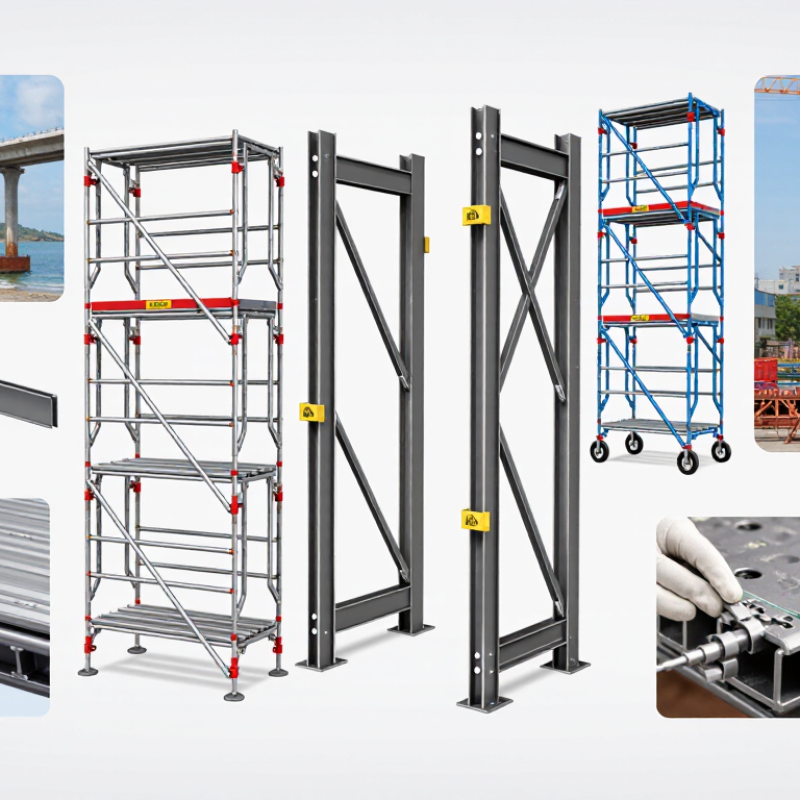
Scaffolding systems differ in how they connect, support loads, and adapt to a worksite. Frame scaffolds use welded frames, cross-braces, base plates, and platforms; crews often choose them for straightforward building façades. Tube-and-coupler systems join steel tubes with clamps, allowing flexible layouts around pipes or irregular structures. That flexibility demands careful assembly and inspection.
Modular systems use vertical standards, horizontal ledgers, diagonal braces, and locking joints. Ring-style connections can make complex access routes easier to configure, but compatibility between components should never be assumed. Suspended scaffolds hang from roof-level supports on ropes or cables, while mobile towers add wheels, locked during use. Each type needs suitable guardrails, access points, and load-rated platforms.
Components are not minor details. A damaged coupler, uneven base, or missing brace can affect stability.
OSHA estimates that about 2.3 million construction workers frequently work on scaffolds, and that improved protection could prevent 4,500 injuries and 50 deaths annually. These figures are U.S.-based, not a global forecast, but they underline the need for competent inspection.
In practice, drawings and site measurements can still miss awkward corners. Check the actual work area before choosing a system.
How to Evaluate Scaffolding Equipment for Safety and Performance
Evaluating scaffolding equipment starts with the actual work: height, platform width, materials, and ground conditions. A frame that suits a warehouse floor may wobble on compacted gravel. Check the rated load against workers, tools, and stored materials together, not separately. OSHA’s scaffolding guidance cites an estimate of 4,500 scaffold-related injuries and 60 deaths annually in the United States. The estimate is not a current-year count, but it underscores why load ratings, guardrails, and secure access deserve close attention. Small details matter.
Inspect welds, locking pins, couplers, braces, and base plates before comparing price. Look for clear assembly instructions and compatible components; improvised combinations can create weak points. The U.S. Bureau of Labor Statistics recorded 865 fatal work injuries from falls, slips, and trips in 2022, across industries. That figure is not scaffold-specific, yet it highlights the consequences of poor access and unstable footing. Fit is not enough. On site, check that platforms sit level and fully supported, and recheck the structure after assembly or relocation. A checklist helps, but it cannot replace a competent inspection. I would not treat a fresh coat of paint as proof of sound metal; corrosion can hide at joints. Choose equipment with documented load limits, traceable inspection records, and parts that can be replaced without guesswork.
Global Standards and Compliance Factors for Scaffolding Buyers
For global buyers, scaffolding compliance starts with the job site, not the catalog. Requirements can differ by country, scaffold type, and intended use. Check the applicable national rules and project specifications before comparing products. A frame that meets one standard may not satisfy another market’s requirements.
Ask for test reports, material specifications, load ratings, and assembly instructions for the exact configuration being purchased. Check whether documents identify the component sizes and connections shown in the drawings. Details matter. A coupler, brace, or platform change can affect the complete system’s performance. Confirm that the stated load class matches the planned work, including workers, tools, and stored materials. Have a qualified person review tie spacing, access, guardrails, and ground conditions.
Paperwork alone is not proof of safe installation. Request clear inspection criteria and guidance for damaged or corroded parts. Keep batch records and inspection logs with the equipment, especially when shipments serve multiple sites. This takes time. It can feel excessive for a small order, and some documents may still leave questions. Resolve those gaps with the supplier and local project professionals before installation, rather than relying on a generic certificate.
How to Select and Source Scaffolding Equipment in 2026
In 2026, selecting scaffolding equipment starts with the work, not the catalog. Define the working height, platform width, load needs, ground conditions, and expected assembly frequency. A narrow renovation site may need compact frames, while a large facade project may require modular components that adapt around corners. Small measurements matter. Record doorway widths and storage space before requesting a quotation; these details are easy to overlook.
Compare complete systems rather than isolated parts. Check that frames, braces, platforms, guardrails, and access components are designed to work together. Ask suppliers for material specifications, load information, assembly instructions, inspection guidance, and traceable quality documents. Requirements vary by destination, so confirm applicable local standards with a qualified professional. Clear answers are useful. Vague paperwork is not. A low price can also become expensive if replacement parts are difficult to source or delivery dates keep shifting.
Before placing a large order, request samples or arrange a practical review of the equipment. Check welds, locking pins, platform surfaces, and how components fit with gloved hands. Discuss packaging, spare-part availability, lead times, and after-sales support in writing. I would not judge a supplier by a polished brochure alone; still, a short review cannot reveal everything. Compare the evidence, note unanswered questions, and keep room in the schedule for delays.

