
2026 Best Skin Care Machine for Global Buyers?
The search for the 2026 Best Skin Care Machine for Global Buyers begins with evidence, not attractive product photos. Grand View Research’s professional skin care devices market analysis identifies rising demand for non-invasive treatments, home-use technology, and clinic-based personalization. Fortune Business Insights also reports steady expansion across the broader skin care devices market. These findings suggest opportunity, but they do not make every device a reliable investment.
Global buyers must examine performance, safety, compliance, and service support together. A machine may promise brighter skin in ten minutes, yet its real value depends on treatment protocols, operator training, maintenance access, and verified clinical evidence. Look for clear specifications, such as energy output, wavelength range, cooling control, treatment depth, and recommended skin types. FDA registration, CE marking, or other approvals may apply differently across markets. Buyers should verify requirements with local regulators, not rely on a seller’s badge.
Details matter.
This guide evaluates each Skin Care Machine through a practical procurement lens. It considers treatment purpose, usability, consumable costs, warranty coverage, documentation, and after-sales training. ISO 13485-based quality systems can strengthen confidence, although certification alone does not prove treatment effectiveness. The World Health Organization emphasizes risk management and responsible medical-device use, which remain essential for international purchasing. No ranking is perfect. Some available data comes from manufacturer-funded studies, and long-term results may be underreported. Readers should compare independent evidence, test samples where possible, and calculate total ownership cost before choosing a device for a clinic, salon, distributor, or home-care market.
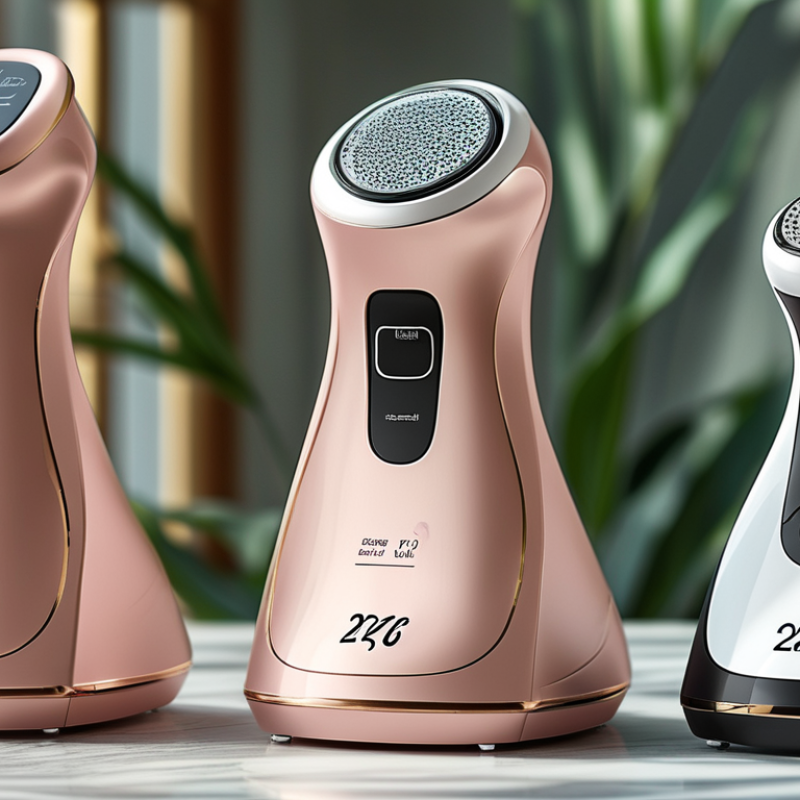
What Is a Skin Care Machine and How Does It Work?
A skin care machine is an electronic device designed to support cleansing, exfoliation, hydration, or skin appearance. It may use LED light, microcurrent, radiofrequency, ultrasound, suction, or gentle vibration. Each method delivers a different physical effect.
LED devices expose the skin to controlled wavelengths. Red light may support visible skin repair, while blue light can target acne-related bacteria. Microcurrent sends very low electrical signals across the skin surface. Radiofrequency produces controlled heat in deeper tissue. This heat may temporarily improve firmness by stimulating collagen activity. The results depend on energy levels, treatment frequency, skin type, and correct use.
Not magic.
Grand View Research’s beauty devices market analysis forecasts double-digit global growth through 2030, driven partly by home-use technology. Fortune Business Insights also reports strong expansion in the global beauty device market, especially for non-invasive equipment. These figures show demand, not guaranteed results. A growing market can still contain weak evidence.
Professional evaluation should check wavelength, output intensity, temperature control, contact materials, and user instructions. It should also review published safety data and regional compliance requirements. A machine suitable for healthy adult skin may irritate sensitive or recently treated skin. Patch testing remains sensible. Real users often use devices too frequently, which is an easy mistake. The most useful machine is not always the most powerful one. Controls, cleaning design, measurement accuracy, and honest clinical claims matter more than impressive lighting or complex screens.

Which Skin Care Technologies Will Matter Most in 2026?
The best skin care machine in 2026 will not simply offer more power. It will provide measurable, safer, and more personalized care. McKinsey estimates that the global beauty market could reach about $580 billion by 2027. This growth reflects stronger demand for practical home routines and professional treatments.
Evidence-based technologies will matter most. LED therapy may support selected skin concerns with consistent use and controlled wavelengths. Radiofrequency can improve the appearance of mild laxity, but temperature monitoring remains essential. Imaging systems will also become more valuable. They can record redness, pores, and pigmentation under the same lighting, helping users judge progress beyond a bathroom mirror.
The 2023 ISAPS Global Survey reported over 19 million nonsurgical aesthetic procedures worldwide. That volume shows sustained interest, but it does not prove every device works equally well. Clinical evidence, transparent energy settings, and qualified operator training should guide purchasing decisions. A machine with five modes may sound impressive. It may also confuse users. I have seen routines fail because people changed settings too often and expected overnight results. That lesson still matters.
In global markets, safety documentation and local regulatory compliance will separate serious equipment from attractive gadgets. Buyers should check published studies, contraindications, warranty support, and replacement-part access. Convenience matters. So does restraint.
2026 Best Skin Care Machine for Global Buyers? - Which Skin Care Technologies Will Matter Most in 2026?
| Technology | Typical Operating Parameters | Primary Skin-Care Uses | Best-Suited Buyer Segment | 2026 Global Demand Outlook | Treatment Comfort | Downtime | Home-Use Potential | Key Buying Considerations |
|---|---|---|---|---|---|---|---|---|
| LED Photobiomodulation | Red light commonly around 620–660 nm; near-infrared commonly around 810–850 nm; blue light commonly around 405–430 nm. Irradiance and dose should be clearly specified. | Support for the appearance of fine lines, redness and mild inflammatory blemishes; blue light is generally used for acne-related applications. | Home users, dermatology practices, aesthetic clinics, spas and wellness centers. | Very High | Very High | None | High | Verify wavelength accuracy, irradiance, treatment dose, eye protection, thermal management, electrical certification and evidence for the intended indication. |
| Radiofrequency (RF) | Electrical energy commonly delivered in monopolar, bipolar or multipolar configurations; operating frequency varies by system and may range from hundreds of kilohertz to several megahertz. | Temporary skin tightening, improved skin feel and support for collagen-remodeling procedures. | Professional clinics, medical spas and advanced beauty centers. | Very High | High | Low to None | Medium | Temperature control, impedance monitoring, contact sensors, treatment depth, contraindications and operator training are essential purchasing criteria. |
| Microcurrent | Low-intensity electrical currents, generally measured in microamperes; output, waveform and polarity vary by device. | Temporary facial toning appearance, facial massage support and product-application routines. | Home users, spas and non-invasive facial treatment providers. | High | Very High | None | Very High | Look for adjustable intensity, stable current output, conductive medium requirements, battery safety and clear warnings for users with implanted electronic devices. |
| Hydrodermabrasion and Water-Based Facial Systems | Uses liquid flow, vacuum-assisted cleansing and topical solutions; pressure and vacuum levels differ by system. | Surface cleansing, gentle exfoliation, temporary hydration and improved skin smoothness. | Spas, salons, aesthetic clinics and high-volume facial treatment businesses. | High | High | None to Very Low | Low | Prioritize handpiece hygiene, disposable fluid paths, drainage design, solution compatibility, noise level and ease of daily cleaning. |
| Ultrasound and Sonophoresis | Cosmetic systems commonly use frequencies in the kilohertz-to-megahertz range; focused ultrasound systems may use defined focal depths such as approximately 1.5, 3.0 or 4.5 mm. | Cleansing, massage, temporary skin smoothing and selected professional tightening procedures. | Professional clinics, spas and facial treatment providers. | Medium to High | High | Low | Low to Medium | Confirm whether the system is unfocused or focused, validate energy and depth controls, and review training, contraindications and regulatory classification. |
| Intense Pulsed Light (IPL) | Broad-spectrum flash light, commonly covering approximately 500–1,200 nm with selectable filters; pulse duration and fluence vary by device. | Hair reduction, selected pigmentation concerns and some vascular-appearance applications. | Licensed medical or aesthetic professionals with appropriate training. | High | Medium | Low to Medium | Low | Skin-tone suitability, cooling, optical filters, pulse control, eye protection, maintenance and local authorization are critical. Risk management is especially important for darker skin tones. |
| Fractional Laser Resurfacing | Ablative systems commonly use carbon dioxide or erbium wavelengths; non-ablative systems use other laser wavelengths and create fractional treatment zones. | Texture irregularities, acne-scar appearance, fine lines and selected pigmentation concerns. | Dermatology practices, hospitals and highly trained medical aesthetic clinics. | High | Low to Medium | Medium to High | Very Low | Assess laser class, cooling, plume evacuation, consumables, service support, operator credentials, patient selection and regional medical-device requirements. |
| Microneedling and RF Microneedling | Mechanical needle penetration commonly ranges from superficial cosmetic depths to approximately 2–3 mm in professional systems; RF versions add controlled thermal energy. | Appearance of acne scars, enlarged pores, uneven texture and fine lines. | Medical aesthetic clinics and trained professional practitioners. | High | Medium | Low to Medium | Very Low | Choose sterile or single-use needle cartridges, needle-depth accuracy, skin-contact detection, adjustable energy, infection-control workflow and traceability features. |
| Vacuum and Mechanical Massage | Uses negative pressure and mechanical rollers or massage heads; vacuum levels and pulse patterns should be adjustable. | Temporary improvement in skin smoothness, facial massage, cleansing and circulation-related appearance. | Spas, salons, wellness centers and entry-level facial businesses. | Medium | Medium to High | None to Low | Medium | Check pressure control, filter replacement, hose sanitation, bruising safeguards, handpiece ergonomics and suitability for sensitive or fragile skin. |
| Skin Analysis and Imaging | Visible-light, polarized-light, ultraviolet or multispectral imaging may be used to document selected skin characteristics; results are screening or tracking aids rather than medical diagnoses. | Consultation support, progress tracking, customized treatment planning and customer education. | Clinics, spas, retail consultation areas and professional skin-care practices. | Very High | Very High | None | High | Evaluate image consistency, lighting control, calibration, software transparency, data privacy, export functions, multilingual support and compatibility with local privacy laws. |
Technical note: Operating ranges are representative industry ranges rather than universal specifications. Actual performance depends on energy delivery, treatment protocol, skin type, device calibration, operator training and local regulations.
Global purchasing checklist: Confirm electrical certification, medical-device classification, language support, warranty coverage, spare-parts availability, consumable supply, cybersecurity and post-sale technical service before importing.
How to Compare Skin Care Machines for Global Markets
A practical comparison starts with treatment goals, not attractive specifications. Define whether the machine supports cleansing, hydration, pigmentation care, or skin texture improvement. Then examine energy levels, treatment modes, applicator design, and adjustment controls. Clear settings matter when operators have different training backgrounds.
Safety documentation should be easy to verify. Check electrical certifications, user instructions, emergency controls, and local market requirements. A machine designed for one region may need different voltage, plugs, or registration elsewhere. Ask for test reports and technical files. Do not rely on sales claims alone.
Look beyond appearance.
Global buyers should calculate the full operating cost. Include consumables, replacement parts, software access, shipping, installation, and staff training. Reliable suppliers should explain maintenance intervals and response times in writing. Hands-on testing is valuable; examine noise, cleaning time, handpiece weight, and client comfort during a real session.
A spreadsheet helps, but it can mislead. Low purchase prices may hide expensive consumables or slow service support. High power does not automatically mean better outcomes. Treatment consistency, operator control, and documented evidence deserve more attention. I would also compare results across different skin types, because a machine that performs well in one clinic may need careful adjustment elsewhere. Leave room for doubt. Real-world performance can differ from laboratory demonstrations.
2026 Best Skin Care Machine for Global Buyers?
How to Compare Skin Care Machines for Global Markets
Representative operating wavelengths commonly used in professional skin care equipment. A wavelength is not a performance ranking: buyers should also verify treatment indications, regulatory requirements, cooling systems, electrical compatibility, user training, service support, and consumable availability in the destination market.
What Safety, Compliance, and Certification Requirements Apply?
2026 Best Skin Care Machine for Global Buyers?
Safety and compliance should guide every skin care machine purchase. A device may be cosmetic in one market and medical in another. That classification changes testing, labeling, and registration duties. Ask for the intended-use statement before reviewing performance claims. Vague claims create expensive compliance risks.
For electrical equipment, request test reports covering IEC 60601-1 and electromagnetic compatibility under IEC 60601-1-2, when applicable. Light-based devices may also require IEC 60825-1 or IEC 62471 assessments. Risk management should follow ISO 14971 principles.
A quality system aligned with ISO 13485 adds confidence, but it does not replace product approval. Check the complete technical file. It should include risk analysis, verification results, instructions, warnings, and traceability records.
Certification is not a universal passport. CE marking may apply under European rules, while other markets can require local registration, authorized representatives, or import documentation. In the United States, registration and listing do not automatically mean market clearance. Confirm the exact pathway with a qualified regulatory professional.
Also inspect labels, software controls, emergency stops, protective eyewear, and service training. Small details matter.
Suppliers sometimes provide attractive certificates with unclear scope or expired test dates. That is a warning sign. A certificate alone proves little. Buyers should verify the issuing laboratory, model number, standards edition, and intended market. Requirements can change, and my own checklist would benefit from local legal review before shipment.
How to Select the Best Machine for Different Users and Skin Needs?
Choosing the best skin care machine depends on the user, not the highest specification. Home users usually need low-energy, simple devices with clear instructions and automatic safety limits. Salons may require adjustable intensity, replaceable handpieces, and easy cleaning. Clinics need stronger evidence, trained operators, service support, and documented treatment protocols.
According to the ISAPS Global Survey 2023, more than 19 million nonsurgical aesthetic procedures were recorded worldwide. This indicates strong demand, but popularity does not prove effectiveness. For acne-prone skin, look for controlled light or cleansing functions supported by clinical studies. For pigmentation, wavelength accuracy and cooling matter. Sensitive skin needs gentle settings, skin-contact sensors, and reliable temperature control. Mature skin may benefit from energy-based stimulation, but realistic outcomes should guide purchasing decisions.
The 2024 Global Wellness Economy Monitor valued the wellness economy at 6.3 trillion dollars in 2023. Global buyers should still check local electrical, medical-device, and advertising requirements. Ask for test reports, contraindication lists, maintenance records, and operator training materials. A perfect device does not exist. I would avoid choosing by price alone, because weak after-sales support can stop treatments quickly. Specifications can also look impressive while producing limited clinical value. A practical trial, independent evidence, and feedback from experienced users remain more useful than polished sales claims.

