
2026 Top Custom Titanium Plate Manufacturers?

Choosing among the 2026 top custom titanium plate manufacturers requires more than comparing prices. Titanium grade, thickness control, surface finish, and delivery reliability can change project results. A plate that looks acceptable may still fail under heat, vibration, corrosion, or repeated loading.

This guide examines manufacturers through practical sourcing experience and technical evidence. It considers material certificates, CNC cutting accuracy, forming capability, welding control, and inspection procedures. Strong suppliers should explain how they manage Grade 2, Grade 5, and other titanium alloys. They should also provide clear tolerances, test reports, and traceability from raw material to shipment. Small details matter. A clean edge can reduce assembly delays.

The review also considers whether each company can produce Custom Titanium Plate for aerospace, medical, marine, chemical, or industrial applications. Certifications may support credibility, but certificates alone do not guarantee good workmanship. Ask for sample photos, inspection records, production timelines, and references from similar projects. A serious manufacturer should answer technical questions without hiding behind broad promises.

No supplier is perfect. Even experienced factories may face tooling limits, capacity changes, or communication gaps. Buyers should verify current capabilities instead of trusting old rankings. This article highlights manufacturers that appear dependable for 2026, while recognizing that suitability depends on design complexity, required standards, budget, and quantity. The best choice is not always the largest company. It is the one that can repeatedly deliver the required plate, with evidence.
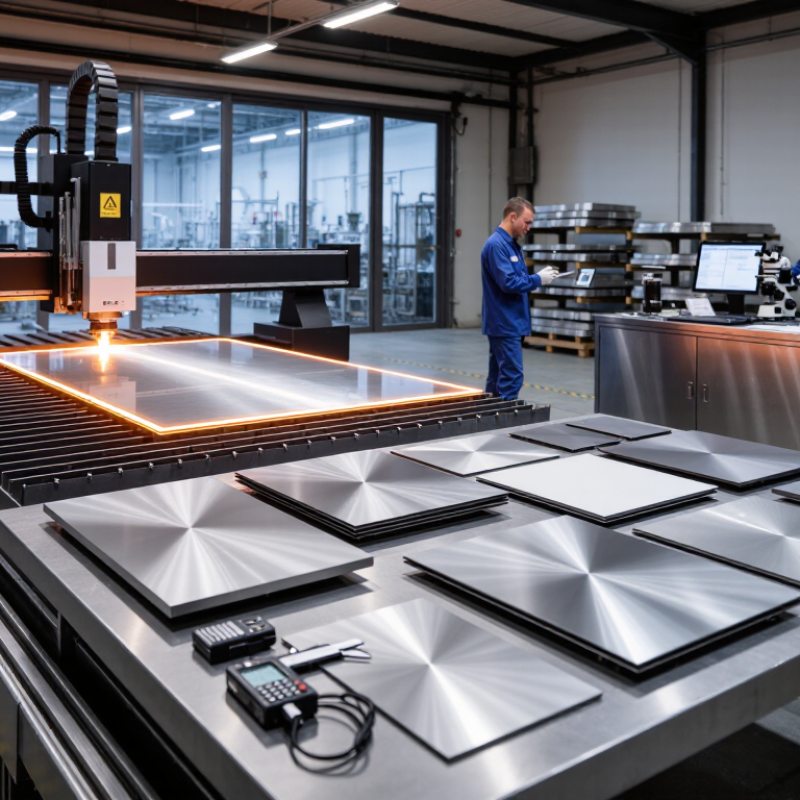
2026 Top Custom Titanium Plate Manufacturers?

2026 Scope: Custom Titanium Plate Manufacturers Under ASTM B265

2026 Top Custom Titanium Plate Manufacturers

Custom titanium plate manufacturers under ASTM B265 must offer more than attractive pricing. They need controlled production, traceable materials, and practical engineering support. ASTM B265 covers titanium and titanium alloy plate, sheet, and strip, including specified chemical and mechanical requirements.

A reliable manufacturer should confirm the required grade, thickness, width, length, and delivery condition before production. Grade 2 may suit corrosion-resistant equipment, while stronger alloys may support aerospace or structural needs.

Each plate should receive documented chemical analysis, tensile testing, dimensional inspection, and surface evaluation. Mill test reports should match the heat number marked on the material.

Traceability matters.

Experienced suppliers also explain how rolling direction, heat treatment, and machining allowances affect the final component. A plate measuring 20 millimeters thick may require extra stock for machining. Tight flatness limits can also change production cost and lead time. These details are easy to overlook.

ASTM B265 is important, but it may not define every project requirement. Buyers should review supplementary inspection, ultrasonic testing, tolerance, packaging, and certification needs in writing. Some specifications remain incomplete until the end-use environment is understood. That is where technical communication becomes as valuable as production capacity. A careful manufacturer will identify unclear requirements instead of quietly making assumptions.

Material Facts: Grade 5 Ti-6Al-4V Offers 4.43 g/cm³ Density

2026 Top Custom Titanium Plate Manufacturers?

Grade 5 titanium, or Ti-6Al-4V, has a nominal density of 4.43 g/cm³. That figure matters when engineers compare titanium with steel, nickel alloys, or aluminum. A 1 m² plate, 10 mm thick, weighs about 44.3 kg before machining losses. The calculation is simple. Production is not.

The 2025 USGS Mineral Commodity Summaries identifies aerospace as a major titanium-consuming sector. Its data also highlights the importance of titanium sponge supply and processing capacity. For custom plate buyers, material origin deserves equal attention. Reliable manufacturers should provide heat numbers, chemical analysis, mechanical test results, and thickness records. ASTM B265 remains a key specification for titanium and titanium-alloy strip, sheet, and plate. Buyers should verify whether the selected plate meets the required grade, condition, and dimensional tolerances.

Density alone cannot prove quality. It does not reveal oxygen content, internal laminations, or rolling variation. Ultrasonic testing may expose hidden flaws in thicker plate. Surface inspection still matters. I would also question unusually low quotations, especially when traceability is vague. That concern is practical, not dramatic. A plate can look bright and clean while failing a later forming or fatigue review. Custom manufacturers with documented process control, qualified inspectors, and repeatable cutting accuracy offer stronger evidence of competence than polished marketing language. Yet even good suppliers need scrutiny; independent testing can uncover assumptions before they become costly.

Quality Gate: ISO 9001, AS9100, AMS 4928, and ASTM B265 Certifications

2026 Top Custom Titanium Plate Manufacturers?

Quality Gate: ISO 9001, AS9100, AMS 4928, and ASTM B265 Certifications

Choosing a top custom titanium plate manufacturer requires more than comparing prices. ISO 9001 shows controlled quality processes, documented inspections, and corrective action. For aerospace work, AS9100 adds stronger risk management, configuration control, and supplier oversight. These systems matter when a plate must match a drawing, heat number, and inspection report.

AMS 4928 helps verify specific titanium alloy and product requirements, including chemistry, mechanical performance, and processing controls. ASTM B265 covers titanium and titanium alloy sheet, strip, and plate requirements. Ask for current certificates, not copied logos. Check the certification scope, expiration date, issuing body, and covered facility. A reliable supplier should also provide mill test reports, lot traceability, ultrasonic testing when required, and clear dimensional records. Small details count.

Tips: Request a sample document package before placing an order. Compare the heat number across the plate, test report, and packing label. Confirm thickness tolerance and surface condition in writing. A certificate alone can still disappoint. I have seen paperwork look complete while edge damage escaped the final check. That is why practical inspection evidence deserves equal attention. Ask how nonconforming material is isolated, reviewed, and corrected. Suppliers that answer clearly usually understand the quality gate, rather than merely displaying it.

Process Review: Hot-Rolled vs Cold-Rolled Plate and ±0.05 mm Tolerances

When evaluating custom titanium plate manufacturers in 2026, process control matters more than polished catalog claims. Hot-rolled plate is shaped above its recrystallization temperature, reducing forming force and supporting thicker sections. Its surface may show scale, mild waviness, and less uniform dimensional accuracy. Those features are manageable after machining, but they must be measured. That matters.

Cold-rolled plate receives additional deformation at lower temperatures. This process can improve surface finish, flatness, and thickness consistency. It may also increase strength while reducing ductility, depending on the alloy and reduction schedule. For components requiring a ±0.05 mm thickness tolerance, buyers should request actual inspection records, not only a stated capability. Each plate should be checked with calibrated micrometers across a defined grid.

Experienced manufacturers document heat numbers, rolling reductions, annealing conditions, and ultrasonic testing results. They should also explain how titanium reacts to contamination during processing. Clean tooling and controlled handling are essential. Applicable ASTM or ISO requirements should appear clearly in the purchase specification.

A practical trial order can reveal more than a sales presentation. Review edge condition, flatness after cutting, and dimensional stability after machining. I would not assume every cold-rolled plate is automatically better. Some projects need hot-rolled material followed by precision machining. The difficult part is balancing tolerance, cost, thickness, and production time. Even well-controlled batches can show variation, so the inspection plan deserves careful revision.

2026 Custom Titanium Plate Process Review

Cold rolling generally provides tighter dimensional control and a smoother surface, making a ±0.05 mm thickness target more realistic for suitable thin-gauge products. Hot rolling is commonly selected for thicker plate and high-volume reduction, but final tolerances depend on alloy, thickness, rolling schedule, heat treatment, and the applicable ASTM or customer specification. The ±0.05 mm value is therefore a project target rather than a universal plate standard.

Ranking Matrix: Aerospace, Medical, MOQ, Lead Time, and QA Performance

2026 Top Custom Titanium Plate Manufacturers?

A useful ranking matrix should separate capability from marketing language. For aerospace plates, I would score traceability, ultrasonic inspection, alloy control, and repeatable thickness tolerance. Medical work needs an even stricter lens. Clean handling, surface finish, biocompatibility documentation, and lot-level records matter greatly. A polished sample proves little.

I would assign 30% to QA performance, 25% to aerospace capability, and 20% to medical experience. MOQ could receive 15%, while lead time receives 10%. That weighting favors dependable production over attractive quotations. Still, the balance may change for a small device developer. A low MOQ can protect cash flow. It can also increase unit cost.

Lead time should be measured from approved drawings, not the first email. Ask for a realistic schedule, including tooling, testing, and final inspection. Eight weeks may sound reasonable until testing adds three more. Request sample inspection reports, material certificates, corrective-action records, and packaging photos. These details reveal working habits.

Look closely.

A manufacturer with strong QA but weak communication can still delay a launch. Conversely, fast replies cannot replace dimensional evidence. I would compare at least three recent production cases, not one impressive prototype. My own matrix still has blind spots, especially when public data is limited. On-site audits, witnessed inspections, and a controlled pilot order can expose assumptions before they become expensive problems.

2026 Top Custom Titanium Plate Manufacturers? - Ranking Matrix: Aerospace, Medical, MOQ, Lead Time, and QA Performance

Anonymous supplier benchmark based on commonly published titanium specifications, qualification standards, purchasing requirements, and custom-fabrication practices

Rank Anonymous Supplier Profile Core Titanium Plate Capability Aerospace Readiness Medical Readiness Typical MOQ Typical Lead Time QA Performance Documentation and Inspection Package
1 Profile A
High-qualification integrated mill and processor
Grades 1, 2, 5, 7, 9, 23
Hot-rolled and cold-rolled plate
Typical thickness: 0.5–100 mm
Excellent
AS9100D-style quality system
Aerospace traceability and lot control
ASTM B265 / AMS-based supply routes
Excellent
Suitable for implant-material supply chains
ASTM F67 and ASTM F136 material routes
500–1,000 kg 6–10 weeks 96 / 100
Full heat and lot traceability
Mill test certificate, chemical analysis, tensile results, dimensional report, ultrasonic testing when specified, certificate of conformity
2 Profile B
Specialized aerospace plate processor
Grades 2, 5, 6, 9
Precision-cut and machined plate
Typical thickness: 1–80 mm
Excellent
Strong process control for aerospace work
AS9100D or equivalent customer qualification commonly requested
Good
Non-implant and industrial medical applications
Medical documentation available by contract
250–500 kg 5–9 weeks 94 / 100
Advanced dimensional and surface inspection
Material certificates, FAI support, PMI, surface-finish report, dimensional inspection report, packaging records
3 Profile C
Medical-grade custom plate supplier
Grades 4, 5, 23
Thin plate, precision blanks, and custom profiles
Typical thickness: 0.3–50 mm
Very Good
Aerospace-grade materials available
Lot-level process documentation
Excellent
ISO 13485-oriented production controls
ASTM F67 / ASTM F136 material options
100–300 kg 4–8 weeks 93 / 100
Strong chemical, mechanical, and cleanliness controls
Heat-lot traceability, biocompatibility-related material documentation, chemical analysis, tensile test, surface inspection, certificate of conformity
4 Profile D
Flexible custom fabrication specialist
Grades 1, 2, 5, 9, 12
Waterjet, laser, CNC, and formed plate
Typical thickness: 0.5–60 mm
Very Good
Aerospace components supported through customer specifications
Traceability available for controlled orders
Good
Medical equipment and non-implant components
Implant-grade material subject to order review
50–200 kg 3–6 weeks 90 / 100
Strong custom inspection flexibility
Material test report, first-article inspection, dimensional report, roughness report, visual inspection, packing list
5 Profile E
Low-volume prototype and short-run supplier
Grades 1, 2, 5, 23
Prototype blanks and small-batch plate parts
Typical thickness: 0.8–40 mm
Good
Suitable for prototypes and secondary aerospace parts
Customer-specific aerospace records available
Good
Prototype medical devices and laboratory equipment
Implant use requires additional qualification
10–50 kg 2–5 weeks 88 / 100
Good inspection coverage for small orders
Certificate of conformity, basic material certificate, dimensional inspection, visual inspection, sample-based test reports
6 Profile F
Cost-focused standard plate distributor and processor
Grades 1, 2, 5
Standard plate, cut-to-size blanks, and basic machining
Typical thickness: 1–100 mm
Good
Standard aerospace alloys available
Advanced qualification depends on source mill
Moderate
Suitable for general medical equipment
Implant-grade documentation must be verified per lot
25–100 kg 1–4 weeks 84 / 100
Basic inspection with optional upgraded testing
Supplier mill certificate, dimensional check, visual inspection, optional PMI and ultrasonic testing
Benchmark note: The profiles above are anonymized capability tiers rather than named-company claims. Titanium grades and referenced standards reflect commonly used industry specifications, including ASTM B265 for titanium plate, ASTM F67 for commercially pure titanium, ASTM F136 for titanium alloy used in surgical implants, AS9100D for aerospace quality management, and ISO 13485:2016 for medical-device quality management. MOQ, lead time, and QA scores are indicative planning benchmarks and should be confirmed with the selected supplier for each quotation.
Scroll to Top