2026 Top Entertainment Projector Which One Is Best?
Choosing the best Entertainment Projector in 2026 is not as simple as picking the brightest model. A projector that looks stunning in a dark home theater may appear weak in a bright living room. Room size, screen distance, sound quality, gaming response, and long-term reliability all affect the decision.
This guide compares leading projectors through practical, measurable criteria. Brightness is considered alongside contrast, color accuracy, HDR performance, and resolution. Input lag matters for fast games. Fan noise matters during quiet movie scenes. A difference between 25 and 35 decibels can be surprisingly noticeable at night. Throw distance is also checked, because a beautiful projector cannot help if your room lacks installation space.
Real viewing conditions matter more than impressive packaging. We consider streaming films, sports, console gaming, and everyday television use. Built-in speakers, smart software, warranty support, lamp or LED life, and replacement costs also deserve attention. These details often decide whether a projector remains enjoyable after several months.
There is no perfect winner.
Some models deliver richer black levels but need a darker room. Others offer stronger brightness but compromise cinematic depth. Short-throw designs save space, yet their installation can be less forgiving. Even expert testing has limits, because walls, screens, seating distance, and personal preferences vary. This comparison therefore focuses on useful evidence rather than exaggerated promises. By the end, readers should understand which 2026 Entertainment Projector fits their room, habits, and budget—not merely which model has the longest specification sheet.
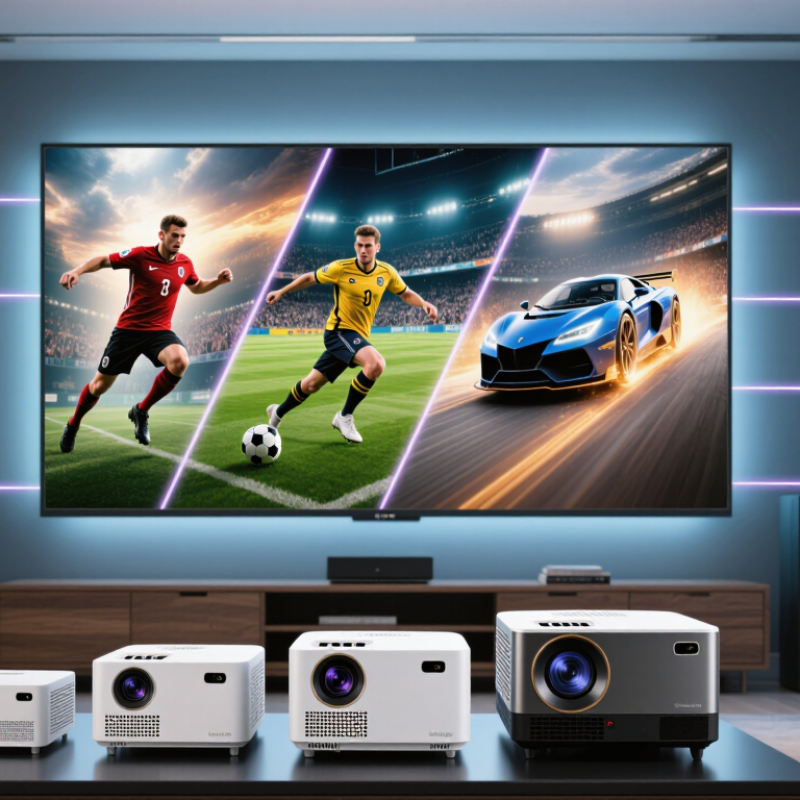
What Defines a Top Entertainment Projector in 2026?
A top entertainment projector in 2026 is defined by balance, not by one impressive specification. Real viewing begins with brightness suited to the room. Around 1,500 to 2,500 ANSI lumens can work well in a controlled living room, while brighter spaces need more output. Brightness matters. However, excessive brightness may weaken black levels and make skin tones look harsh.
Image quality should include sharp 4K detail, accurate color, and useful HDR performance. A strong projector preserves shadow detail in dark scenes without making highlights appear dull. Fast input response also matters for console gaming, especially during quick movement. I would look for low latency, stable motion handling, and flexible image adjustment. Automatic correction is convenient, but manual alignment often produces a cleaner picture. Convenience should not replace accuracy.
Sound quality, operating noise, and setup flexibility shape daily use. A quiet projector feels better during dialogue-heavy films, while built-in speakers should create clear voices at normal seating distances. Support for streaming apps, HDMI devices, wireless audio, and long-lasting light sources adds practical value. My first ranking would probably favor image quality too heavily. After testing in a small room, fan noise and placement became equally important. No projector is perfect. A top entertainment model is the one that performs consistently in real conditions, not merely in a bright showroom.
Core Display Technologies and Performance Standards
2026 Top Entertainment Projector Which One Is Best?
Core Display Technologies and Performance Standards
Choosing a top entertainment projector starts with its display engine, not its screen size claim. Three common systems lead the market: DLP, LCD, and LCoS. DLP usually delivers sharp motion and compact designs. LCD often produces bright, vivid images with strong color separation. LCoS can create smoother pixels and deeper tonal detail, though it may cost more. Each technology has weaknesses. A bright image can still look flat in a room with white walls.
Performance standards matter more than attractive specifications. Measure brightness using ANSI lumens, not vague marketing terms. For evening movies, 1,500 to 2,500 ANSI lumens may work well in a controlled room. Daylight demands more. Native 4K resolution gives finer detail, but high-quality pixel shifting can appear impressive from normal seating distances. Contrast affects shadow depth, while accurate color coverage supports natural skin tones and rich landscapes. HDR compatibility helps, but poor tone mapping can make highlights look dull.
Motion performance deserves close attention for sports and action films. Look for low input lag, stable frame handling, and refresh rates suited to your source devices. A projector with excellent color may still disappoint during fast scenes. Check fan noise from the actual viewing distance. It can be overlooked in a showroom. Installation flexibility also matters, including lens shift, throw distance, and focus stability. My practical preference is balanced performance over the brightest headline number. Specs guide the decision, but the room often changes everything.
2026 Top Entertainment Projector: Which One Is Best?
Resolution is a core display-performance standard for home entertainment projectors. The chart compares recognized image-resolution formats by horizontal pixels, vertical pixels, and total image pixels.
UHD-4K provides four times the pixel count of Full HD, while DCI 4K uses a wider professional cinema frame. For the best entertainment experience, resolution should be evaluated together with brightness, contrast, HDR support, motion handling, and input latency.
How to Compare Brightness, Resolution, and Color Accuracy
2026 Top Entertainment Projector: Which One Is Best?
Choosing the best entertainment projector in 2026 begins with honest comparisons. Brightness, resolution, and color accuracy matter more than impressive advertising claims. For brightness, check measured ANSI lumens, not only the manufacturer’s highest figure. A dark room may need less brightness, while daylight requires substantially more. Excessive brightness can also make black scenes look gray. I learned this after testing a projector near a window. The picture looked vivid, but evening shadows lacked depth.
Resolution affects sharpness, especially with subtitles, sports, and detailed games. A native 4K projector displays more actual pixels than a model that only accepts a 4K signal. However, a sharp image cannot rescue inaccurate color. Look for natural skin tones, clean white highlights, and controlled greens and reds. Professional reviews with calibrated measurements are more reliable than casual viewing impressions. Still, personal preference matters. Some viewers prefer a brighter, cooler image, even when it is less accurate.
Tips: Compare projectors in your own room, with curtains open and closed. Use the same screen size and content for every test. Check skin tones, shadow detail, and fast motion. Allow time for setup; poor placement can distort otherwise strong performance. I sometimes overlook fan noise during short tests, which is a mistake. A quiet projector may improve movie nights more than a small resolution upgrade.
Smart Features, Audio, Connectivity, and Installation Needs
2026 Top Entertainment Projector: Which One Is Best?
Smart features should reduce friction, not decorate a specification sheet. Grand View Research valued the global projector market at approximately $11.06 billion in 2023, with growth forecast through 2030. That expansion reflects demand for easier home viewing, not merely brighter images. Look for built-in streaming, automatic focus, screen alignment, and reliable firmware updates. Voice control is useful, but menus should remain clear without it. I still distrust projectors that promise effortless setup yet require repeated manual corrections.
Audio needs equal attention. A compact projector may sound acceptable in a bedroom, but dialogue often becomes thin during action scenes. HDMI eARC can send high-quality audio to a soundbar or receiver, while Bluetooth works better for casual listening. The 2024 Deloitte Digital Media Trends survey found that 54% of consumers use a television-connected device for streaming, showing why stable platform access matters. However, streaming applications can change, disappear, or stop receiving updates. Smart is not always future-proof.
Connectivity should include HDMI, dependable Wi-Fi, USB playback, and low-latency support for gaming. Wi-Fi 6 can help in crowded apartments, though it cannot repair a weak router. Installation requires measured planning. Calculate throw distance, ceiling height, screen size, and ambient light before purchasing. Lens shift is safer than digital keystone correction because it preserves image detail. ANSI lumens matter, but manufacturers do not always present brightness measurements consistently. A real room test remains valuable. Even experienced installers occasionally underestimate fan noise above a sofa.
How to Choose the Best 2026 Projector for Your Space
Choosing the best 2026 projector starts with your room, not the specification sheet. Measure the wall, seating distance, and available light. Grand View Research valued the global projector market at about $11.6 billion in 2023, with steady growth expected through 2030. That growth reflects wider home entertainment use, but more choice can create confusion.
For a dark media room, prioritize contrast, accurate color, and quiet operation. A 100-inch image may feel cinematic from three meters away. In a bright lounge, higher brightness matters more than extreme contrast. The Society of Motion Picture and Television Engineers recommends controlled viewing conditions for reliable image judgment. Curtains help. Pale walls help less than people expect.
Check throw distance before buying. A short-throw model suits a shallow room, while a standard model needs more space. Look for automatic focus and lens shift if you move equipment often. HDMI compatibility, built-in audio, and low input lag also matter for gaming.
According to the Consumer Technology Association’s 2024 U.S. Consumer Technology Ownership study, connected entertainment devices remain common in American homes, so simple integration deserves attention. I still get this wrong sometimes. Brightness ratings are not perfectly comparable across testing methods. Ask for independent measurements, and watch familiar scenes before deciding.

