2026 Top IPE Beam Sizes Prices and Suppliers?
Choosing the right IPE BEAM in 2026 requires more than comparing a price list. Buyers must match section size, steel grade, length, loading conditions, and project standards. A small sizing mistake can increase deflection, fabrication work, or delivery costs. It may also create delays on site.
This guide examines common IPE beam sizes, current price factors, and reliable supplier selection. It considers market conditions, regional transport, mill certifications, surface condition, and cutting services. For example, a 6-meter IPE 200 beam may appear affordable, yet freight, handling, and custom cutting can change the final cost significantly. Always request a detailed quotation.
Supplier experience matters. Established distributors should provide material certificates, dimensional information, traceable batch details, and clear delivery terms. Independent verification remains valuable. Not every online listing shows the same steel grade or pricing basis. Some quotations exclude VAT, lifting fees, or protective packaging.
Prices can change quickly.
The discussion will compare practical options for contractors, fabricators, engineers, and purchasing teams. It will also highlight common mistakes, including buying by weight alone or choosing a section without checking local design requirements. Standards and engineering calculations should guide final selection. This article offers useful market direction, but it cannot replace advice from a qualified structural professional. Some information may become outdated as energy, raw material, and freight costs shift. That limitation deserves attention.
What Is an IPE Beam and Where Is It Commonly Used?
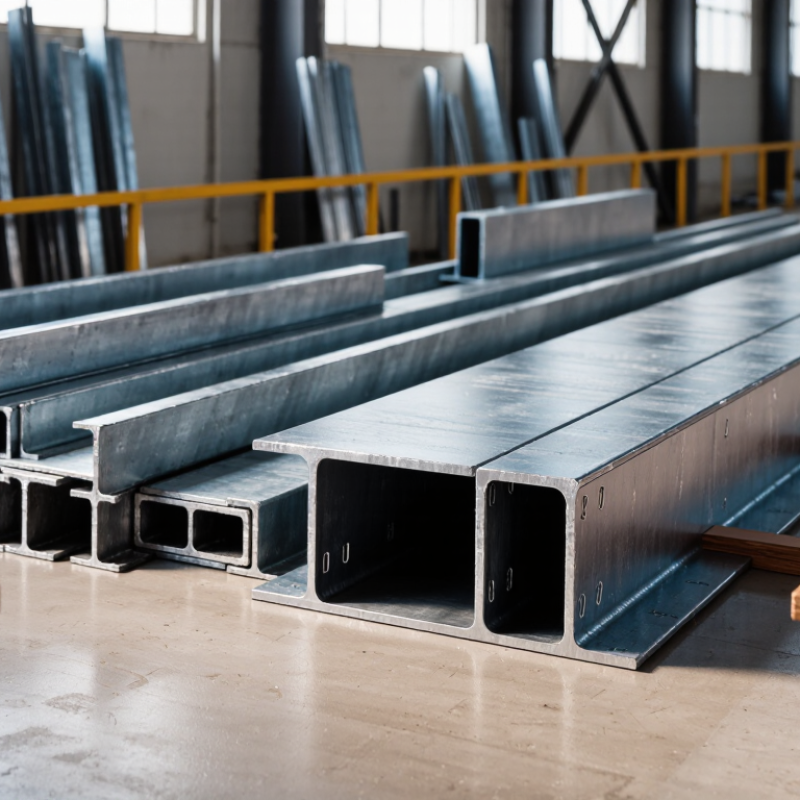
An IPE beam is a hot-rolled European I-section with parallel flanges and a relatively narrow web. Its shape places steel away from the neutral axis, improving bending efficiency while keeping weight controlled. EN 10365:2017 defines common dimensions, masses, and section properties for IPE profiles.
For example, an IPE 200 weighs about 22.4 kilograms per metre
while an IPE 300 weighs about 42.2 kilograms per metre.
It is commonly used in floor joists, roof frames, platforms, mezzanines, and industrial building columns. Engineers usually verify bending, shear, buckling, fire resistance, and connection strength under Eurocode 3.
The World Steel Association’s World Steel in Figures 2024 reported roughly 1.89 billion tonnes of crude steel production in 2023, showing the scale of the material supply behind structural steel markets. Yet availability differs by region.
Prices should be compared by grade, section size, length, surface condition, delivery distance, and certification. Ask suppliers for an EN 10204 3.1 inspection certificate and confirm whether cutting or drilling is included. A low price can become expensive after freight and fabrication.
IPE is efficient, but not automatically suitable for every span. Real load paths matter more than a convenient catalogue choice.
How to Choose the Right IPE Beam Size for Structural Projects
Choosing the right IPE beam size begins with the structure, not the price list. Measure the clear span, support conditions, tributary width, and expected loads. Include permanent loads, people, equipment, snow, wind, and construction-stage weight. Deflection often controls the decision before strength does. A beam may carry the load safely yet feel uncomfortable under movement.
The calculation should check bending, shear, buckling, vibration, and connection capacity. Lateral restraint matters. An unrestrained compression flange can reduce the beam’s practical resistance. Steel grade, corrosion exposure, fire requirements, and available lifting equipment also influence selection. Do not treat a familiar size as automatically suitable. Small details matter.
A competent structural engineer should verify the final section against local design standards and stamped drawings. For 2026 purchasing, compare more than quoted price. Request mill certificates, section dimensions, steel grade, tolerances, lead time, and delivery protection. Check whether the supplier can provide traceability and consistent documentation. Prices can shift with steel markets, freight, quantity, and cutting services. A cheaper beam may become expensive after delays or unsuitable tolerances. Measure twice.
I have seen projects favor a deeper beam for lower deflection, then struggle with floor depth and service openings. That compromise deserves careful review. When comparing IPE 200, IPE 240, or larger sections, use verified calculations rather than visual judgment. The best choice balances structural performance, buildability, availability, and long-term maintenance.
2026 IPE Beam Sizes, Weights, Dimensions, and Price Factors
IPE beam selection in 2026 depends on section size, weight, span, and loading conditions. The designation indicates the approximate beam depth in millimetres. For example, an IPE 200 is about 200 mm deep, 100 mm wide, and weighs approximately 22.4 kg per metre. An IPE 300 is about 300 mm deep, 150 mm wide, and weighs around 42.2 kg per metre. These dimensions should be checked against current tables, not guessed from appearance.
Weight directly affects handling, transport, fabrication, and the final quotation. A smaller IPE 100 weighs roughly 8.1 kg per metre, while an IPE 400 may weigh about 66.3 kg per metre. Prices in 2026 can change with steel grade, order quantity, country of origin, energy costs, freight, cutting, drilling, surface treatment, and market demand. A ten-metre beam may also cost more per project when special packing or crane unloading is required.
Ask suppliers for section dimensions, mass tolerance, steel grade, mill certificates, and test documents. Standards such as EN 10365 help verify nominal dimensions, while the applicable material standard confirms mechanical properties. I have seen estimates fail because buyers compared price per tonne without checking usable length or processing fees. That mistake is easy to repeat. Stock availability matters too. A cheaper section can become expensive when delayed fabrication disrupts installation schedules. Structural calculations should be completed by a qualified engineer before ordering.
2026 IPE Beam Sizes, Weights, Dimensions, and Price Factors
This chart compares nominal IPE beam sizes with their standard mass per metre. Dimensions and mass values are based on commonly specified EN 10365 IPE sections. Actual purchase prices vary according to steel grade, market conditions, order quantity, length, finish, certification, freight, and regional availability.
How IPE Beam Prices Are Commonly Determined
- Section size and mass per metre are the primary quantity drivers.
- Steel grade, mechanical requirements, and mill certification can change the base price.
- Length, cutting tolerance, bundling, surface condition, and packaging affect processing costs.
- Order volume, production availability, delivery distance, currency, and regional steel prices influence the final quotation.
- For a comparable quotation, specify the IPE designation, steel grade, required lengths, quantity, standard, certification, and delivery location.
How Are IPE Beam Prices Calculated in 2026?
How Are IPE Beam Prices Calculated in 2026?
IPE beam pricing begins with weight, not length alone. Under EN 10365, an IPE 200 beam weighs about 22.4 kilograms per metre. A six-metre piece therefore contains roughly 134.4 kilograms of steel. Suppliers multiply this weight by the regional mill price, then add rolling, cutting, inspection, transport, and taxes.
Raw steel remains the main variable. World Steel Association statistics recorded global crude steel production near 1.9 billion tonnes in 2024. That scale does not set an IPE price directly, but it reflects demand, capacity, and energy pressure. Regional section-steel assessments from MEPS and CRU commonly separate base steel values from fabrication and delivery costs. Freight can change quickly when fuel rates, port congestion, or import duties move. Currency exchange also matters for international purchases.
A practical quote should show the steel grade, beam length, tolerance, surface condition, and delivery point. Ask for the price per tonne and per metre. They should match. Sometimes, they do not.
Tips:
Compare at least three written offers. Check whether cutting loss is charged. Confirm the actual mass against the EN 10365 table. A low headline price may exclude testing, packing, or inland freight.
My own caution is simple: published market data is useful, but a delivered quote can still differ by several percent because local inventory and timing are difficult to measure.
Top IPE Beam Suppliers and Key Purchasing Considerations
Top IPE beam suppliers usually fall into three groups: steel mills, regional stockists, and fabrication companies. Mills suit large projects with repeated sizes and scheduled deliveries. Stockists can provide faster access to common sections, such as IPE 200 or IPE 300. Fabricators may cut, drill, and prepare beams for installation. This saves site labor, but adds processing costs.
Supplier reliability depends on more than a low quotation. Request material certificates, section dimensions, steel grade, production standard, and recent inspection records. Check whether the supplier can maintain flange width, web thickness, straightness, and cutting accuracy. Ask for clear delivery terms. A beam arriving two weeks late can disrupt cranes, crews, and concrete work.
Prices change with steel markets, order volume, coating requirements, transport distance, and currency movement. Compare complete delivered costs, not only the price per tonne. A useful quote should show beam weight, quantity, cutting fees, loading charges, taxes, and estimated arrival dates. Small orders often face minimum-weight fees. That detail is easy to miss. Also confirm storage conditions, especially when beams may remain outdoors. Moisture under stacked sections can create early surface corrosion. One purchasing mistake is choosing the cheapest supplier before checking tolerances and documentation. Saving money at quotation stage may create rework later. Still, specifications can be overcomplicated, so review every requirement against the actual structure.
2026 Top IPE Beam Sizes Prices and Suppliers? - Top IPE Beam Suppliers and Key Purchasing Considerations
Indicative 2026 purchasing reference for standard hot-rolled European IPE sections manufactured to EN 10365 and commonly supplied with EN 10025 structural steel grades.
| IPE Section | Nominal Depth
(mm) | Flange Width
(mm) | Web Thickness
(mm) | Flange Thickness
(mm) | Approx. Mass
(kg/m) | Common Steel Grade | Indicative 2026 Price
(USD/metric ton) | Typical Stock Lengths | Typical Supplier Type | Common Supply Region | Typical Lead Time |
| IPE 100 | 100 | 55 | 4.1 | 5.7 | 8.1 | S275JR / S355JR | $780–$1,080 | 6 m or 12 m | Regional steel stockholder | Europe, Middle East, Asia | 1–3 weeks |
| IPE 120 | 120 | 64 | 4.4 | 6.3 | 10.4 | S275JR / S355JR | $770–$1,060 | 6 m or 12 m | Regional steel stockholder | Europe, Middle East, Asia | 1–3 weeks |
| IPE 140 | 140 | 73 | 4.7 | 6.9 | 12.9 | S275JR / S355JR | $760–$1,050 | 6 m or 12 m | Steel service center | Europe, Middle East, Asia | 1–4 weeks |
| IPE 160 | 160 | 82 | 5.0 | 7.4 | 15.8 | S275JR / S355JR | $750–$1,040 | 6 m or 12 m | Steel service center | Europe, Middle East, Asia | 1–4 weeks |
| IPE 180 | 180 | 91 | 5.3 | 8.0 | 18.8 | S275JR / S355JR | $745–$1,035 | 6 m or 12 m | Steel service center | Europe, Middle East, Asia | 1–4 weeks |
| IPE 200 | 200 | 100 | 5.6 | 8.5 | 22.4 | S275JR / S355JR | $740–$1,030 | 6 m or 12 m | Primary mill or distributor | Europe, Middle East, Asia | 2–5 weeks |
| IPE 220 | 220 | 110 | 5.9 | 9.2 | 26.2 | S275JR / S355JR | $735–$1,025 | 6 m or 12 m | Primary mill or distributor | Europe, Middle East, Asia | 2–5 weeks |
| IPE 240 | 240 | 120 | 6.2 | 9.8 | 30.7 | S275JR / S355JR | $730–$1,020 | 6 m or 12 m | Primary mill or distributor | Europe, Middle East, Asia | 2–5 weeks |
| IPE 270 | 270 | 135 | 6.6 | 10.2 | 36.1 | S275JR / S355JR | $725–$1,015 | 6 m or 12 m | Primary mill or distributor | Europe, Middle East, Asia | 2–6 weeks |
| IPE 300 | 300 | 150 | 7.1 | 10.7 | 42.2 | S275JR / S355JR | $720–$1,010 | 6 m or 12 m | Primary mill or heavy-section distributor | Europe, Middle East, Asia | 3–6 weeks |
| IPE 330 | 330 | 160 | 7.5 | 11.5 | 49.1 | S275JR / S355JR | $720–$1,015 | 6 m or 12 m | Heavy-section distributor | Europe, Middle East, Asia | 3–7 weeks |
| IPE 360 | 360 | 170 | 8.0 | 12.7 | 57.1 | S275JR / S355JR | $725–$1,020 | 6 m or 12 m | Heavy-section distributor | Europe, Middle East, Asia | 3–7 weeks |
| IPE 400 | 400 | 180 | 8.6 | 13.5 | 66.3 | S275JR / S355JR | $730–$1,030 | 6 m or 12 m | Heavy-section distributor | Europe, Middle East, Asia | 3–8 weeks |
| IPE 450 | 450 | 190 | 9.4 | 14.6 | 77.6 | S275JR / S355JR | $735–$1,040 | 6 m or 12 m | Heavy-section distributor | Europe, Middle East, Asia | 4–8 weeks |
| IPE 500 | 500 | 200 | 10.2 | 16.0 | 90.7 | S275JR / S355JR | $740–$1,050 | 6 m or 12 m | Heavy-section distributor | Europe, Middle East, Asia | 4–9 weeks |
| IPE 550 | 550 | 210 | 11.1 | 17.2 | 106.0 | S275JR / S355JR | $750–$1,065 | 6 m or 12 m | Heavy-section distributor | Europe, Middle East, Asia | 4–10 weeks |
| IPE 600 | 600 | 220 | 12.0 | 19.0 | 122.4 | S275JR / S355JR | $760–$1,080 | 6 m or 12 m | Heavy-section distributor or mill order | Europe, Middle East, Asia | 5–12 weeks |
Purchasing considerations: Prices are budgetary ranges for new, unpainted carbon-steel beams in commercial quantities and may vary by steel grade, order volume, mill availability, freight, import duties, currency, cutting, drilling, galvanizing, and certification requirements. Confirm section tolerances, material certificates, heat numbers, delivery terms, minimum order quantity, straightness, surface condition, and compliance with the project design standard before placing an order.

