
10 Best Commercial Kitchen Ranges for Global Buyers?
Choosing the right Commercial Kitchen Range can shape a restaurant’s speed, safety, and long-term operating costs. Global buyers face more than brand comparisons. Fuel type, electrical voltage, gas pressure, ventilation needs, cooking capacity, and local certification can change the final decision. A range that performs well in one country may create installation problems in another.
This guide examines ten leading options for professional kitchens, using practical criteria rather than attractive brochures alone. We consider burner output, oven consistency, stainless-steel construction, cleaning access, controls, energy use, warranty coverage, and spare-parts availability. Real kitchen conditions matter. A busy hotel line needs durable grates and fast recovery. A small catering kitchen may value compact dimensions and flexible installation.
Performance comes first.
However, no ranking can suit every buyer. Supplier support may vary by region, and published specifications do not always reveal daily maintenance demands. That limitation deserves attention. Buyers should confirm dimensions, certifications, service networks, and replacement-part timelines before placing an order. User reviews and technician feedback can also expose weaknesses that laboratory testing misses.
The following selection aims to support informed purchasing decisions across different markets and kitchen formats. Each Commercial Kitchen Range is considered for practical value, not marketing language. The strongest choice is the one that matches your menu, workforce, utilities, budget, and local compliance requirements. Compare carefully. The cheapest unit may become expensive when downtime begins.
What Defines a Commercial Kitchen Range for Global Buyers?
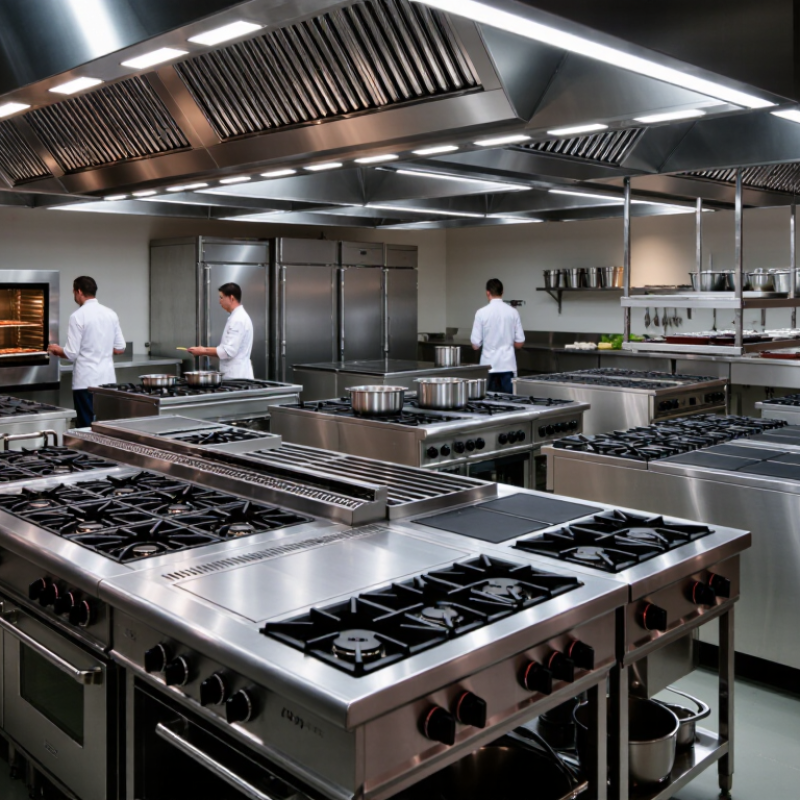
A commercial kitchen range is more than a hot surface with an oven below. For global buyers, it is a production tool shaped by fuel availability, local codes, cooking volume, and service conditions. A useful range may include open burners, griddles, ovens, or modular sections. Its value depends on recovery speed, flame stability, temperature control, and cleanability. Small details matter, especially when staff cook continuously during peak hours.
The U.S. Department of Energy’s Commercial Cooking Products Technical Support Document evaluates cooking and idle energy separately. This distinction is important. A range that heats quickly may still waste energy while waiting. ENERGY STAR reports that qualified commercial ovens can use about 20% less energy than standard models, depending on configuration and operating conditions. However, those savings cannot be assumed for every range. Test methods, gas pressure, voltage, and ventilation design change real results.
Safety and compatibility also define commercial quality. Buyers should check NFPA 96 guidance for ventilation and fire protection, then confirm local electrical, gas, and emissions requirements. A practical assessment should measure pan recovery, oven temperature variation, surface clearance, and access to replacement parts. Documentation must be clear.
Heat matters. So does downtime.
A common mistake is choosing output ratings without studying the kitchen’s actual menu. High power may look impressive, yet it can create excess heat, higher ventilation demand, and difficult control. The better question is less glamorous: will this range perform consistently at 11:30 a.m., in this country, with this team?
10 Best Commercial Kitchen Ranges for Global Buyers? - What Defines a Commercial Kitchen Range for Global Buyers?
| Rank | Commercial Range Configuration | Overall Width | Cooking Top | Total Burner Output | Oven Type | Oven Capacity | Primary Fuel | Approx. Gas Input | Best Application | Global Buyer Considerations |
|---|---|---|---|---|---|---|---|---|---|---|
| 1 | 36-Inch Six-Burner Range | 36 in / 914 mm | 6 open burners | 150,000 BTU/h | Standard gas oven | Approximately 5.7 ft³ / 161 L | Natural gas or LPG | 180,000–220,000 BTU/h | Small and medium restaurants | Compact footprint, flexible fuel conversion, and strong general-purpose performance. |
| 2 | 48-Inch Eight-Burner Range | 48 in / 1,219 mm | 8 open burners | 200,000 BTU/h | Standard gas oven | Approximately 9.0 ft³ / 255 L | Natural gas or LPG | 240,000–280,000 BTU/h | High-volume à la carte kitchens | Provides additional pan capacity while retaining a familiar open-burner layout. |
| 3 | 60-Inch Ten-Burner Range | 60 in / 1,524 mm | 10 open burners | 250,000 BTU/h | Double gas oven | Approximately 11.5 ft³ / 326 L | Natural gas or LPG | 300,000–360,000 BTU/h | Hotels, banquet kitchens, and institutional catering | High throughput requires adequate ventilation, gas pressure, and floor space. |
| 4 | 36-Inch Four-Burner Range with Griddle | 36 in / 914 mm | 4 burners plus 12-in griddle | 100,000 BTU/h plus griddle | Standard gas oven | Approximately 5.7 ft³ / 161 L | Natural gas or LPG | 190,000–230,000 BTU/h | Breakfast service, cafés, and mixed menus | Combines pan cooking and flat-top cooking in a space-efficient configuration. |
| 5 | 48-Inch Six-Burner with 24-Inch Griddle | 48 in / 1,219 mm | 6 burners plus 24-in griddle | 150,000 BTU/h plus griddle | Standard gas oven | Approximately 9.0 ft³ / 255 L | Natural gas or LPG | 260,000–320,000 BTU/h | Diners, burger operations, and all-day breakfast venues | Large griddle area improves batch cooking and menu flexibility. |
| 6 | 36-Inch Induction Range | 36 in / 914 mm | 5 or 6 induction zones | 18–30 kW electrical | Electric convection oven | Approximately 5.7 ft³ / 161 L | Electric | No gas connection | Low-emission kitchens and buildings with limited gas supply | Requires compatible magnetic cookware, suitable electrical capacity, and heat management. |
| 7 | 48-Inch Gas Range with Convection Oven | 48 in / 1,219 mm | 6 burners plus 12-in griddle | 150,000 BTU/h plus griddle | Gas convection oven | Approximately 9.0 ft³ / 255 L | Natural gas or LPG | 270,000–330,000 BTU/h | Baking, roasting, and multi-station production | Convection improves heat distribution but normally needs a dedicated electrical connection for the fan. |
| 8 | 60-Inch Ten-Burner with Large Griddle | 60 in / 1,524 mm | 8 burners plus 24-in griddle | 200,000 BTU/h plus griddle | Double gas oven | Approximately 11.5 ft³ / 326 L | Natural gas or LPG | 340,000–420,000 BTU/h | Large-scale breakfast and high-volume service | Excellent capacity, but installation must address ventilation, gas demand, and operator safety. |
| 9 | 24-Inch Compact Four-Burner Range | 24 in / 610 mm | 4 open burners | 80,000 BTU/h | Standard gas oven | Approximately 3.5 ft³ / 99 L | Natural gas or LPG | 110,000–150,000 BTU/h | Food trucks, kiosks, bars, and satellite kitchens | Useful where floor area is limited; verify clearances and ventilation before installation. |
| 10 | 48-Inch Combination Range with Salamander | 48 in / 1,219 mm | 6 burners plus 12-in griddle | 150,000 BTU/h plus griddle | Gas convection oven plus overhead broiler | Approximately 9.0 ft³ / 255 L | Natural gas or LPG | 290,000–350,000 BTU/h | Steak, grill, hotel, and finishing-focused kitchens | Adds high-heat finishing capability while preserving standard range functions. |
| Buyer note: Dimensions and outputs shown are representative commercial configurations commonly used in international foodservice equipment. Final specifications can vary by local gas type, burner design, electrical frequency, oven options, certification requirements, and installation standards. Always confirm the manufacturer’s technical sheet, ventilation calculations, utility connections, and local compliance requirements before purchase. | ||||||||||
