7 Best Turbo Intercoolers for Performance and Value
Choosing among the 7 Best Turbo Intercoolers for Performance and Value means looking beyond size and price. A Turbo Intercooler helps cool compressed intake air, but its real-world benefit depends on the entire setup. Core design, airflow, pressure drop, fitment, and heat-soak behavior all matter. On a hot afternoon, a poorly matched unit may feel less impressive than its polished finish suggests. Details count.
Turbocharging author Corky Bell is a useful expert reference for evaluating the system as a whole. To avoid presenting an unverified sentence as his exact words, here is the practical lesson paraphrased from that systems-focused approach: “Judge an intercooler by how well it supports the complete turbo setup.” That is the lens for this guide. We compare options for street-focused builds and higher-demand applications, while noting the trade-offs behind each choice. Bigger is not automatically better. A large core can create packaging headaches, and installation quality can change results. Real vehicle data matters more than bold product claims. Still, published specifications rarely tell the whole story; independent testing and careful fitment checks are worth seeking. Use this shortlist as a starting point, then confirm dimensions, connections, and intended boost range for your vehicle. The best value is the intercooler that fits your goals, not merely the cheapest one on the shelf.
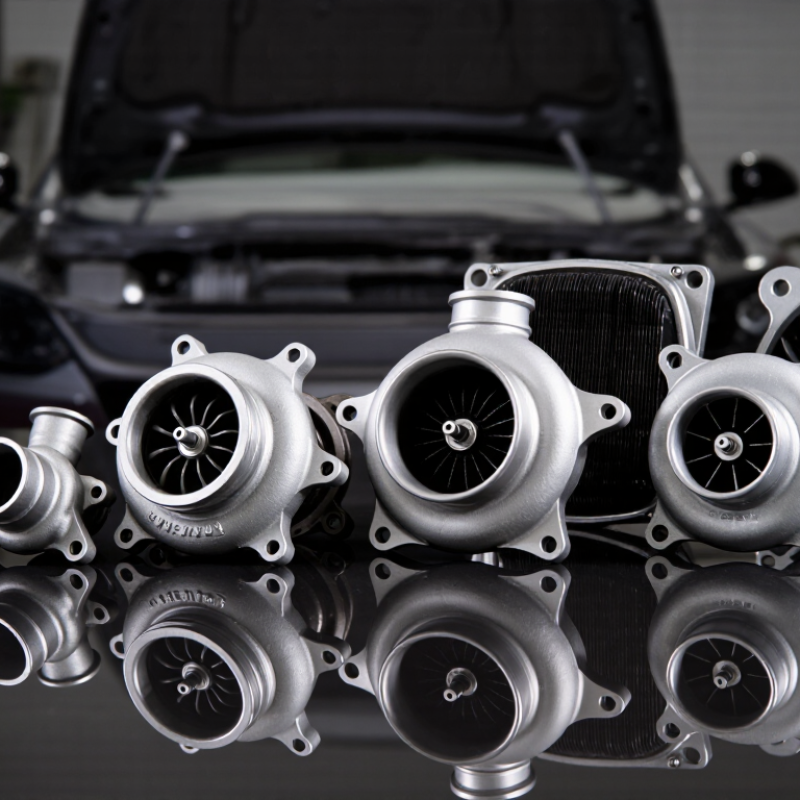
Understanding Turbo Intercoolers and Their Role in Performance
A turbocharger compresses intake air, and compression raises its temperature. Hotter air is less dense, so each cylinder may receive less oxygen by volume. An intercooler transfers heat from the pressurized charge air to ambient air or coolant. The result can be cooler, denser air entering the engine. It is a heat exchanger, not a horsepower switch.
The scale is tangible. Using the ideal gas relationship at equal pressure, cooling air from 100°C to 50°C increases its theoretical density by about 15%. This is a calculation, not a guaranteed engine-power gain; pressure drop, humidity, heat soak, and engine calibration all affect the result. SAE International’s J1349 engine-power test procedure specifies intake-air conditions and correction methods, highlighting why consistent conditions matter when comparing performance.
On a road pull, an undersized core may feel effective at first, then lose ground as it heat-soaks. A larger core can improve cooling, but excessive flow restriction may offset some benefits. Look beyond core size: compare pressure drop and temperature reduction under similar airflow and test conditions. Numbers without test details deserve caution. Fitment matters, too; airflow blocked by a tight bumper opening is airflow the cooler cannot use. There is no universal “best” temperature. Real-world results can be messier than a clean test sheet.
Key Factors for Evaluating Cooling, Fitment, and Value
Cooling performance should be judged by outlet temperature, pressure drop, and repeatability, not core size alone. NIST thermophysical-property references support the ideal-gas relationship: at equal pressure, air density varies inversely with absolute temperature. As an illustration, cooling air from 75°C to 25°C raises its theoretical density by about 17%. Real gains will differ. Heat soak, airflow, and engine calibration all matter.
Fitment deserves equal scrutiny. Measure the available space behind the grille, then check pipe diameter, hose angles, mounting points, and clearance from fans or crash structures. A large core that forces sharp bends may add pressure loss or complicate installation. SAE J1349_202104 sets controlled procedures for rating engine power; it is useful context when comparing test claims, but it is not an intercooler ranking method. Ask for test conditions, including ambient temperature and airflow. Small detail. A tidy catalog figure can still mislead if the test setup is unclear. For value, compare delivered cooling and documented pressure loss with total installed cost, including brackets, couplers, and any fabrication. I would treat a single peak-temperature result cautiously; repeated pulls often reveal whether performance holds after the core heats up.
Seven Turbo Intercooler Options Compared
Seven turbo intercooler options serve different builds, so “best” depends on fit, airflow, and driving conditions. An OEM-style replacement is usually the simplest choice for a near-stock setup. Tube-and-fin cores can be lighter, while bar-and-plate designs often trade extra weight for robust construction. Neither layout wins in every application.
A compact front-mount core may suit a tight installation, but its cooling capacity can be limited under repeated high-load driving. A larger front-mount unit offers more cooling area, yet may add pressure drop or require changes to surrounding parts. Water-to-air systems can package neatly where space is scarce, though they add a pump, hoses, and another system to maintain. Fit matters. Check core dimensions, inlet and outlet positions, and vehicle-specific mounting points before buying.
The remaining options include a direct-fit performance core and a universal intercooler kit. Direct-fit designs can reduce fabrication work; universal kits offer flexibility but may need careful pipe routing. Ask for pressure-drop and temperature-test data under stated conditions, not just peak-power claims. Also confirm the core’s rated pressure and inspect welds and end tanks. I would not rank one design above all others without knowing the vehicle, tune, and typical use. Real-world comparisons can be imperfect, especially when testing conditions differ.
Choosing an Intercooler for Your Vehicle and Driving Needs
Choosing an intercooler starts with how you drive, not the largest core that fits. A commuter in stop-and-go traffic faces repeated heat soak and limited airflow. A track driver gets stronger airflow but sustains high boost for longer. Different demands. Check core dimensions, inlet and outlet positions, and clearance around fans, crash structures, and pipes before comparing cooling claims.
Look for test results that report both charge-air temperature reduction and pressure drop. Lower outlet temperatures are useful, but excessive restriction can offset some gains. SAE International’s J1723 standard sets out methods for measuring charge-air-cooler performance, helping make test conditions more comparable. Ask whether reported results reflect your likely airflow and boost conditions; a single peak figure can hide important trade-offs. Real installations vary.
Your routine matters. The U.S. Environmental Protection Agency’s fuel-economy label calculations weight city driving at 55% and highway driving at 45%, reflecting mixed-use conditions rather than constant high-speed operation. That split is not an intercooler test, but it is a useful reminder to consider everyday use. For street driving, prioritize reliable fitment, modest pressure loss, and consistent cooling in slow traffic. For repeated high-load use, seek documented performance under sustained airflow and heat. I’d still treat advertised temperature drops cautiously unless the test setup is clearly described.
Installation, Testing, and Ongoing Maintenance
A careful installation begins with a cool engine and a clean work area. Check the intercooler’s dimensions, hose connections, and pressure rating before removing the old unit. Keep debris out of open pipes, and avoid bending the thin cooling fins. They damage easily. Confirm that brackets sit without tension and that hoses do not rub against sharp edges or hot components.
After installation, inspect every clamp and connection. Use a regulated pressure tester only within the intercooler’s specified limit, then check for leaks with an approved method. Never guess at test pressure. On a road test, record ambient temperature, intake temperature, and driving conditions. Repeat the same route when possible; otherwise, the comparison can mislead. A single test is not proof of better performance. That’s a limitation worth admitting.
Maintenance is mostly observation. Look for loose clamps, oily residue around joints, bent fins, and debris blocking airflow. Clean the core gently, following its care instructions; forceful washing can flatten fins. Recheck connections after the first few heat cycles, then inspect them during routine servicing. If temperatures rise unexpectedly, consider other causes too, such as a blocked filter or a failing sensor. I would not assume the intercooler is at fault without checking the whole system.
7 Turbo Intercooler Designs: Performance & Value
Illustrative comparison of generic core designs—not verified product test results. Lower charge-air temperature rise indicates better cooling under the same test conditions.
Example readings assume a consistent airflow and heat-load test. Actual cooling, pressure drop, fitment, and value depend on the vehicle and installation.

