
China Top 10 Stainless Steel Rebar Manufacturers
China’s Stainless Steel Rebar market is shaped by scale, grade choice, and demanding site conditions. World Stainless’s 2023 production report recorded about 58.4 million tonnes of global stainless crude steel output. China produced approximately 36.7 million tonnes. Those figures show the country’s manufacturing depth, but they do not prove that every supplier can deliver consistent rebar quality. Buyers still need to check test certificates, dimensions, traceability, and production capacity.
This guide introduces ten Chinese manufacturers and the factors that matter when comparing them. Stainless Steel Reba is used here as a search term; product specifications should still be confirmed with each supplier. Corrosion specialist Frank Altmayer offers a useful engineering perspective: material selection should reflect the service environment, not just the alloy label. That principle matters near salt spray, chemical exposure, or persistent moisture. A polished sample tells only part of the story.
Look for evidence. Ask for grade-specific mill test reports, applicable standards, and documented quality controls. Compare lead times and export experience, too. Price matters, but so does consistency between batches. The ranking is a starting point, not a substitute for supplier audits or independent testing. Data can lag behind market changes, and public company information is uneven. That deserves scrutiny. The strongest choice is the one whose claims match verifiable production records and your project’s actual conditions.
Overview of China’s Stainless Steel Rebar Industry
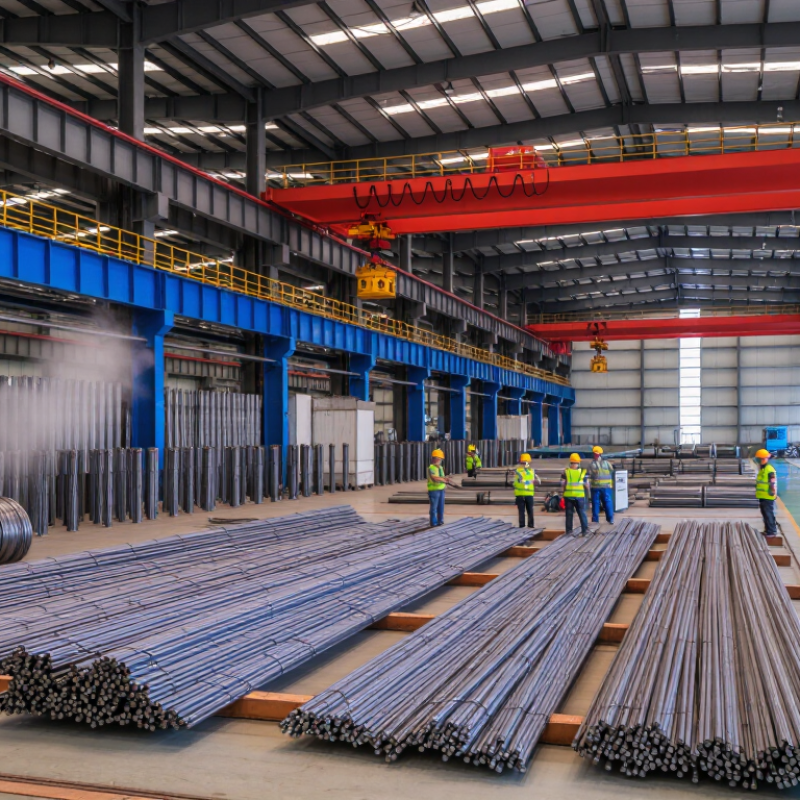
China’s stainless steel rebar industry sits within a large and technically diverse steel sector. Unlike conventional carbon steel, stainless rebar is chosen where moisture, salts, or industrial chemicals can accelerate corrosion. Its higher material cost makes lifecycle planning important, though site conditions can be less predictable than designs suggest. Demand comes from coastal infrastructure, water facilities, transport projects, and chemical-processing sites.
Production involves alloy selection, melting and refining, hot rolling, and controlled cooling. Details matter. China’s broad steelmaking base supports a range of production capabilities, but suppliers may differ in grade control, testing, and batch consistency. The industry is not uniform, and a specification sheet alone may not show how carefully every production stage is monitored. That distinction is easy to miss.
For buyers, useful checks include chemical composition, mechanical test results, dimensional tolerances, and traceability between test reports and delivered bars. Rib shape and surface condition also deserve attention, especially when bars must fit established construction practices. A quoted grade does not tell the whole story. Project teams should match the material to exposure conditions and verify documentation before procurement; this step can feel tedious, but skipping it leaves important questions unanswered.

China’s Stainless Steel Rebar Industry: Alloy Composition Overview
Representative stainless steel grades compared by chromium and nickel content (weight percent).
Values show the midpoint of the specified composition ranges for grades 201, 304, 316, and duplex 2205 in ASTM A240/A240M. Actual compositions vary within each grade’s specification; composition alone does not determine a grade’s suitability for a particular reinforcement project.
Common Grades, Standards, and Applications
Stainless steel reinforcing bars are commonly specified in 304, 316L, and duplex 2205 grades. Grade 304 suits many ordinary exposure conditions. Grade 316L contains molybdenum, which improves resistance to chloride attack near seawater and de-icing salts. Duplex 2205 combines higher strength with good corrosion resistance, but detailing and fabrication need careful control. ASTM A955/A955M covers stainless steel reinforcing bars; BS 6744 is another relevant specification. Check the project documents: grade names alone do not confirm a bar meets every standard requirement.
These bars are often selected for bridge decks, marine structures, tunnels, and wastewater facilities, where corrosion repairs can be difficult or costly. They are not automatically needed throughout a structure; designers may reserve them for splash zones, joints, or other chloride-exposed areas. The International Stainless Steel Forum’s Stainless Steel in Figures 2024 reports 58.4 million tonnes of global stainless steel production in 2023. That figure describes the wider material industry, not rebar demand or service life. A useful reminder. Specify exposure, bar grade, surface condition, and inspection requirements together. Even a strong alloy can disappoint if detailing traps water or construction damages its protective surface.
Criteria for Ranking Leading Chinese Manufacturers
A credible ranking of Chinese stainless steel rebar manufacturers should weigh verified product performance more heavily than headline capacity. The World Stainless Association’s Stainless Steel in Figures 2024 reports 36.7 million tonnes of Chinese stainless crude steel production in 2023, out of 58.4 million tonnes worldwide. This scale signals a deep supply base, but it does not prove that any mill makes rebar consistently. Product-level evidence matters.
Assess mechanical test results, corrosion resistance, rib geometry, dimensional tolerances, and batch-to-batch consistency. ASTM A955/A955M provides a relevant specification for stainless-steel reinforcing bars, including strength and elongation requirements. Ask for recent mill test certificates and independent inspection records, then check that reported grades and dimensions match the order. Traceability matters. Also compare production lead times, available bar sizes, packaging, and the mill’s ability to provide clear technical support. Public data rarely separates stainless rebar output from broader stainless-steel production, so capacity claims can be difficult to verify. No scorecard is perfect; a low price may still hide uneven documentation or limited testing. Rank manufacturers on evidence buyers can inspect, not promotional claims.
China Top 10 Stainless Steel Rebar Manufacturers - Criteria for Ranking Leading Chinese Manufacturers
A weighted evaluation framework for comparing manufacturers. The criteria below describe what to assess; they do not identify or rank specific companies.
| No. | Evaluation Criterion | Weight | Evidence to Review | Why It Matters |
|---|---|---|---|---|
| 1 | Product Quality and Consistency | 15% | Review recent inspection reports, dimensional checks, mechanical test results, nonconformance records, and consistency across production batches. | Reliable properties and dimensions are essential for rebar used in structural concrete. |
| 2 | Applicable Standards and Specification Compliance | 14% | Check product documentation against the standards and project specifications actually required by the buyer. Relevant references may include ASTM A955/A955M for stainless steel reinforcing bars and GB/T 1220 for stainless steel bars; confirm the applicable edition and product scope. | Standards define requirements and test methods, but the correct reference depends on the product and destination market. |
| 3 | Material Traceability | 12% | Verify heat or batch identification, material test certificates, grade designation, and the ability to connect delivered bars to production and test records. | Traceability supports quality verification and investigation if a material issue arises. |
| 4 | Product Range and Grade Capability | 12% | Assess documented availability of requested stainless grades, bar sizes, lengths, finishes, and production routes; confirm capability with current technical data and samples where appropriate. | A suitable range helps match the reinforcement to engineering, fabrication, and project requirements. |
| 5 | Testing and Quality-Control Capability | 10% | Review the manufacturer’s testing arrangements for chemical composition, tensile properties, dimensions, and other tests required by the governing specification. Check laboratory qualifications where relevant. | Documented testing provides evidence that products are checked against agreed requirements. |
| 6 | Corrosion-Performance Evidence | 10% | Examine grade-specific technical information and test data relevant to the intended environment. Compare evidence using the project’s specified test method and acceptance criteria. | Stainless steel grade selection should reflect exposure conditions; corrosion performance should not be inferred from a generic product label alone. |
| 7 | Production Capacity and Process Control | 10% | Confirm the production processes used, capacity available for the required order, process-control records, and ability to maintain agreed specifications at the requested volume. | Capacity and process control affect order feasibility and repeatability. |
| 8 | Delivery and Order Reliability | 6% | Compare documented lead times, delivery performance, packaging practices, export documentation capability, and procedures for communicating schedule changes. | Reliable fulfilment helps buyers coordinate construction and fabrication schedules. |
| 9 | Technical Support and Documentation | 6% | Assess the clarity and completeness of technical data sheets, certificates, product identification, quotation specifications, and responses to engineering or quality questions. | Clear documentation makes product review, procurement, and receiving inspection more efficient. |
| 10 | Management Systems and Responsible Operations | 5% | Check current management-system certificates and their scope, if claimed, and review relevant environmental, safety, and operational records using buyer-defined requirements. | Management systems can support consistent processes; certificates should be verified for validity and scope rather than treated as a substitute for product testing. |
| Total Weight | 100% | Weights are an example evaluation model and may be adjusted to suit project risk, specification, and purchasing priorities. | ||
Suggested scoring method: Score each criterion from 0 to 5 using verified evidence, where 0 = no evidence, 1 = very limited, 2 = below requirements, 3 = meets requirements, 4 = strong evidence, and 5 = excellent, independently verifiable evidence. Calculate each weighted result as (criterion score ÷ 5) × criterion weight. Verify standards, certificates, test reports, and product claims directly before making a procurement decision.
Profiles of 10 Major Stainless Steel Rebar Manufacturers
A useful profile compares more than advertised capacity. It examines stainless grades, bar diameters, surface finish, testing records, and delivery consistency. These details matter on site: a bundle with clear heat numbers is easier to trace than one with incomplete paperwork. The World Stainless Association reported global stainless steel melt-shop production of about 58.4 million tonnes in 2023, with China producing about 36.7 million tonnes. This scale provides context, but it does not prove that any individual mill makes rebar or meets a project’s requirements. Check product-specific certificates and recent inspection records.
Tips: Ask each supplier for a sample test report, stated tolerances, and a traceability example. Confirm whether the quoted grade and dimensions are available in the required quantity. A polished profile can still leave gaps. For the ten manufacturers, compare production focus, quality controls, export experience, and technical support using the same checklist. Note uncertainties too: public data may describe a company’s broader steel output, not its stainless rebar capacity. That distinction deserves a second look.
Comparison of Product Range, Quality, and Export Capabilities
China’s top stainless steel rebar manufacturers are best compared across product range, quality controls, and export readiness—not catalog size alone. Check available diameters, bar lengths, grades, and whether custom cutting or coil supply is offered. The World Steel Association’s World Steel in Figures 2024 reports that China produced 1,019.1 million tonnes of crude steel in 2023. That scale indicates strong industrial capacity, but it cannot confirm an individual mill’s rebar quality.
For quality, request recent chemical-composition and tensile-test results, plus traceable heat numbers and dimensional tolerances. Ask how each order is inspected. A polished certificate is useful, but it is not a substitute for consistent batch records. China exported 110.72 million tonnes of steel in 2024, according to customs data reported by industry sources; this covers steel products broadly, not rebar alone. Compare suppliers’ shipment histories, lead times, packaging, and export documentation rather than treating national export volume as proof of rebar expertise.
Tips: Match the quoted grade to your project specification. Verify test reports against the actual heat number, and confirm shipping marks before production. Small checks matter. Some comparisons still rely too heavily on brochures; that is a weakness worth correcting.

