
How to Choose a VTOL Fixed Wing Drone in 2026?
Choosing a Vtol Fixed Wing Drone in 2026 means balancing vertical takeoff convenience with the endurance and coverage of fixed-wing flight. This combination can suit mapping, inspection, and environmental surveys where a runway is unavailable. But the category name alone tells you little about mission readiness. Payload weight, wind tolerance, landing accuracy, and setup time can change results quickly. A camera may seem light on a product page, then become a significant load with its mount and power needs. Small details matter.
Specifications deserve a closer look. Flight time, for example, may be measured with a light payload in calm conditions, not during a demanding field survey. Ask how the aircraft performs with your intended sensors, batteries, and data link. Check whether the manufacturer explains test conditions and offers replacement parts, software support, and clear maintenance guidance. A short demonstration can reveal more than a polished brochure. It can also expose issues.
This guide outlines practical criteria for comparing aircraft, from payload capacity and battery logistics to control systems and recovery options. It also considers training needs, support, and operation within applicable local requirements. There is no universal best model. A drone suited to a wide-open site may be awkward near trees or buildings. Some published figures look precise, yet depend on conditions you may not encounter. The right choice comes from matching verified performance to the work you actually need to do—and being honest about what remains uncertain.
Define the Mission and Operating Environment
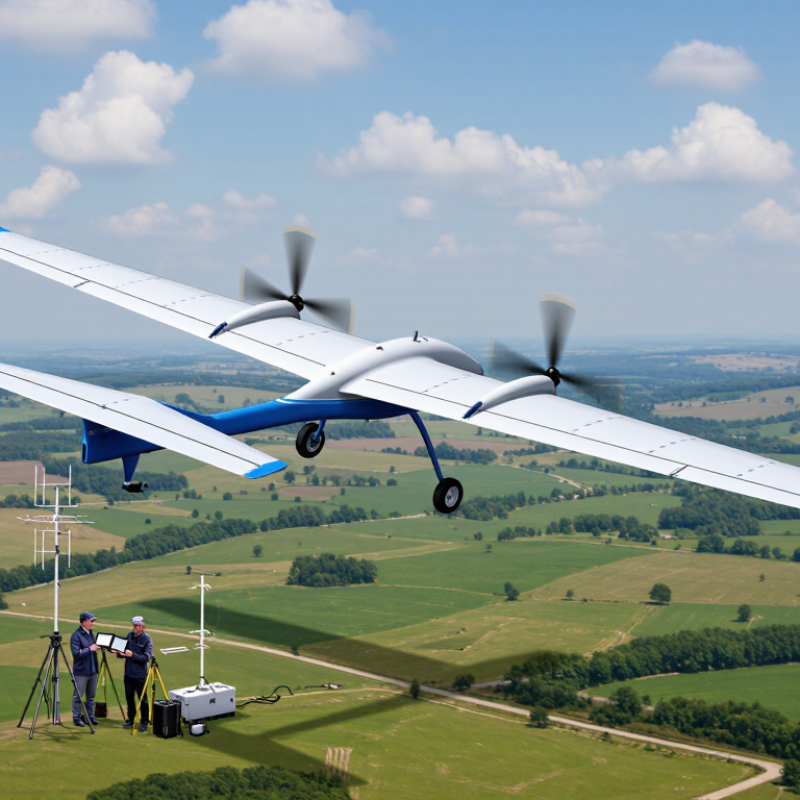
Start with the job, not the airframe. Define the payload, required image detail, coverage, and time window before comparing endurance figures. A multispectral survey over flat fields differs from a ridgeline inspection, where launch sites may be uneven and recovery space scarce. Mark trees, wires, buildings, expected wind, temperature, dust, and radio-shadow areas on a map. VTOL removes the runway requirement, but climbing and transitioning still use energy. A headwind on the return leg can shrink the reserve quickly.
The operating area also shapes your choice. Short, repeated flights near a service vehicle may favor quick battery swaps; remote work calls for more range, payload margin, and reliable recovery options. The FAA’s 2024–2044 Aerospace Forecast projects continued growth in the U.S. commercial small-UAS fleet through 2028. That trend makes repeatable site assessment increasingly useful, not optional. Still, a forecast cannot tell you whether a gust funnels between two buildings. Field checks matter.
Tips: Walk the launch and landing zone. Record wind, temperature, and obstacles at the planned flight time, not just at dawn. Compare the planned route with a conservative return-energy reserve. I’d also test one short mission before committing to a full survey; the map can miss things.

Compare VTOL Designs, Range, and Flight Performance
A VTOL fixed-wing drone combines vertical takeoff with wing-borne cruise, but its layout changes what it can do well. Multirotor-style lift motors are mechanically simpler; tilt-wing or tilt-rotor layouts may reduce cruise drag, yet add moving parts and transition checks. The FAA’s 2024 Aerospace Forecast estimates the U.S. commercial small-drone fleet could reach 1.18 million by 2028. More choices do not make selection easier.
Compare useful range, not brochure maximum. A 30-kilometer claim can shrink with headwinds, cold batteries, or a heavier camera. Ask for endurance and payload figures from the same flight test, then reserve a practical return margin. On a real survey, that may mean landing with 20 percent battery, not chasing the last kilometer. The detail matters.
Also check transition speed, wind limits, and launch-site needs. A runway-free design helps on a rocky ridge, while extra lift motors can reduce cruise efficiency. Drone Industry Insights’ 2024 market report projects a global drone market of US$54.6 billion by 2030; market growth is not proof that any aircraft fits your route. I would favor repeatable flight logs over a polished range figure. I might still misjudge local wind. That deserves a second look.
Match Payload Capacity and Sensors to Your Tasks
Choose the aircraft around the work it must complete, not the largest payload figure on its specification sheet. Maximum payload may include mounting hardware, cables, and other equipment. A 1.2-kilogram sensor package can also change flight time, climb performance, and transition behavior. Small details matter. Check the usable payload capacity and confirm how the aircraft handles the sensor’s weight and balance.
Match the sensor to the decision you need to make. RGB cameras suit visual inspection and mapping when fine surface detail matters. Thermal sensors can reveal temperature differences, but they need suitable conditions and careful interpretation. Multispectral sensors support vegetation analysis; their value depends on calibration and consistent capture settings. This trade-off is real. A higher-resolution sensor may produce larger files and require more processing, without improving every task.
Check power draw, vibration isolation, data storage, and mounting options alongside weight. Ask how payload affects the planned route, wind margin, and reserve flight time. A neat spreadsheet can miss field friction: a loose cable or awkward camera angle may spoil useful data. Leave capacity for practical accessories, and review sample imagery from a short test flight before committing to a full survey.
How to Choose a VTOL Fixed-Wing Drone in 2026: Match Payload Capacity and Sensors to Your Tasks
Indicative payload-mass ranges for common mission payloads. Choose an aircraft with sufficient payload margin for the sensor, mount, cabling, and any required gimbal.
These class-level ranges are planning estimates, not specifications for a particular aircraft or sensor. Actual mass varies by configuration. Check the aircraft’s rated payload, center-of-gravity limits, and endurance at the intended payload before selecting a system.
Check Autonomy, Safety Features, and Regulatory Needs
When choosing a VTOL fixed-wing drone in 2026, assess autonomy by testing a real mission, not just reading a specification sheet. Check waypoint accuracy, wind limits, battery reserves, and what happens after a lost link. A safe system should have clear geofencing, return-to-home logic, and reliable vertical-to-cruise transitions. Watch the aircraft climb and land; a smooth demonstration is useful, but repeatability matters more.
Safety depends on the full operating setup. Review obstacle-sensing limits, alert visibility, emergency procedures, and whether the control link remains dependable across your survey area. The FAA’s 2024 Aerospace Forecast projects the U.S. commercial small-drone fleet could reach about 1.18 million aircraft by 2028. That growth makes airspace coordination more important, not optional. Before buying, check local rules for airspace access, pilot qualifications, identification, and any required flight approvals. Requirements differ by location and mission.
Tips: Ask for documented test results in wind and low-battery conditions. Rehearse a lost-link response in a safe, controlled area. Keep a checklist beside the launch point. And be candid: autonomy can reduce workload, but it cannot replace sound judgment or a careful site assessment.
Use this guide to compare aircraft for your mission. Performance varies with payload, weather, battery condition, altitude, and operating procedures; verify figures in the aircraft’s current documentation and test them under representative conditions. Regulatory requirements depend on where and how you fly.
| Evaluation Area | What to Check | Practical Guidance | Evidence to Request or Test |
|---|---|---|---|
| Mission fit | Survey area, route length, terrain, launch and recovery space, and required output | Choose the aircraft and sensor combination for the actual mission. A runway-free vertical takeoff does not remove the need for a suitable landing area or a safe operating plan. | Demonstration on a representative route, including takeoff, transition, cruise, approach, and landing |
| Autonomy and navigation | Route planning, waypoint behavior, geofencing, position estimation, and loss-of-link response | Confirm what the aircraft does when satellite navigation, the control link, or a sensor becomes unavailable. Autonomy does not replace operator oversight or required visual-line-of-sight procedures. | Documented failsafe logic, alert behavior, and supervised tests of simulated navigation and link failures |
| Endurance and usable range | Flight time and route distance with the intended payload and operational reserve | Do not rely on a maximum no-payload figure as a mission estimate. Payload, wind, temperature, battery age, and VTOL phases can reduce usable flight time and range. | Measured mission profiles with the planned payload, a stated reserve, and representative weather conditions |
| Payload capacity | Payload mass, power draw, mounting, data interfaces, and sensor compatibility | Check the complete takeoff mass, balance, power budget, and effect of the payload on flight performance. Payload capacity alone does not establish sensor suitability. | Payload integration documentation, calibration process, and test results using the intended sensor |
| VTOL transition and landing | Transition stability, landing accuracy, surface requirements, and recovery behavior | Evaluate vertical takeoff and landing performance in the conditions and space available at your sites. Wind, obstacles, and uneven surfaces can affect recovery. | Repeated takeoff, transition, and landing demonstrations, including the documented limits for wind and landing conditions |
| Safety features | Return-to-home or alternate recovery, low-battery behavior, geofencing, and emergency procedures | Safety functions should be configurable, clearly alerted, and appropriate to the operating environment. Return-to-home is not a guarantee of safe recovery if the route or landing area is obstructed. | Safety-function descriptions, operator training materials, and controlled tests of relevant contingencies |
| Detect-and-avoid capability | How the aircraft detects, alerts on, or responds to nearby aircraft and obstacles | Do not assume that onboard sensing provides complete airspace awareness or makes an operation compliant. Capabilities and operating limitations vary by system. | Sensor limitations, detection conditions, alert logic, and any approvals or operational limitations applicable to the intended use |
| Communications and data security | Command-and-control link, telemetry coverage, data storage, access controls, and update process | Check how the system behaves outside reliable link coverage and how mission data is protected, retained, and exported. Confirm whether operation depends on an internet connection. | Link-loss procedures, security documentation, data-flow details, and offline-operation test results if needed |
| Maintenance and support | Battery health checks, inspection intervals, replaceable parts, repair process, and training | Plan for battery degradation and routine inspections when estimating availability and operating cost. Confirm that required maintenance can be performed within your schedule. | Maintenance schedule, battery-care guidance, spare-parts availability, and operator training requirements |
| United States regulatory planning | Aircraft weight, pilot qualification, operating rules, registration, Remote ID, and airspace access | For many civil small-UAS operations, FAA Part 107 applies to aircraft under 55 lb (25 kg) including payload. Remote ID and airspace requirements may apply; operations beyond visual line of sight generally require applicable FAA authorization or another authorized pathway. Verify current rules and exceptions for the specific operation. | Operating concept, aircraft takeoff weight, registration and Remote ID status, pilot credentials, and required airspace authorizations |
| European Union regulatory planning | Open or Specific category, aircraft class, operator registration, pilot competency, and local airspace rules | In the Open category, operations are generally limited to visual line of sight and a maximum height of 120 m above the closest point of the surface, subject to applicable conditions and exceptions. Operations outside those limits may require the Specific category and an operational authorization. Check current EU and national requirements. | Proposed operation category, aircraft class marking where applicable, operator registration, competency evidence, and any required authorization |
| Total cost and operational readiness | Aircraft, payload, batteries, software, training, maintenance, and regulatory preparation | Compare the cost and effort of a complete mission-ready setup, not just the aircraft. Include the people, procedures, and approvals needed to operate lawfully and safely. | Itemized lifecycle costs, training plan, operating procedures, and a realistic deployment schedule |
Compare Total Ownership Cost, Support, and Upgrade Options
A VTOL fixed-wing drone’s purchase price is only the opening line in its ownership cost. Compare systems over the same expected service period and flight schedule. Include batteries, chargers, spare propellers, payload integration, training, software fees, transport cases, and routine inspections. Battery replacement can become a major expense when frequent flights shorten useful life. Small costs add up.
Support quality affects both budgets and mission planning. Ask how quickly technical staff respond, which repairs can be completed locally, and how long common parts usually take to arrive. Check whether training includes practical maintenance, not just flight procedures. Request written warranty terms and a clear list of excluded damage. A low hourly operating estimate may omit technician time or shipping delays. I would treat that estimate cautiously.
Upgrade options matter when sensors, communication needs, or workflows change. Look for documented payload limits, available power, mounting interfaces, and compatibility with future software versions. A modular design may reduce replacement costs, but only if upgrades are tested and supported. Compare the price of a specific upgrade, its installation time, and any required retraining. It is easy to assume future upgrades will be simple; that assumption deserves a second look. Keep a realistic reserve for repairs and changes.

