
How to Choose the Best Aluminum Frame Sun Room?
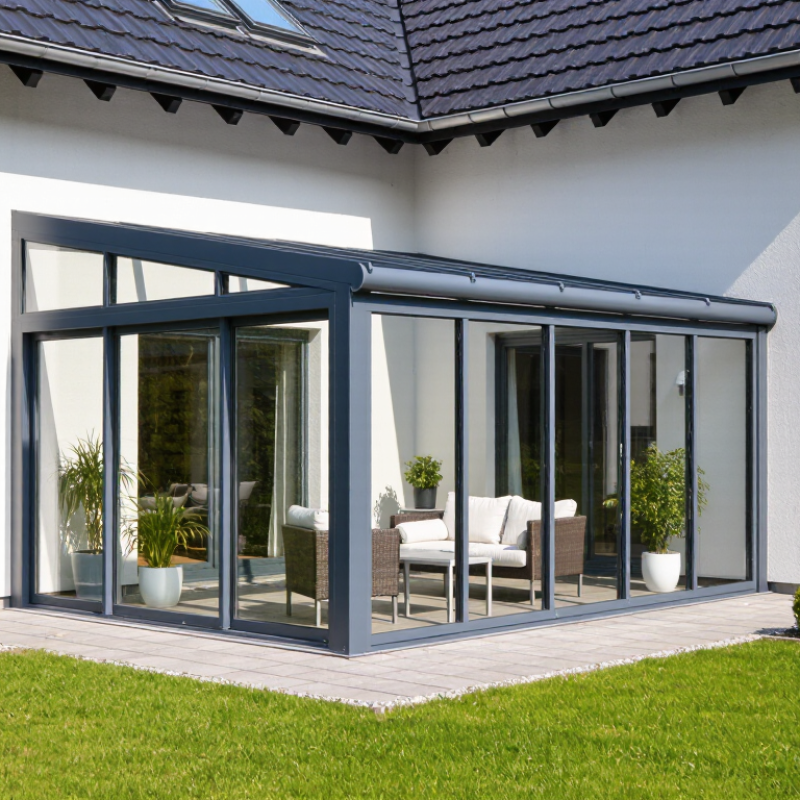
Choosing the right Aluminum Frame Sun Room involves more than comparing prices and glass panels. The frame affects strength, insulation, appearance, maintenance, and long-term comfort. A well-designed room should feel bright in winter, shaded in summer, and secure during heavy rain or strong winds.
This guide examines practical details that buyers often overlook. It considers aluminum grade, thermal breaks, roof design, glass performance, drainage, ventilation, and installation quality. For example, a powder-coated frame may resist fading, while thermally broken aluminum can reduce indoor heat loss. Double glazing may improve comfort, but its value depends on the local climate and room orientation. Product specifications matter.
Professional advice is equally important. Reliable suppliers should provide clear drawings, tested materials, warranty terms, and installation references. Local building requirements may also affect foundations, ventilation, safety glass, and storm resistance. Check these details before ordering.
No frame is perfect. A larger glass area can improve views but increase solar heat. Slim profiles look elegant but may demand stronger engineering. Even attractive designs can perform poorly when drainage is ignored. That is why careful comparison matters. By reviewing technical evidence and real installation conditions, homeowners can choose an Aluminum Frame Sun Room that suits their property, budget, and daily habits. The best decision may not be the cheapest one. It should remain comfortable, durable, and practical for many years.
Define Climate Needs Using IECC U-Factor and SHGC Targets
How to Choose the Best Aluminum Frame Sun Room?
Climate should guide your sun room design before frame color or roof style. The IECC uses U-factor and SHGC to measure window performance. U-factor shows how quickly heat escapes through glazing and frames. Lower values usually improve insulation. SHGC shows how much solar heat enters through the glass.
A cold climate may benefit from lower U-factors and moderate SHGC levels. This combination helps retain indoor heat during winter. In hot climates, lower SHGC values can reduce overheating near west-facing windows.
However, shaded north-facing glass may need different targets. Orientation matters more than many homeowners expect. Use the applicable IECC edition and climate-zone table for exact requirements.
Aluminum conducts heat efficiently, so choose thermally broken frames. Inspect the frame detail, not only the advertised glass rating. A well-rated pane can perform poorly with weak edge seals or installation gaps. Field measurements, local code review, and a qualified installer add useful protection.
I have seen attractive designs become uncomfortable beside unshaded afternoon glass. That mistake is easy to make.
Also, IECC targets are minimum compliance values, not always comfort targets. A stricter U-factor may cost more, while excessive glass can still create glare and heat. Review winter temperatures, summer sun, shading, and ventilation together before selecting the final system.

Evaluate Thermal Breaks Against Aluminum’s 205 W/m·K Conductivity
How to Choose the Best Aluminum Frame Sun Room?
Aluminum conducts heat quickly, with a typical conductivity of about 205 W/m·K. This figure is widely reported in engineering data from the International Aluminium Institute. In a sun room, an unbroken aluminum frame can transfer outdoor heat inward during summer. It can also pull indoor heat outward during winter.
A thermal break interrupts this path. Most systems use a low-conductivity polymer strip between the exterior and interior aluminum sections. Polyamide materials may have conductivity near 0.3 W/m·K, according to common construction material data. The reduction is substantial. However, the frame’s final performance depends on strip width, connection design, glass spacing, and installation quality.
Look for tested U-values, not marketing language. NFRC 100 provides procedures for rating window and door thermal performance. Ask whether the published value covers the complete frame, glass, and spacer assembly. A strong thermal break can still underperform when metal screws bypass it or insulation stops at the sill.
Condensation matters too. The U.S. Department of Energy notes that windows can represent roughly 25–30% of household heating and cooling energy use. A cold interior frame may increase moisture risk around corners. That detail is easy to miss.
Wider breaks are not always better. They may reduce usable frame strength or complicate drainage. A careful design review should compare thermal results with structural loads, local climate, and real installation details. The 205 W/m·K figure is only the starting point.
How to Choose the Best Aluminum Frame Sun Room? - Evaluate Thermal Breaks Against Aluminum’s 205 W/m·K Conductivity
| Frame Configuration | Primary Material | Thermal Conductivity | Typical Thermal-Break Width | Indicative Frame Uf Value | Approximate Conductive Heat-Flow Reduction vs. Unbroken Aluminum | Condensation Risk | Suitability for a Conditioned Sun Room |
|---|---|---|---|---|---|---|---|
| Unbroken aluminum frame | Aluminum alloy | Approximately 205 W/m·K | 0 mm | Approximately 5.0–6.0 W/m²·K | Baseline: highest heat transfer | High, especially in cold weather and at metal-to-glass junctions | Generally unsuitable where year-round heating or cooling is required |
| Basic polyamide thermal-break frame | Aluminum exterior and interior sections separated by reinforced polyamide | Aluminum: approximately 205; polyamide: approximately 0.25 W/m·K | 18–24 mm | Approximately 2.2–3.0 W/m²·K | About 45–60% lower conductive heat flow | Moderate to low when drainage, gaskets, and installation are correctly designed | Suitable for mild-to-moderate climates and seasonal use |
| Enhanced polyamide thermal-break frame | Aluminum sections with a wider, reinforced polyamide barrier | Aluminum: approximately 205; polyamide: approximately 0.25 W/m·K | 30–34 mm | Approximately 1.6–2.2 W/m²·K | About 60–70% lower conductive heat flow | Low when interior surface temperatures remain above the room-air dew point | A strong general-purpose choice for conditioned sun rooms |
| High-performance multi-chamber frame | Thermally broken aluminum with multiple insulating chambers and optimized seals | Aluminum: approximately 205; insulating zones typically much lower than aluminum | 34–45 mm | Approximately 1.2–1.8 W/m²·K | About 70–80% lower conductive heat flow | Low, provided the glazing edge, spacers, and installation are also thermally optimized | Best option for cold climates, extended occupancy, and low-energy designs |
| Thermally broken frame with insulated glazing | Thermally broken aluminum combined with double or triple insulating glass | Frame: low-conductivity barrier zones; glass center-pane conductivity varies by gas and coating | 30–45 mm | Frame: approximately 1.2–2.2 W/m²·K | Frame improvement must be combined with low-U glazing for whole-window gains | Low when warm-edge spacers and continuous perimeter seals are used | Most balanced configuration for year-round comfort and energy efficiency |
Notes: Uf values are representative ranges for the frame only, not the complete window or sun-room system. Actual performance depends on profile geometry, thermal-break continuity, glazing, spacers, seals, drainage, installation quality, orientation, and local climate. Aluminum’s conductivity is approximately 205 W/m·K, while reinforced polyamide thermal barriers are commonly around 0.25 W/m·K; lower conductivity indicates greater resistance to heat flow.
Compare Low-E Glazing Options Using ENERGY STAR U-Factor ≤0.30
How to Choose the Best Aluminum Frame Sun Room?
For an aluminum-frame sunroom, start with the window label, not the frame color. U-factor measures heat flow; lower values indicate better insulation. An ENERGY STAR target of U-factor ≤0.30 Btu/h·ft²·°F is a practical screening point for many projects. However, ENERGY STAR criteria vary by climate zone, so this number is not a universal pass.
Double-pane Low-E glazing Double-pane Low-E glazing often reaches around 0.27–0.30 when paired with insulating gas and a thermally broken aluminum frame. Triple-pane units can reduce U-factor further, sometimes near 0.20, but they add weight, cost, and installation demands.
Low-E coating options Low-E coatings also differ. A soft-coat option usually provides stronger insulating performance, while a hard-coat option may offer better durability during fabrication. The right choice depends on the sunroom’s exposure.
The U.S. Department of Energy reports that windows can contribute significantly to household heating and cooling loads. NFRC performance labels separate U-factor, solar heat gain coefficient, and visible transmittance, helping buyers compare complete assemblies. I once focused too heavily on glass U-factor. That was incomplete. A high-performing pane can lose value through an uninsulated frame or poor edge sealing. Ask for NFRC-certified data, tested frame dimensions, and installation details. A low number printed on a quotation is not enough.
Verify Roof Loads and Wind Resistance Under ASCE 7 Requirements
How to Choose the Best Aluminum Frame Sun Room?
A strong aluminum frame begins with verified roof loads, not attractive profiles. ASCE 7-22 uses site-specific wind speed, exposure, height, terrain, and enclosure classification. Wind pressure increases with the square of wind speed. A 140 mph design wind can create about 36% more velocity pressure than 120 mph wind. That difference can affect rafters, anchors, glazing, and roof-to-wall connections.
Ask for calculations based on ASCE 7-22 and your local building code. The roof should account for dead load, construction load, roof live load, and local snow accumulation. ASCE 7-22 commonly uses a 20 psf minimum roof live load for applicable low-slope roofs, but reductions and exceptions require careful review. Snow drift near taller walls can produce much higher localized forces. It is easy to overlook this detail.
Check the aluminum alloy, member thickness, fastener spacing, and connection design. Thin frames may look rigid in a showroom but flex beside a real house. FEMA’s Coastal Construction Manual emphasizes continuous load paths from roof sheathing to foundations, especially in high-wind regions. Ask whether the design includes uplift at corners and edges, where pressures can become severe. I would also request stamped calculations from a qualified structural engineer. Product literature is not enough. In practice, this step may feel slow and overly cautious, yet an attractive sun room with weak anchorage is an expensive mistake.
Check NFRC Air, Water, and Thermal Performance Ratings Before Buying
How to Choose the Best Aluminum Frame Sun Room?
Check NFRC Air, Water, and Thermal Performance Ratings Before Buying
An aluminum frame sun room can look bright and elegant, but appearance alone proves little. Check the NFRC label and request the complete performance report. Air leakage shows how much outside air passes through the closed unit. A lower value usually means fewer drafts and better comfort. Stand near the frame on a windy day. Small gaps can become obvious.
Water performance deserves equal attention. Review the listed water penetration rating and the testing conditions behind it. A strong result can help protect furniture, flooring, and wall finishes during heavy rain. However, installation still matters. Poor flashing or an uneven base can defeat a well-tested product. I have seen attractive enclosures fail because installers treated drainage as an afterthought.
Tips: Compare U-factor and condensation resistance before choosing. A lower U-factor generally reduces heat transfer. Look for thermal breaks in the aluminum frame, especially around corners and sliding panels. Check SHGC too; lower values may reduce summer heat, while higher values can add winter warmth. Ask whether the figures apply to the complete unit, not only the glass. Ratings are helpful, not perfect. Local shade, roof design, ventilation, and installation quality can change real performance. Pay attention to those details.

