
How to Choose the Best Aluminum Tube Evaporator in 2026?
Choosing an Aluminum Tube Evaporator in 2026 is not just a matter of matching dimensions. The right choice affects heat transfer, energy use, defrost frequency, and maintenance access. A unit that looks suitable on a specification sheet may perform differently once installed in a humid, dusty, or space-constrained environment.
The International Energy Agency’s The Future of Cooling report projects that global air-conditioner stock could rise from 1.6 billion units in 2016 to 5.6 billion by 2050. It also warns that cooling electricity demand could more than triple over that period. These figures are not specific to evaporators, but they underline why system efficiency deserves close attention. Energy analyst Amory Lovins is widely associated with the principle, “The cheapest energy is the energy you don’t use.” Applied here, that means evaluating the complete system—not just the tube material or purchase price.
Look closely at operating conditions. Check refrigerant compatibility, fin spacing, airflow, corrosion exposure, coil dimensions, and available service clearance. Ask suppliers for test conditions and performance data that match your application. Small details matter. A narrow fin pitch, for example, can collect debris faster in some environments and raise cleaning demands. Yet no single design suits every site; even a careful selection can miss a local operating factor. This guide explains how to compare options, verify claims, and choose an Aluminum Tube Evaporator with evidence rather than guesswork.
Understanding Aluminum Tube Evaporators and Their Main Types
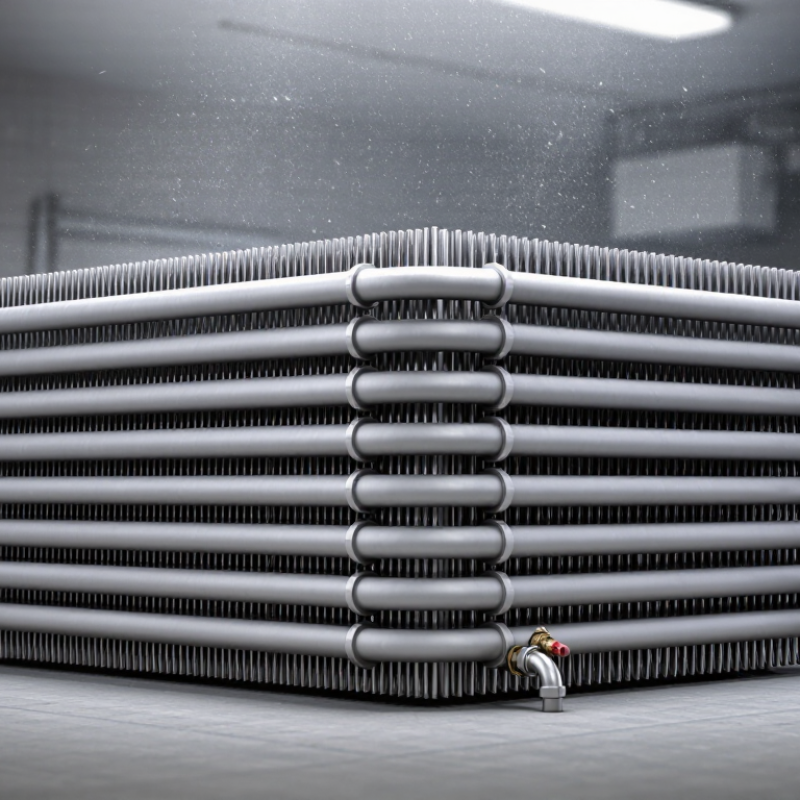
An aluminum tube evaporator absorbs heat as refrigerant flows through its passages and air moves across its surface. The main types differ in geometry and operating conditions. Bare-tube coils have open spacing, making them easier to clean and less prone to trapping debris. They suit applications where airflow is modest and frost is manageable. Tube-and-fin designs add fins around the tubes, increasing heat-transfer area in a compact footprint. They are common in refrigerated cabinets and air-handling equipment, but tight fin spacing can collect dust or ice.
Microchannel evaporators use many small parallel passages and compact headers. Their high surface-area-to-volume ratio can support compact designs, though cleaning and refrigerant distribution deserve careful attention. Details matter. The International Energy Agency’s 2018 report, The Future of Cooling, projected global electricity demand for space cooling to rise from about 2,000 TWh in 2016 to 6,200 TWh by 2050. That outlook makes efficient heat exchange increasingly important, but it does not prove one coil type is best for every system.
In practice, compare refrigerant compatibility, operating pressure, airflow, defrost strategy, corrosion exposure, and service access. A walk-in freezer with frequent door openings may need wider fin spacing and a practical defrost plan. A compact cooler may favor a smaller coil, provided airflow remains adequate. Aluminum construction alone is not a performance guarantee. I would also verify test conditions: catalog capacity can look convincing, yet change substantially with air temperature, humidity, and frost buildup.
| Evaporator Type | Typical Construction | Common Applications | Key Advantages | Selection Considerations |
|---|---|---|---|---|
| Aluminum Tube-and-Fin | Round aluminum refrigerant tubes pass through closely spaced aluminum fins. Air moves across the finned surface, usually with a fan. | Refrigerated display cases, commercial refrigeration equipment, and some air-conditioning systems. | Large air-side heat-transfer area in a compact assembly; widely used in forced-air applications. | Check fin spacing against the expected frost and dust conditions. Confirm fan airflow, defrost method, available space, and refrigerant-circuit requirements. |
| All-Aluminum Microchannel | Flat aluminum tubes contain multiple small refrigerant passages and are connected to headers. Compact fins are typically placed between the tubes. | Compact air-conditioning and refrigeration equipment designed for a compatible microchannel circuit. | Compact construction and low internal refrigerant volume can be useful where size and refrigerant charge matter. | Verify that the system is designed for the coil’s pressure drop, refrigerant, and distribution requirements. Small passages require clean refrigerant circuits; repair and cleaning options may be more limited than for conventional tube coils. |
| Smooth-Tube Aluminum | Unfinned aluminum tubes provide a comparatively simple surface for refrigerant evaporation and air or product-side heat exchange. | Specialized cooling equipment, simple air coolers, and applications where ease of cleaning or reduced fin blockage is important. | Open surfaces are generally easier to access and clean than densely finned surfaces; fewer narrow fin gaps are available to trap debris. | Its lower external surface area than a comparable finned coil may require more space or a different airflow and capacity arrangement. Confirm the required cooling duty before selecting. |
| Serpentine or Multi-Pass Tube Coil | One or more aluminum tubes follow a serpentine path or are arranged in multiple passes to provide the required refrigerant circuit length and surface area. | Custom or application-specific evaporators, including equipment with particular shape or connection constraints. | Can be adapted to available space and circuit layouts; may be paired with fins when greater air-side surface area is needed. | Check circuiting, refrigerant distribution, pressure drop, tube connections, and service access. Performance depends on the complete coil design, not just the tube material or shape. |
Choosing guidance: Compare the required cooling capacity at the actual evaporating and air temperatures, airflow, humidity and frost conditions, refrigerant compatibility, allowable pressure drop, defrost method, corrosion environment, dimensions, and service requirements. Final selection should be confirmed against equipment and system design data.

Identifying the Cooling Requirements of Your Application
How to Choose the Best Aluminum Tube Evaporator in 2026?
Identifying the Cooling Requirements of Your Application
Choosing an aluminum tube evaporator starts with the product, not the catalog. Record the required room temperature, target pull-down time, and heat entering through doors, lights, and people. A produce cooler has different needs from a freezer holding boxed meat. That difference matters. Include the warmest expected ambient conditions, too; sizing for an average day can leave the system short during a busy afternoon.
Next, estimate the cooling load and match it to the evaporator’s capacity at your actual operating temperatures. Check airflow, fin spacing, and available installation clearance. Tightly packed fins may suit a clean, controlled space, but dust or frequent frost can restrict airflow. Measure the coil location carefully. A unit that fits on paper may block a service panel or create uneven air distribution once installed.
Defrost conditions deserve attention. Frequent door openings add moisture, while low-temperature applications may need a more deliberate defrost plan. Aluminum construction can offer useful heat transfer and lower weight, but confirm compatibility with the surrounding materials and cleaning conditions. I would not rely on a single capacity figure without its test conditions. Those details are easy to miss, and real rooms rarely behave like neat calculations. If measurements are uncertain, log temperatures and operating cycles before final selection.
Comparing Tube Design, Alloy, and Heat Transfer Performance
When choosing an aluminum tube evaporator in 2026, compare the tube design with the actual operating conditions. Tube diameter, wall thickness, fin spacing, and circuit layout all affect refrigerant flow and air-side contact. Tighter fin spacing can increase surface area, but dust or frost may restrict airflow. A compact design is not automatically a better one. Check pressure drop and cleaning access, too.
Alloy selection involves trade-offs. Aluminum conducts heat well, but the specific alloy and temper also affect strength, formability, and corrosion resistance. Review the supplier’s material specifications and confirm they suit the refrigerant, humidity, and joining process. Small details matter. Brazed joints, tube expansion, and fin-to-tube contact can influence performance as much as the alloy’s published conductivity. A datasheet alone may not predict results in your cabinet or system.
Tips: Compare test data under matching conditions, including inlet air temperature, airflow, and refrigerant state. Ask for pressure-drop and capacity figures, not just a headline efficiency value. If possible, run a pilot test and inspect for uneven frosting or warm outlet zones. Real systems can be messy; even careful comparisons leave some uncertainty.
Evaluating Durability, Maintenance, and Operating Costs
How to Choose the Best Aluminum Tube Evaporator in 2026?
Evaluating Durability, Maintenance, and Operating Costs
An aluminum tube evaporator should suit the system’s refrigerant, pressure range, and operating environment. Its low weight can simplify handling, but durability depends on more than the base material. Inspect tube joints, fin spacing, and protective coatings, especially if moisture or cleaning chemicals are present. Ask for corrosion and pressure-test data, and compare them with your actual conditions. A specification sheet helps, but it cannot predict every site-specific failure.
Tips: Check service access before buying. Look for removable panels, clear drain paths, and enough room to clean fins without bending them.
Maintenance affects costs over the unit’s life. Dust-blocked fins and poor drainage can reduce heat transfer, extend run times, and increase energy use. Review recommended cleaning intervals, replacement-part availability, and labor requirements—not just the purchase price. Compare expected energy consumption under similar loads, then include installation and routine service in your estimate. One imperfect but useful check: ask maintenance staff how long a normal coil cleaning takes. Their answer may reveal more than a polished sales estimate. Reassess the choice after seasonal operating data becomes available.
How to Choose the Best Aluminum Tube Evaporator in 2026?
Thermal conductivity is one useful material-selection factor—but it does not determine evaporator performance or lifetime on its own.
Representative thermal conductivity values near room temperature: aluminum alloy 3003, 193 W/m·K; copper, 391 W/m·K; and stainless steel 304, 16 W/m·K. Actual values vary with alloy, temper, and temperature. For an aluminum tube evaporator, also assess refrigerant compatibility, corrosion exposure, fouling and cleaning access, expected service life, and total operating and maintenance costs. Conductivity alone is not a measure of whole-unit efficiency.
Checking Standards, Supplier Quality, and Long-Term Compatibility
Choosing an aluminum tube evaporator starts with the requirements it must meet, not a catalog description. Check the applicable design and testing standards for pressure, dimensions, materials, and intended operating conditions. Ask for material specifications, inspection records, and leak-test procedures tied to the actual production lot. A certificate alone cannot show whether every shipment matches the approved sample.
Small details matter. Compare tube diameter, wall thickness, fin spacing, and connection positions against your assembly drawings. Ask how the supplier controls brazing or other joining processes, and how finished units are checked for leaks. A useful quality review includes sample measurements and clear records of corrective actions. If answers stay vague, pause before approving volume production.
Long-term compatibility deserves equal attention. Confirm that the aluminum alloy, refrigerant, lubricant, and joining materials suit the system’s temperature and pressure range. Consider moisture, cleaning chemicals, vibration, and contact with dissimilar metals; these can change corrosion risk over time. Fit comes first. A prototype should be tested in the real assembly, including thermal cycling and vibration where relevant. One point is easy to miss: a unit can pass a short leak test yet still create service problems after repeated expansion and contraction. Revisit specifications when the system or operating environment changes.

