
How to Choose the Best Inverter Voltage Stabilizer in 2026?
Choosing the best Inverter Voltage Stabilizer in 2026 starts with the equipment it must protect. A home with LED lights, a refrigerator, and a sensitive control board has different needs from a workshop running motors. Note the supply voltage, connected load, and each appliance’s starting demand. A stabilizer that looks powerful on its casing may still struggle with a motor’s brief startup surge.
Check the input-voltage range, rated capacity, correction speed, and overload protection. Look for clear specifications, dependable after-sales support, and installation instructions suited to your system. Small details matter: a warm enclosure, frequent relay clicks, or lights that still flicker can signal a poor match. Quiet operation helps. So does a readable display. Yet no single feature guarantees reliable performance; site conditions and wiring also affect results.
A responsible choice needs evidence, not an impressive claim. Compare the manufacturer’s test data with your measured supply conditions, and ask a qualified installer to assess the load when requirements are unclear. There is one source limitation: no article or verified specialist quotation was supplied, so I cannot honestly attribute a sentence to a named Inverter Voltage Stabilizer expert. That gap matters. A fabricated quote would weaken trust rather than strengthen this guide. Use the sections ahead to weigh practical performance, safety features, and long-term service—not just the lowest price. And be willing to reconsider your first choice. A stabilizer can reduce voltage-related problems, but it cannot correct every fault in an electrical system.
Understand How an Inverter Voltage Stabilizer Works
How to Choose the Best Inverter Voltage Stabilizer in 2026?
Understand How an Inverter Voltage Stabilizer Works
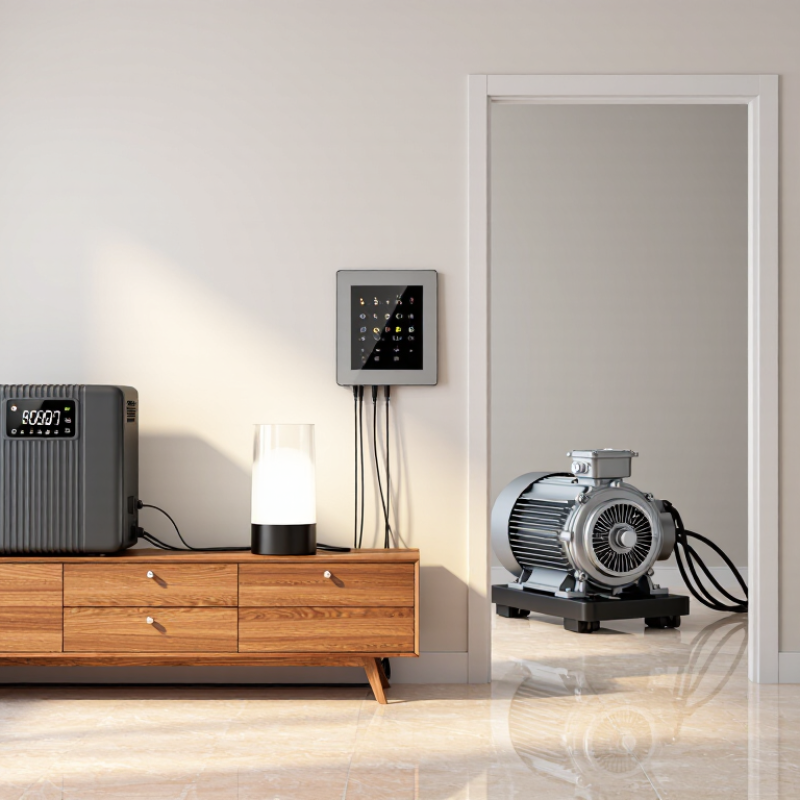
An inverter voltage stabilizer monitors the electricity entering your home or workplace. When voltage rises or falls, its control circuit responds to keep the output within a safer range. In many designs, incoming AC power is converted to DC, then changed back into regulated AC by an inverter. A battery may store energy for outages, but not every stabilizer includes backup power. Check the unit’s specifications rather than assuming.
The process happens quickly. Sensors track voltage changes, and electronic controls adjust the output. Some models also use transformer-based correction, so designs differ. The goal is steadier power for equipment such as routers, refrigerators, or workshop tools. Still, a stabilizer cannot fix every power-quality problem. It may not protect against all surges, poor wiring, or an overloaded circuit.
Look at the stated input-voltage range, output tolerance, and rated capacity. A refrigerator’s startup current can be much higher than its normal running demand. Allow for that when sizing a unit. A display showing stable voltage is useful, but it does not tell the whole story. I’d also check the waveform rating and protection features. The details can be easy to overlook. Some product descriptions make the technology sound simpler than it is.

Calculate Your Load and Required Stabilizer Capacity
Start by listing every device the stabilizer will serve, not just the largest one. Read each nameplate for input watts or amps, and note which appliances run at the same time. A refrigerator marked 180 W, for example, may draw a brief starting surge several times higher. Add the simultaneous running watts, then account for motor and compressor startup demand. Check carefully. This figure is only an estimate; actual startup behavior varies.
If the stabilizer is rated in VA, convert watts using the load’s power factor: divide watts by the power factor. A 1,000 W load at 0.8 power factor needs about 1,250 VA before adding headroom. A margin of 20–30% can help accommodate variation, but confirm the manufacturer’s sizing guidance and your measured input-voltage range.
Do not use total household consumption if the stabilizer serves only selected circuits. Also verify compatibility with the inverter’s output waveform, frequency, and permitted load. For large motors or uncertain wiring, have a qualified technician check the setup. Worth checking.
Compare Input Voltage Range and Output Regulation
When choosing an inverter voltage stabilizer, compare its stated input range with the actual voltage at your installation. A unit rated for a broad range may still deliver less power near its limits. Check whether the specification applies at full load, not just under light-load conditions. A kettle, pump, or other brief surge can expose that difference. That matters.
Output regulation describes how closely the stabilizer holds its rated output as input voltage changes. A tighter tolerance can help sensitive equipment, but compare figures measured under similar loads and conditions. Check the nominal output voltage against the inverter’s permitted input range. A mismatch may cause the inverter to reject power or switch to battery unnecessarily.
Read the technical sheet for both the correction range and the regulation tolerance; they measure different things. Also confirm the rated capacity in VA or watts, and allow for startup demand from motors. If possible, record voltage during busy hours using a suitable meter, then compare those readings with the stabilizer’s limits. Specifications can look reassuring on paper, and I would not treat a single spot measurement as the whole story.
| Stabilizer Type | Typical Input Voltage Range | Typical Regulated Output | Typical Output Regulation | Typical Correction Speed | Best Suited For | Key Selection Consideration |
|---|---|---|---|---|---|---|
| Relay-based stabilizer | Approximately 140–260 V AC | 220 or 230 V AC, depending on the model | Typically within about ±6% to ±10% | Usually a fraction of a second to a few seconds; correction occurs in steps | Basic protection for household appliances where voltage changes are moderate | Check the switching steps, rated load, and whether the input range covers the lowest voltage at your location. |
| Servo-motor stabilizer | Commonly about 140–260 V AC; wider-range designs are available | Usually 220 or 230 V AC | Often around ±1% to ±3% | Typically several hundred milliseconds to a few seconds, depending on the voltage change and load | Equipment that benefits from close regulation during sustained voltage fluctuations | Consider motor maintenance, correction speed, overload capacity, and the stabilizer’s full-load input range. |
| Static electronic stabilizer | Varies by design; some models cover approximately 140–260 V AC | Usually 220 or 230 V AC | Often around ±1% to ±3% | Generally fast, often in milliseconds to fractions of a second | Loads needing fast correction and installations where moving parts are undesirable | Verify the stated regulation under the expected load and confirm compatibility with the inverter’s output waveform. |
| Wide-input electronic or servo stabilizer | Some designs operate across approximately 90–280 V AC; confirm the model’s limits | Usually 220 or 230 V AC within its rated operating range | Commonly around ±1% to ±5%, depending on design and load | Varies by technology; check the manufacturer’s specified correction time | Locations with frequent brownouts or large mains-voltage swings | Confirm that the advertised wide range applies at the required output power, not only at a reduced load. |
| Inverter-based AC voltage regulator | Design-dependent; some systems accept a broad AC input range or use an external DC source | Typically a fixed 220 or 230 V AC output | Can be close-regulated, but the exact tolerance is model-specific | Typically fast; consult the unit’s technical specification | Installations requiring controlled output and, in some configurations, energy storage or power conditioning | Check conversion efficiency, rated continuous output, battery requirements, waveform quality, and transfer behavior. |
Check Inverter Compatibility and Essential Safety Features
Before choosing an inverter voltage stabilizer, check the inverter’s output type, rated power, and operating voltage. A stabilizer designed for grid power may not work correctly with an inverter’s modified or pure sine wave output. Confirm compatibility in the product specifications, or ask a qualified technician to verify it. Small details matter.
Match the stabilizer’s capacity to the inverter and connected appliances. Allow room for startup surges from items such as refrigerators or pumps; their brief demand can exceed normal running power. I used to focus on wattage alone. That was too simple. Also check the stabilizer’s input range and response behavior, since these affect performance when voltage fluctuates.
Look for overload, short-circuit, overheat, and high- or low-voltage protection. A grounding connection and clear status indicators are useful, too. Heat builds quickly. Keep ventilation openings clear, and avoid placing the unit near damp areas or piled cables. Check that the plug, cable, and enclosure feel sturdy, not loose or undersized. No label can replace careful installation, and a stabilizer cannot fix every inverter problem. If the equipment gets unusually hot, makes repeated clicking sounds, or trips often, stop using it and have the setup inspected.
Assess Efficiency, Certification, Warranty, and Total Cost
How to Choose the Best Inverter Voltage Stabilizer in 2026?
Assess Efficiency, Certification, Warranty, and Total Cost
Efficiency should be checked across the loads you actually run, not just at peak rating. Ask for test results at 25%, 50%, and 100% load, and note the input-voltage range used. A unit can look efficient on paper yet waste power during long idle hours. The U.S. Energy Information Administration’s Electric Power Annual reports transmission and distribution losses near 5% in recent years. That figure describes the wider grid, not an individual stabilizer, but it is a reminder that every conversion stage deserves scrutiny.
Certification needs to match the product and your market. Check the exact model number, test laboratory, and applicable safety standard; IEC 61558-2-12 covers particular requirements for constant-voltage transformers, where relevant. A printed logo is not enough. Ask for a verifiable certificate and test documentation. Also compare warranty length, exclusions, repair locations, and response times. A five-year warranty may matter little if service requires shipping a heavy unit hundreds of miles.
Calculate total cost over the expected service life: purchase, installation, electricity use, maintenance, and likely downtime. For example, a workshop stabilizer running ten hours daily may make small efficiency differences meaningful over several years. Request measured standby consumption and efficiency at your typical load. I would still treat projected savings cautiously; real loads fluctuate, and estimates can be optimistic. Check the assumptions before deciding.

