
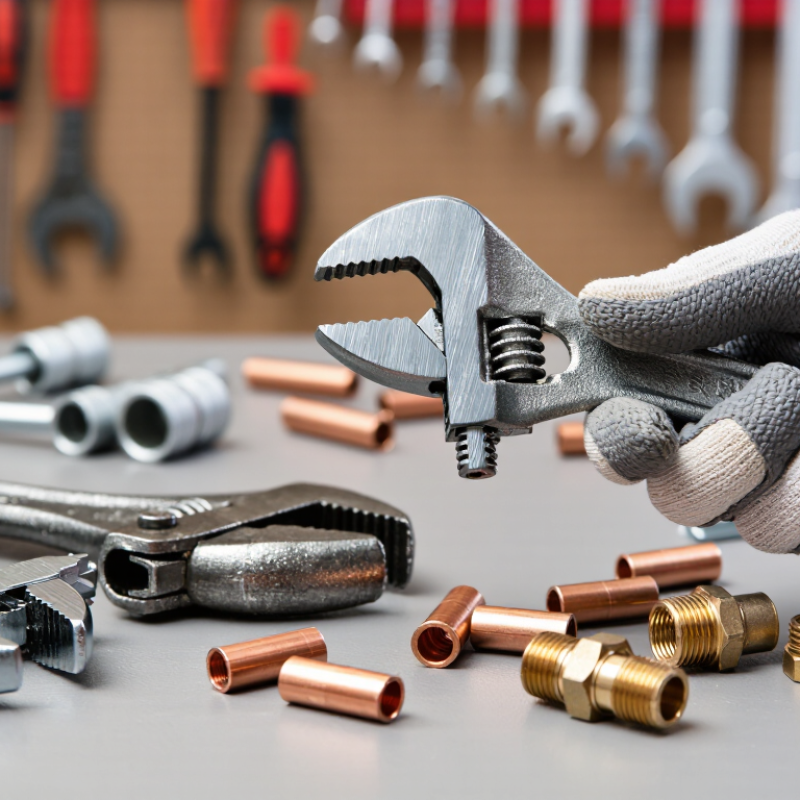
How to Choose the Right Adjustable Pipe Wrench?
Material, grip, and handle design determine how safely an adjustable pipe wrench performs. Forged alloy steel offers strength under heavy loads. The jaw teeth should remain sharp without biting too aggressively into softer pipe. ASME B107.8 provides dimensional and performance guidance for pipe wrenches, making it a useful reference when comparing tools.
Grip matters when hands are oily, wet, or cold. A textured handle can reduce sliding, but thick rubber may hide cracks or looseness. Choose a handle that fits your palm without forcing your wrist sideways.
The U.S. Bureau of Labor Statistics reported 1,001,440 private-industry cases involving days away, restriction, or transfer from overexertion and related bodily reactions in 2022.
A better grip cannot remove every risk, but it can reduce unnecessary squeezing and twisting. I once preferred a heavier wrench for confidence. After repeated overhead work, that choice felt less intelligent.
Tips: Check jaw movement before buying. Open and close it several times. Look for smooth adjustment, clean threads, and even jaw alignment. Hold the wrench with a glove. If the handle presses into one narrow spot, reconsider it. NIOSH ergonomic guidance supports reducing force, awkward posture, and repetition. Do not treat that advice as perfect; real pipe access is often cramped and unpredictable. A compact handle may improve control, yet it can reduce leverage. Choose based on the task, not appearance.
