
How to Choose Thermal Break Aluminum System Windows?
Choosing Thermal Break Aluminum System Windows is not just a matter of picking a frame color or comparing prices. The right system must suit the building’s climate, glazing, opening style, and installation details. A thermal break—a low-conductivity barrier between the inner and outer aluminum profiles—helps reduce heat transfer through the frame. But it cannot compensate for poor glass or careless fitting.
Dr. Stephen Selkowitz, a building-energy researcher known for his work on high-performance windows, has studied how window components affect energy performance. A practical paraphrase of his research is: “A window performs as a system, not as a frame alone.” That distinction matters. A slim profile may look elegant, yet its thermal performance depends on the break material, frame geometry, seals, glazing, and the quality of installation. Ask for tested whole-window performance data, not just a claim about the frame.
Look closely. Request the U-factor, air-leakage results, and relevant test reports for the exact configuration you plan to buy. Check whether the product uses polyamide strips, how corners are joined, and how the sash seals against the frame. Then consider your actual site: a windy upper-floor apartment and a shaded ground-level home may need different specifications. Even a strong product can underperform when installers leave gaps around the perimeter.
There is no perfect specification for every project. I would also question unusually bold performance claims unless the supplier can show supporting test data. This guide explains what to compare, what to ask, and where a lower price may conceal a costly compromise.
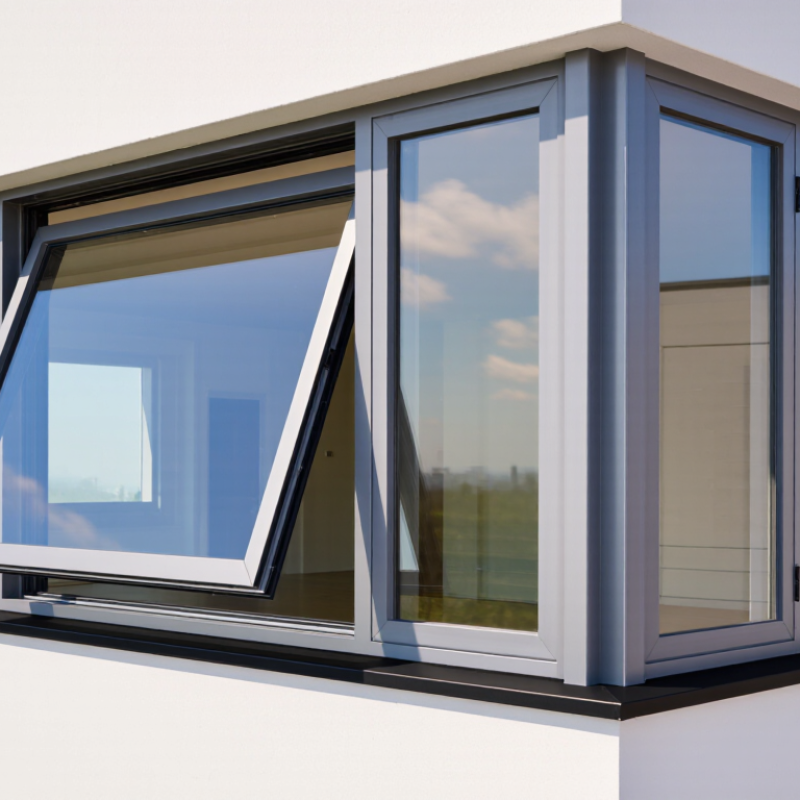
Define Thermal Break Aluminum Windows and Their Core Components
How to Choose Thermal Break Aluminum System Windows?
Define Thermal Break Aluminum Windows and Their Core Components
A thermal break aluminum window uses two aluminum sections separated by a low-conductivity barrier. The barrier interrupts the direct path for heat through the frame. It is often a reinforced polyamide strip, mechanically locked between the interior and exterior aluminum profiles. The metal remains strong; the connection conducts less heat. A small detail, with real consequences.
The frame is only one part of the system. Look for the thermal barrier, insulated glass unit, perimeter gaskets, glazing seals, hardware, and drainage paths. Together, these parts affect heat flow, air leakage, water management, and sash operation. A weak gasket can undermine an otherwise well-designed frame. That distinction is easy to miss when comparing profile drawings alone.
The U.S. Department of Energy’s Energy Saver guidance estimates that windows account for about 25–30% of residential heating and cooling energy use. This is a broad estimate, not a promise of savings from any one window. Compare tested whole-window U-factor and solar heat gain coefficient values, rather than judging insulation by the aluminum frame alone. NFRC ratings provide a consistent way to compare these performance measures. Ask for the rating of the complete window, including its glass and frame. I would also check installation details; a good product cannot correct a poorly sealed opening.

Compare Aluminum at 160–200 W/(m·K) with Polyamide at About 0.3 W/(m·K)
Aluminum conducts heat readily. Its thermal conductivity is commonly around 160–200 W/(m·K). Polyamide is about 0.3 W/(m·K), so it creates a much less conductive bridge between inner and outer aluminum profiles. This large difference helps reduce heat flow through the frame. It does not make the entire window “0.3.” The finished unit also depends on frame design, glazing, seals, and installation. A narrow or poorly connected thermal break can underperform, even when the material figures look impressive. Numbers alone can mislead.
When comparing systems, ask for the thermal-break width and whole-window U-factor, measured or calculated for the stated configuration. Check whether the test includes the glass, spacer, and frame. On site, look for continuous gaskets and tidy corners; a visible gap can invite drafts and condensation. In practice, the cold edge near a sill may reveal more than a brochure table. I would also compare the same window size and glazing package. Otherwise, the comparison is not fair.
Tips: Request the full performance report, not only raw conductivity values. Confirm the polyamide strip is continuous and securely joined to both aluminum sections. Ask how drainage and seals are handled. If the supplier cannot explain the test setup, pause and verify it. Small detail, big effect.
Check Frame Depth, Thermal-Break Width, and Glazing Configuration
Start with frame depth, because the frame must fit the wall opening and leave room for sound sealing and drainage. Compare section drawings, not just exterior photos. A deeper frame can accommodate thicker glazing, but it may also change sightlines and installation details. Check the thermal-break width and continuity across the frame. A wider break can reduce heat transfer, yet width alone does not predict whole-window performance. Ask for tested whole-window U-factor data.
Glazing needs equal attention. Compare double or triple panes, low-emissivity coatings, gas fills, and spacer types against your climate and orientation. The U.S. Department of Energy estimates that heat gain and loss through windows account for about 25–30% of residential heating and cooling energy use. The National Fenestration Rating Council rates whole-window U-factor and solar heat gain coefficient, making those figures more useful than center-of-glass claims. Small differences matter. Still, ratings cannot account for poor installation or every site condition. Check the proposed unit’s dimensions and glass build-up against the rated configuration; the match is easy to overlook.
Evaluate Whole-Window U-Factor, SHGC, and Air Leakage Ratings
When choosing thermal break aluminum system windows, compare whole-window ratings, not center-of-glass figures. The frame, sash, spacers, and glazing all affect performance. The National Fenestration Rating Council (NFRC) label reports U-factor and solar heat gain coefficient (SHGC) for the complete unit. Lower U-factor means less heat transfer; SHGC indicates how much solar heat enters. Check that compared products have similar sizes and configurations.
Numbers matter. The U.S. Department of Energy estimates that windows account for 25–30% of residential heating and cooling energy use (Energy Saver, “Update or Replace Windows”). In cold, windy locations, a lower U-factor can help reduce heat loss. In sunny rooms, SHGC deserves equal attention: lower values can limit summer heat, while higher values may help with winter sun. There is no best number for every façade.
Check air leakage separately. Ask for a tested rating, its units, and the test pressure; ASTM E283 is a recognized method for measuring leakage through window assemblies. Lower leakage can mean fewer drafts around a cold aluminum frame. Tiny gaps matter. Do not assume a thermal break alone guarantees an airtight window. Installation and perimeter sealing influence real results, too. I would treat ratings as useful evidence, not a promise; actual comfort can still vary from room to room.
How to Choose Thermal Break Aluminum System Windows
Compare whole-window U-factor, SHGC, and air leakage—not frame-only figures.
Lower U-factor means less heat transfer; SHGC indicates how much solar heat enters and should be selected for the climate and project; lower air leakage means a tighter window. Bubble size indicates relative air leakage, with exact illustrative values shown in the tooltips. These generic examples are not certified product ratings—compare NFRC whole-window labels and test reports for the actual windows you are considering.
Verify Test Standards, Certifications, and Climate-Specific Performance Targets
How to Choose Thermal Break Aluminum System Windows?
A thermal break reduces heat flow through the frame, but it does not prove the whole window performs well. Ask for test reports matching the exact frame, glass, size, and hardware configuration. The AAMA/WDMA/CSA 101/I.S.2/A440 standard evaluates air leakage, water penetration, and structural performance. NFRC 100 and 200 provide standardized U-factor and solar heat gain coefficient ratings. Check the whole assembly.
Use climate-specific targets, not a single “high-performance” claim. The U.S. Department of Energy estimates that heat gain and loss through windows account for 25–30% of residential heating and cooling energy use. In cold regions, prioritize a lower U-factor; in sunny climates, compare SHGC and shading needs. NFRC labels help compare products under consistent procedures, while ENERGY STAR criteria offer climate-based benchmarks. Confirm the criteria and report date, since targets can change.
Look beyond the headline rating. A low U-factor may come with a SHGC that is poorly suited to a west-facing room. Ask for condensation-resistance data where available, and verify that installation details preserve tested air and water performance. A published rating still cannot predict every site condition. I would also inspect corner joints and drainage paths; small details are easy to overlook.
How to Choose Thermal Break Aluminum System Windows? - Verify Test Standards, Certifications, and Climate-Specific Performance Targets
| Selection dimension | Standard or evidence to check | What to verify | Practical decision guidance |
|---|---|---|---|
| Whole-window thermal performance | NFRC 100; current NFRC-certified product label or directory listing | Whole-product U-factor for the exact frame, glazing, spacer, and operating style. U-factor is normally reported in Btu/(h·ft²·°F); lower values indicate less heat transfer. | Compare whole-window values, not center-of-glass claims. Confirm the quoted configuration matches the units being purchased. |
| Solar heat gain and daylight balance | NFRC 200; product label or certified listing | Whole-window Solar Heat Gain Coefficient (SHGC), a dimensionless value from 0 to 1. Lower SHGC admits less solar heat; visible transmittance (VT) describes visible-light transmission. | Choose SHGC by orientation, shading, cooling needs, and winter-sun benefits. Do not select a low value solely by climate label if useful winter solar gain is desired. |
| Air leakage | ASTM E283 or the applicable air-leakage test method referenced by the local product standard | Test pressure, specimen size, operating type, and reported leakage rate. Check the required local code or project specification limit. | Request the laboratory report for the offered configuration. A test result is meaningful only when its pressure, units, and tested product are identified. |
| Water penetration resistance | ASTM E547 or the water-penetration method required by the applicable NAFS edition and local code | Test pressure, duration, specimen configuration, and pass/fail result. Confirm the tested sill, joints, hardware, and drainage details represent the proposed unit. | Specify a performance level suited to exposure, building height, wind-driven rain, and installation conditions; there is no single pressure appropriate for every project. |
| Structural wind-load capacity | ASTM E330/E330M; applicable NAFS performance grade or local structural requirements | Design pressure, specimen size, mullion configuration, deflection criteria, and whether the tested assembly matches the project size and anchorage. | Have the project design professional establish pressure requirements from site wind loads, building height, exposure, and applicable code. |
| Product class and certification scope | Applicable edition of NAFS (AAMA/WDMA/CSA 101/I.S.2/A440); independent certification documentation where required | Product type, performance class, performance grade (PG), size limits, tested options, and certification validity. NAFS requirements and editions vary by jurisdiction. | Verify that the listing covers the exact series and configuration, rather than a visually similar unit or a different operating style. |
| Condensation resistance | NFRC Condensation Resistance (CR) rating, when available | The rated product and scale. NFRC CR is a comparative rating; higher values indicate greater resistance to condensation under the rating method. | Useful in cold or humid conditions, but not a guarantee against condensation. Indoor humidity, ventilation, installation, and surface temperatures also matter. |
| Cold-climate starting targets | Compare certified whole-window U-factor and SHGC against project energy-code requirements | Illustrative screening target: U-factor around 0.30 or lower; consider moderate-to-higher SHGC on suitable orientations where winter solar gain is beneficial. | These are early-selection guidelines, not code limits. Balance heat loss, solar exposure, shading, overheating risk, and local energy requirements. |
| Mixed-climate starting targets | NFRC whole-window values plus orientation-specific energy modeling where appropriate | Illustrative screening target: U-factor roughly 0.30–0.35; select SHGC to balance heating-season gains and cooling-season solar loads. | Treat the range as a comparison aid only. Local climate, façade orientation, exterior shading, and code can change the preferred values. |
| Hot or cooling-dominated climate starting targets | NFRC whole-window U-factor and SHGC; local energy-code compliance documentation | Illustrative screening target: prioritize lower SHGC, often around 0.25–0.30 or lower where solar exposure is high; also check U-factor and VT. | A lower SHGC can reduce solar heat gain but may reduce daylight. Confirm orientation, shading, glare, and local code before final selection. |
| Thermal-break construction and durability | Product drawings, material specifications, and applicable air, water, structural, and thermal test reports | Thermal-barrier continuity, frame and sash details, corner joints, glazing system, drainage, seals, and compatibility with the specified installation. | A thermal break alone does not establish whole-window performance. Judge the assembled, tested window and installation details together. |
Note: Climate targets in this table are illustrative screening ranges, not universal code requirements or guarantees. Confirm current local codes, applicable test editions, certified product data, and project-specific design loads before specification.

