
Top 10 Silicone Decorative Molds for Wholesale Buyers

Silicone Decorative Molds can turn everyday materials into rose-shaped soaps, textured candles, detailed cake decorations, and patterned plaster ornaments. For wholesale buyers, attractive designs matter, but repeatable production matters just as much. Details drive decisions. A delicate floral mold loses its appeal when thin edges tear during demolding or finished pieces vary between batches.

MarketsandMarkets’ Silicones Market report projects growth from USD 21.5 billion in 2024 to USD 28.2 billion by 2029. That forecast covers the broader silicone industry, including applications beyond decorative molds. It provides market context, but cannot establish demand for individual mold designs. Buyers still need product-specific evidence: sample performance, reorder history, customer feedback, and documented material specifications. Check the samples. A glossy product photograph cannot reveal uneven cavity depths, trapped bubbles, or a base that rocks during filling.

This selection of ten mold types focuses on practical wholesale considerations, including design appeal, release performance, durability, and purchasing flexibility. Look closely at cavity dimensions, mold weight, minimum order quantities, packaging protection, and replacement policies. For food-contact applications, request documentation applicable to the intended market and conditions of use. “Food-grade” wording alone provides insufficient evidence. There are trade-offs. Softer silicone may release intricate shapes easily, yet require additional support when filled. A cheaper mold may still suit short production runs; paying more does not automatically guarantee better results. The strongest purchasing decisions begin with realistic trials and clear acceptance criteria.
Top 10 Silicone Decorative Molds for Wholesale Buyers

Silicone Decorative Molds: Materials, Features, and Common Uses

Top 10 Silicone Decorative Molds for Wholesale Buyers

Silicone Decorative Molds: Materials, Features, and Common Uses

Silicone decorative molds are made from flexible elastomers that can capture fine details and release shaped pieces easily. They are used for baking, confectionery, soap making, and craft projects. Material hardness and mold thickness affect how well delicate shapes hold during demolding. Check cavity depth, edges, and seams: thin sections may tear after repeated flexing. Temperature limits vary by product, so request technical sheets instead of assuming one rating. For food applications, ask suppliers for traceable food-contact documentation. Keep food-use molds separate from craft-use molds. Small details matter.

The Global Silicone Market report by Grand View Research valued the market at USD 18.6 billion in 2023 and forecast a 7.5% compound annual growth rate from 2024 to 2030. This broad market figure does not measure decorative molds specifically, but it offers context for silicone’s wider industrial use.

Wholesale buyers comparing designs should test samples with their intended material and cleaning routine. Deep textures can trap residue. That part is easy to overlook. Check whether molds recover their shape after bending, whether dimensions stay consistent across samples, and whether any odor remains after airing. Release quality matters, but supplier descriptions may not reveal how fiddly a mold is to clean.

Top 10 Types of Silicone Decorative Molds for Wholesale Buyers

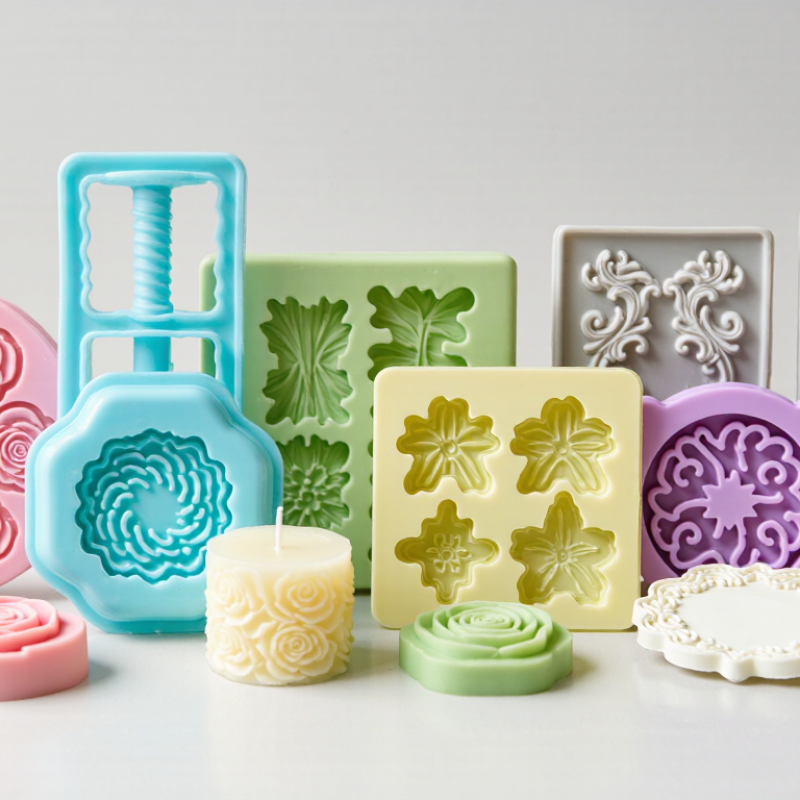
Silicone decorative molds serve different buyers, from candle makers to bakers and craft studios. Floral molds remain popular because petals add depth to soaps, wax pieces, and fondant decorations. Geometric molds offer clean lines and repeatable shapes. Lace molds create delicate surface patterns, though very fine details can tear during demolding. Leaf molds suit nature-inspired designs. Shell molds work well for coastal themes. Fruit molds bring bright shapes to seasonal projects. Animal molds appeal to children’s crafts and themed gift sets.

Seasonal molds cover holidays and changing displays, but demand may fade after a short selling window. Architectural molds, such as miniature columns and tile patterns, suit model work and decorative casting. Abstract molds give designers room to experiment. Some shapes sell steadily; others sit in storage. That matters. For wholesale orders, compare cavity size, wall thickness, flexibility, and surface detail. Ask for sample pieces before committing to a large quantity. A mold that looks crisp in a photo may produce shallow details in practice.

Check that the silicone releases finished pieces without excessive pulling. Review how easily the mold can be cleaned, especially around narrow grooves. Consistent dimensions help buyers package matching sets. Small imperfections can still appear between production batches, so inspect samples under ordinary working conditions. Price matters, but so does usable output per mold. A lower-cost option may not be the better value.

Top 10 Silicone Decorative Molds for Wholesale Buyers

Mold Type Common Applications Typical Mold or Cavity Size Common Materials Used With the Mold Wholesale Buying Considerations
Floral Molds Fondant and gum-paste decorations, soap embellishments, candles, and craft projects Individual flower details often range from about 1–5 cm across; multi-cavity sheets vary by design Food-contact-rated silicone for edible decorations; craft silicone molds may also be used with suitable casting materials Check petal detail, cavity depth, and how easily small finished pieces release from the mold
Geometric Coaster Molds Resin, plaster, and concrete-style coasters or small decorative trays Common coaster cavities are approximately 9–11 cm across, with shape and thickness varying by design Resin, plaster, or casting mixes compatible with the mold and its manufacturer instructions Compare cavity dimensions, finished-edge profile, and whether the design includes a level base
Leaf and Botanical Molds Fondant accents, soap designs, resin pieces, and botanical craft decorations Leaf cavities commonly measure about 2–8 cm long; larger plaques are available in some designs Food-contact-rated silicone for edible use; otherwise, use materials approved for the mold type Look for clear vein detail and a range of leaf sizes if buyers need coordinated sets
Lace and Filigree Molds Cake borders, fondant panels, soap details, and decorative craft overlays Often supplied as strips or panels; widths and lengths depend on the pattern and mold format Fondant, gum paste, soap-making materials, or compatible craft compounds Review pattern depth and flexibility, since intricate designs can require careful cleaning and release
Baroque and Scrollwork Molds Decorative cake accents, furniture or craft embellishments, soap, and casting projects Small motifs are often a few centimeters wide; plaque-style designs can be substantially larger Food-contact-rated silicone for edible applications; compatible casting or modeling materials for crafts Request clear images of the relief depth and check that the mold can flex around detailed edges
Brick and Stone Texture Molds Miniature scenes, model-making, architectural crafts, and textured clay or casting work Texture mats commonly cover a hand-sized area, while individual brick or stone impressions are smaller Clay, plaster, or other materials specified as compatible by the mold supplier Confirm pattern repeat, mat coverage, and whether the texture is deep enough for the intended scale
Wood-Grain Texture Molds Fondant panels, clay crafts, resin details, and miniature or rustic-style decorations Usually offered as flexible texture mats or smaller panels; working area varies by product Fondant, clay, resin, or other compatible materials according to the mold instructions Check grain direction, pattern scale, and whether the mat produces a consistent impression across its surface
Shell and Coral Molds Coastal-themed cakes, soaps, candles, resin decorations, and craft castings Individual shell cavities often range from roughly 2–7 cm across, depending on the design Food-contact-rated silicone for edible decorations; compatible soap, wax, or casting materials for other uses Compare the assortment of shell shapes and inspect fine ridges, cavity depth, and release access
Seasonal Motif Molds Holiday baking decorations, themed soaps, candles, and seasonal craft products Small motifs commonly measure a few centimeters; multi-cavity sheets may contain several designs Use food-contact-rated molds for edible products; other materials must match the mold’s intended use Consider seasonal demand, design variety, and whether the product can be stocked beyond a single holiday period
Lettering and Number Molds Custom cake messages, personalized soaps, resin lettering, and small craft projects Character height is commonly around 1–4 cm, with complete sets varying in layout and character count Food-contact-rated silicone for edible lettering; compatible modeling or casting materials for craft use Verify the included characters, font style, cavity orientation, and whether letters release cleanly without distortion

Size ranges are typical examples, not fixed specifications. Actual dimensions, material compatibility, food-contact suitability, and temperature limits vary by product; confirm the supplier’s technical details before ordering.

Comparing Mold Designs, Dimensions, and Casting Compatibility

Top 10 Silicone Decorative Molds for Wholesale Buyers

Decorative molds can look similar in a catalog but behave differently on a production bench. Compare floral, leaf, shell, geometric, medallion, tile, bead, relief, miniature, and border designs by cavity shape and depth. Fine veins and narrow corners add detail, but they can trap air or slow demolding. Simple forms usually release faster. Small details matter.

Check dimensions against the finished product, not just the mold’s outer size. A 25-millimeter cavity suits small embellishments, while deeper cavities may create heavier pieces and longer curing times. Ask for cavity measurements, mold thickness, and a sample before placing a bulk order. Measurements can vary slightly between production runs; that deserves a second look.

Casting compatibility depends on both the silicone and the material being poured. Resin, plaster, wax, soap, and cement mixes have different heat, cure, and release requirements. Verify the mold’s temperature range and material limits with the supplier, especially for fast-curing resin, which may generate heat. Test one sample. Check for bubbles, surface marks, and edge tearing after repeated use. A mold that releases cleanly once may still wear poorly under wholesale production conditions.

Evaluating Mold Quality, Durability, and Safety Requirements

Wholesale buyers should judge silicone molds by measured performance, not by softness alone. Request lot-level test reports showing tensile strength and elongation under ASTM D412, plus compression-set results under ASTM D395. These figures help compare resistance to tearing and shape loss after repeated use. Check wall thickness around narrow details, too. Thin petals and sharp corners often deform first.

For food-use molds, ask for material documentation and migration testing relevant to the intended temperature and food type. The FDA Food Code 2022 requires food-contact surfaces to be durable, nonabsorbent, smooth, and easily cleanable. NSF/ANSI 51 also provides a benchmark for materials used in food equipment. A certificate is useful, but it does not replace a report identifying the tested material and conditions.

Run a simple incoming inspection. Flex each cavity, check for tackiness or strong odor, and inspect seams under bright light. Then test sample molds through repeated heating, cooling, and washing cycles. Keep the before-and-after measurements. A glossy surface can look excellent while hiding weak edges. That is easy to miss. Note any color change or lingering odor, even if the mold still releases cleanly.

Choosing Wholesale Suppliers, Order Quantities, and Pricing Terms

Top 10 Silicone Decorative Molds for Wholesale Buyers

Choosing a wholesale supplier takes more than comparing mold photos. Request samples and check their edges, flexibility, surface finish, and dimensional consistency. Ask for the silicone grade, curing method, and written quality checks. If molds will contact food, request documentation relevant to your destination market. A polished sample matters; repeatable production matters more.

Set order quantities around realistic sales, storage space, and cash flow. Ask whether the quoted minimum applies per design, color, or combined order. Grand View Research’s 2024 silicone market report valued the global market at about $18.5 billion in 2023 and projected 6.4% annual growth through 2030. This broad market estimate is not a forecast for decorative molds, but it signals a sizable materials sector. Compare unit price alongside setup fees, packaging, freight, payment timing, and defect replacement terms. A low unit price can hide expensive tooling or shipping. I would still check every charge in writing; quotes are not always easy to compare.

Tips: Order a small pilot batch before scaling. Confirm lead time, sample approval, carton count, and remedies for damaged or out-of-spec molds. Keep the approved sample for reference.

Scroll to Top