
China Top 10 Micro Drill Hard Coating Machine Suppliers
A Micro-Drill Hard Coating Machine helps apply wear-resistant films to tiny cutting tools, where even a small process variation can affect tool life. Its value is practical: stable coating thickness, repeatable temperatures, and careful handling of narrow drill flutes. Small details matter.
As hole diameters shrink, buyers need more than a machine’s maximum capacity. They also need evidence of batch consistency, maintenance requirements, and compatibility with the coatings their tools actually use. A polished specification sheet is useful, but it cannot replace a credible process trial.
Grand View Research valued the global machine tools market at approximately USD 86.7 billion in 2023 and projected a 6.3% compound annual growth rate from 2024 to 2030. This broad market estimate offers useful context, not a direct measure of micro-drill coating equipment demand. The distinction matters because niche-machine data is not always reported separately.
Supplier comparisons should therefore examine coating technology, chamber design, automation, technical support, and documented application results. Ask what drill sizes were tested and how coating uniformity was measured. Supplier comparison takes work.
This guide introduces ten Chinese suppliers and highlights practical questions for evaluating their equipment. Company claims may vary in detail, and public test data can be incomplete. That limitation deserves attention. Buyers should verify specifications with sample trials, written service terms, and references from comparable production environments before making a decision.
What Is a Micro Drill Hard Coating Machine?
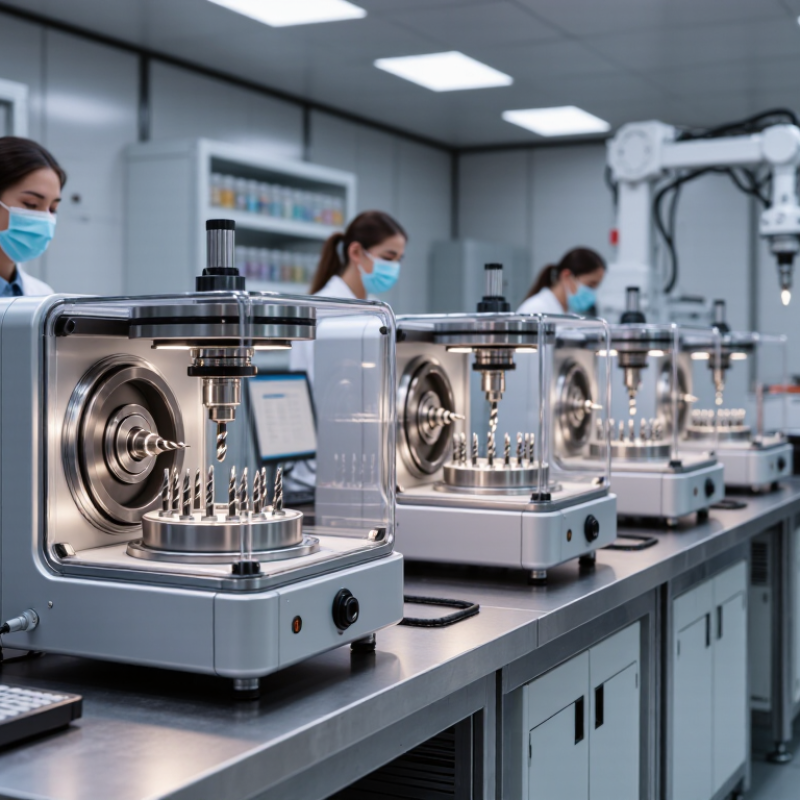
A micro drill hard coating machine applies a thin protective layer to small-diameter drill bits. Most systems use a vacuum chamber and a physical vapor deposition process. Inside the chamber, fixtures hold the drills so coating reaches their flutes and cutting edges. The layer may reduce friction, heat buildup, and wear during machining. It does not repair a chipped edge or correct poor grinding.
Operators control factors such as chamber pressure, temperature, coating material, and cycle time. Small changes matter. A fixture that blocks airflow can leave uneven coverage on a narrow flute. For this reason, samples should be inspected for thickness, adhesion, and surface defects before production runs. The right coating depends on the drill substrate, workpiece material, cutting speed, and coolant conditions. There is no universal setting. A coating that performs well in one test may disappoint on another machine, and that is easy to overlook. Process records and repeatable trials help separate a genuine improvement from a lucky result.

What Is a Micro Drill Hard Coating Machine?
It deposits a thin, wear-resistant coating onto micro drills, typically using a vacuum-based process such as physical vapor deposition (PVD). The chart shows approximate thickness ranges commonly used for several hard-coating types; actual specifications vary by tool size, application, and coating process.
China’s Micro Drill Hard Coating Industry and Supplier Landscape
China’s micro-drill hard-coating industry serves manufacturers of precision tools for electronics, medical components, and small-hole machining. Suppliers generally fall into three groups: coating-equipment makers, coating-service providers, and tool producers with in-house coating lines. Buyers compare more than machine price. They examine chamber capacity, coating uniformity, batch cycle time, and support for delicate drills with narrow flutes.
MarketsandMarkets’ Cutting Tools Market report estimated a global market of US$23.6 billion in 2023, with a forecast of US$29.7 billion by 2028. This is a useful demand signal, but an imperfect proxy: the report does not isolate micro-drill coating machines. The distinction matters. A supplier’s broader sales figures may say little about its ability to coat drills below one millimeter in diameter. Ask for sample-part results, coating thickness records, adhesion testing, and repeatability data across full batches. Inspect the loading fixtures, too; poor positioning can leave shadowed areas near the cutting edge. Some supplier claims still need independent verification. That caution is healthy.
Key Technologies and Capabilities of Chinese Suppliers
Chinese suppliers’ capabilities are best judged by process control, not machine size. A micro-drill coating line needs stable plasma cleaning, repeatable PVD deposition, and fixtures that expose tiny flutes evenly. Even a small thickness variation can affect edge sharpness and chip evacuation. Small details matter. Buyers should request coating-thickness maps, adhesion-test records, and trial results on their own drill geometry.
The technical benchmark matters. Reviews of PVD cutting-tool coatings commonly report film thicknesses around 1–5 μm, a range that supports wear resistance without unnecessarily rounding delicate edges. Suppliers should also disclose substrate-temperature control and hardness-test methods. The Grand View Research report on the global physical vapor deposition market estimated its 2022 value at USD 22.5 billion, with a projected 6.3% compound annual growth rate from 2023 to 2030. This covers PVD broadly, not micro-drill equipment alone. A polished brochure cannot prove consistency. Ask for batch-to-batch data, and verify performance through controlled drilling trials; the evidence may be less tidy than the sales claim.
China Top 10 Micro Drill Hard Coating Machine Suppliers - Key Technologies and Capabilities of Chinese Suppliers
This table summarizes common technology and capability areas to assess when sourcing micro-drill hard-coating equipment in China. It is not a verified company ranking; actual specifications and performance vary by supplier and machine configuration.
| No. | Technology or Capability | Common Industry Practice | What Buyers Should Verify |
|---|---|---|---|
| 1 | PVD coating process | Physical vapor deposition is widely used for hard coatings on carbide cutting tools because it can produce thin films at temperatures suitable for many tool substrates. | Ask for the supported process type, working temperature range, coating uniformity data, and results from comparable micro-drill applications. |
| 2 | Arc ion plating | Cathodic-arc sources can provide high ionization and deposition rates; macroparticle control is an important consideration for fine cutting edges and small tool features. | Check source design, droplet-reduction measures, maintenance intervals, and coating-surface inspection results. |
| 3 | Magnetron sputtering options | Sputtering is another PVD method and can be used where film smoothness, composition control, or specific multilayer designs are priorities. | Confirm available target materials, achievable deposition rate, process repeatability, and whether the configuration suits the required tool geometry. |
| 4 | Hard-coating material systems | Common tool-coating families include titanium- and chromium-based nitrides, such as TiN, TiAlN, and AlCrN. The suitable coating depends on the workpiece material, cutting conditions, and tool substrate. | Request coating composition, hardness-test method, adhesion-test method, and application-specific cutting results rather than relying on a coating name alone. |
| 5 | Micro-tool fixturing and rotation | Small-diameter drills require secure, repeatable loading and suitable part movement to help achieve consistent coating coverage on flutes, margins, and cutting edges. | Inspect the fixture design, loading method, rotation or planetary motion, batch capacity, and demonstrated coating coverage on the buyer’s tool sizes. |
| 6 | Vacuum system and process control | PVD equipment uses a vacuum chamber, pumping system, gas control, and process monitoring. Stable pressure and gas-flow control support repeatable production. | Review pump configuration, leak-test procedures, process-recording functions, alarm handling, and the availability of service parts. |
| 7 | Film thickness and uniformity control | Coating thickness and uniformity depend on the process, tool position, fixture motion, and part geometry. Micro-drills need an application-appropriate film that does not compromise critical dimensions. | Ask for measured thickness maps or sample measurements, measurement methods, and tolerances for the specific drill geometry. |
| 8 | Automation and recipe management | Industrial systems may provide programmable recipes, process logging, and interlocks. These functions help operators reproduce validated coating cycles across production batches. | Verify recipe access controls, data export, batch traceability, user training, and whether commissioning includes process validation. |
| 9 | Quality assurance and testing | Coating quality is commonly assessed using suitable methods for thickness, adhesion, hardness, surface condition, and tool performance. No single test establishes suitability for every application. | Request sample inspection reports, test standards or procedures, acceptance criteria, and comparative machining trials using the intended workpiece. |
| 10 | Installation, service, and process support | Equipment value depends on more than the chamber: installation, operator training, preventive maintenance, spare parts, and coating-process support affect long-term production availability. | Confirm service coverage, response arrangements, warranty scope, recommended maintenance schedule, and support for process optimization. |
Profiles of Ten Chinese Micro Drill Hard Coating Machine Suppliers
Profiles of Ten Chinese Micro Drill Hard Coating Machine Suppliers should compare engineering evidence, not just polished product sheets. Grand View Research estimated the global cutting-tools market at about US$25.3 billion in 2023, reflecting demand for productive, durable tooling. That figure covers cutting tools broadly, not coating equipment alone. Suppliers’ profiles should therefore clarify chamber type, coating process, batch capacity, and supported drill diameters. Small details matter.
A useful ten-supplier review can cover equipment makers serving different needs: compact research systems, production-scale PVD lines, and custom-built coating chambers. For each supplier, check whether its process suits tiny flute geometry and whether it documents coating thickness, adhesion, and temperature control. Ask for a sample run using comparable micro drills. Request measured results, maintenance intervals, and references from repeat production—not only demonstrations. A neat brochure is not proof. Some specifications may also depend on the substrate and tool geometry, so comparisons need care.
Tips: Ask how the supplier verifies coating uniformity near the drill tip. Request a written test protocol and inspect actual measurement records before comparing quotations.
How to Evaluate and Select a Supplier
Selecting a micro drill hard coating machine supplier starts with your tool geometry and production needs. Ask how the machine handles drills with narrow flutes and small diameters. Request coating trials using your own tools, not only demonstration samples. Check coating thickness at the cutting edge and flute, where uneven coverage can affect performance. Ask for repeatability data across several runs. One good sample is not enough.
Tips: Request a written trial plan. Confirm the measurement method, sample size, and acceptance limits before testing. Ask how the supplier controls temperature, vacuum, and fixture placement. These details matter when small tools are sensitive to heat or shadowing. Short answer? Test your real workload.
Review more than the machine price. Compare installation, operator training, maintenance intervals, spare-part availability, and response times. Ask to see service records or speak with users running similar drill sizes. A supplier should explain process limits clearly, including what the machine cannot reliably coat. That honesty is useful. Still, specifications can look better on paper than in daily production, so verify claims during a factory visit or remote acceptance test. Keep the trial results and agreed service terms in writing.

