
China Top 10 POY Spinning and Winding Suppliers?

China’s POY Spinning And Winding suppliers serve a demanding part of the polyester filament market. Their equipment must turn polymer melt into consistent partially oriented yarn, then wind it into packages that unwind cleanly downstream. A production line is more than a machine list. Spinneret design, quench airflow, godet control, winding tension, and service support all affect the result.

This guide examines ten suppliers through practical buying criteria: product range, line configuration, automation, stated operating capabilities, customization, and after-sales support. Buyers should compare like with like. A high spindle count may look impressive, but package quality, uptime, energy use, and access to replacement parts matter on the factory floor. Ask for operating references, clear technical specifications, and a visit or sample trial where possible. Small details count.

No verifiable expert quotation or named specialist was supplied with the brief, so attributing a quote here would risk inventing evidence. That matters. Supplier pages and brochures can describe capabilities, but they do not replace independent checks or a careful review of operating conditions. Even a strong supplier may not suit every plant, and a ranking can miss that nuance. Use this list as a starting point, not a final verdict. Compare the machines against your yarn specifications, expected output, available floor space, and maintenance team. Then verify each claim directly. A little doubt is useful.
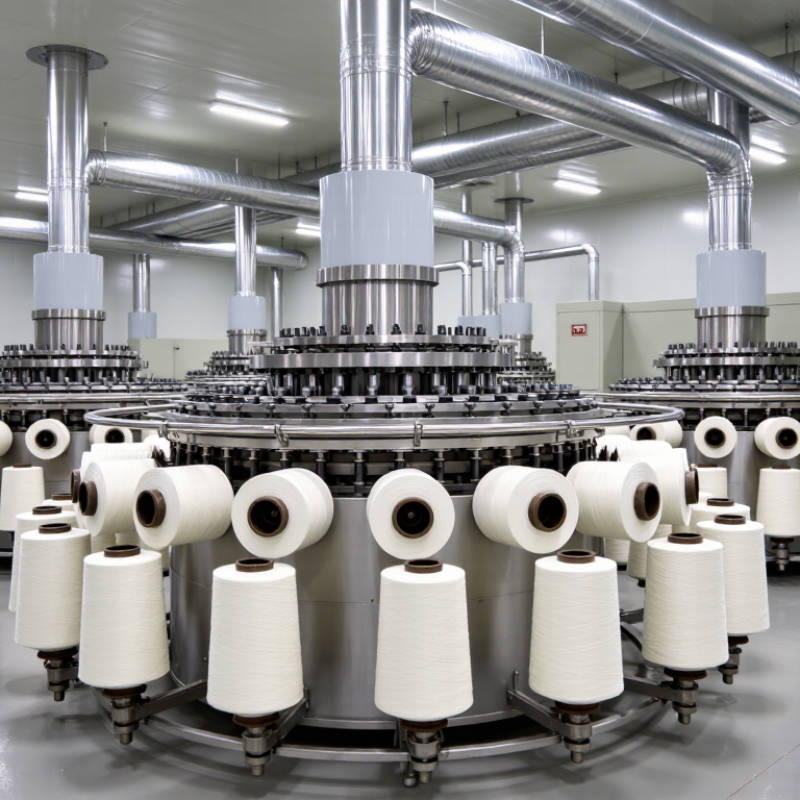
China Top 10 POY Spinning and Winding Suppliers?

POY Fundamentals: Polyester Melt Spinning, Quenching, Drawing, and Winding

POY Fundamentals: Polyester Melt Spinning, Quenching, Drawing, and Winding

Polyester POY begins as polymer chips are dried and melted under controlled conditions. The melt passes through filters and a metering system before reaching the spinneret. Tiny capillaries form continuous filaments. Quenching air cools and solidifies them, so even airflow across the filament bundle matters. A finish is applied to reduce friction and support stable handling. Winding then places the filaments onto packages at controlled speed and tension. POY is partially oriented, not fully drawn. Drawing usually happens later, during downstream yarn processing.

Line stability depends on melt temperature, spinneret condition, quench uniformity, and winding tension. Small changes can cause uneven filament size, broken ends, or packages that unwind poorly. Operators can track pressure, temperature, and package shape over time instead of changing one setting blindly. This is easy to overlook. A neat package is useful evidence, but it does not prove uniform yarn. Polymer quality and later drawing or texturing settings also affect results.

Tips: Check for consistent package edges and stable process readings. If a result seems odd, verify the measurements before adjusting the line. Small details matter.

Industry Benchmarks: 2,500–3,500 m/min Spinning Speeds and 50–600 Denier

A 2,500–3,500 m/min spinning speed is a useful benchmark for POY lines, not a guarantee of output. Actual performance depends on polymer quality, spinneret condition, quench airflow, and yarn specifications. Even small changes in temperature or finish can affect yarn consistency. Operators should compare stable production data, rather than relying on a machine’s rated maximum. That distinction matters.

The 50–600 denier range covers very different winding demands. At 50 denier, tension control and clean guides help prevent filament breaks; at 600 denier, cooling and package formation need close attention. Denier measures yarn mass per 9,000 metres, so it helps buyers describe product size, but it does not describe every performance property. A supplier’s equipment should be assessed against the intended denier range, package size, and changeover needs. One detail is easy to overlook: a line that runs well during a short trial may behave differently across a full shift. I would want records for speed, breaks, and package quality before treating any benchmark as dependable.

Supplier Selection Criteria: Output, Filament Count, Automation, and After-Sales Support

Choosing among China’s POY spinning and winding suppliers starts with production fit, not headline capacity. A large output figure means little if it assumes continuous operation, one polymer grade, and ideal utilities. Ask for rated and typical monthly output, shift patterns, changeover time, and recent acceptance data. Numbers need context. Compare proposals using the same yarn specification and operating hours.

Filament count affects product range, package build, and process stability. Confirm the count range the line can run, then request trial data for your intended denier and end use. Check winding speed, package dimensions, tension control, and doffing time. These details shape usable output. Automation can reduce handling and improve consistency, but it also adds sensors, controls, and maintenance needs. Ask operators to demonstrate alarm recovery and recipe changes, not just normal running.

After-sales support matters when a line stops during a production shift. Clarify commissioning scope, operator training, spare-parts availability, response times, and remote troubleshooting arrangements. Request references with comparable line configurations, and verify what support was actually delivered. I would not rely on a polished showroom run alone; it may hide routine changeovers or recurring faults. A practical selection record should include test conditions, exclusions, and agreed service responsibilities.

China Top 10 POY Spinning and Winding Suppliers? — Selection Criteria

A practical comparison framework for assessing suppliers without implying a company ranking.

Each bar counts the suggested evidence checkpoints listed for that criterion; it does not represent supplier performance. Compare documented line output and supported filament configurations, automation features, and after-sales provisions such as installation, training, and spare parts. Confirm specifications directly with each supplier.

Profiles of 10 Chinese POY Spinning and Winding Equipment Suppliers

This profile compares ten Chinese suppliers of POY spinning and winding equipment through measurable engineering features, not promotional claims. China’s National Bureau of Statistics reported 71.28 million tonnes of chemical-fiber output in 2023. That production scale makes stable throughput, energy use, and maintenance access practical selection criteria.

A useful supplier review checks spinning positions, winding speed, package size, filament control, and automation options. It also asks for documented performance under comparable polymer, denier, and operating conditions. ITMF’s International Textile Machinery Shipment Statistics provides a professional reference for global machinery investment and shipment trends, though it does not replace factory-level acceptance testing. Ask for test protocols.

Details matter. Inspect yarn breaks per position, oiling access, alarm history, and the time needed to change a package. Request commissioning records and spare-parts lead times. Ten profiles may look similar on paper; they are not interchangeable. A specification sheet can still hide trade-offs, and quoted efficiency may not reflect a buyer’s actual feedstock or shift pattern. Independent verification remains sensible.

China Top 10 POY Spinning and Winding Suppliers? - Profiles of 10 Chinese POY Spinning and Winding Equipment Suppliers

Non-ranked equipment-capability overview. Company names and brands are omitted; specifications vary by project and should be confirmed against supplier datasheets.

No. Equipment supplier profile Typical equipment scope Key information to verify POY production relevance
1 Integrated POY line provider Coordinated line design covering polymer melt delivery, spinning, quenching, godets and winding. Line layout, supported polymer and yarn types, output basis, utility requirements, automation scope and acceptance-test method. Useful when a buyer needs one supplier to coordinate interfaces across the main production stages.
2 Melt-spinning system specialist Spinning beams, spin packs, metering pumps and related melt-distribution equipment. Polymer compatibility, operating temperature and pressure limits, pump accuracy, filtration arrangement and maintenance procedure. The spinning system meters and extrudes polymer through spinnerets to form filaments.
3 Spinneret and spin-pack supplier Spinnerets, filter media and spin-pack components for melt-spinning positions. Hole count and geometry, material, tolerances, filtration specification, cleaning method and compatibility with the spinning beam. These components influence filament formation and are selected for the intended polymer and yarn construction.
4 Quench-air system supplier Quench chambers, air-conditioning equipment, filters and airflow distribution components. Airflow uniformity, temperature and humidity control, filtration grade, monitoring points and cleaning access. Controlled cooling helps solidify freshly extruded filaments; the required setup depends on the process and product.
5 Godet and drive-system supplier Godet rolls, drive motors, controls and associated yarn-path components. Roll dimensions and surface, speed range, drive synchronization, temperature-control options and spare-parts availability. Godets guide and transport filaments; their speed settings form part of the line’s process control.
6 POY winder specialist Automatic winders, yarn traverse mechanisms, package holders and doffing arrangements. Supported yarn counts and filament configurations, winding-speed range, package dimensions, doffing cycle and yarn-break handling. Winding forms the POY package; package quality and changeover performance should be evaluated against the intended production plan.
7 Winding automation and doffing provider Automatic doffing, package transfer, conveying and production-data interfaces. Cycle-time definition, package handling limits, line-interface requirements, safety functions and recovery procedures. Automation can reduce manual handling, but its fit depends on package format and the plant’s material-flow design.
8 Electrical controls and line-integration provider Control cabinets, drives, operator interfaces, alarms and communication between line sections. Control architecture, data access, alarm history, cybersecurity provisions, language support and commissioning scope. Consistent controls help operators monitor and coordinate equipment; interfaces should be agreed before installation.
9 Yarn inspection and process-monitoring supplier Monitoring devices for yarn breaks, process conditions, package status and production records. Measured variables, detection limits, calibration requirements, data export formats and integration with existing controls. Monitoring supports process oversight; measurement capability and definitions should be confirmed for each application.
10 Retrofit, service and spare-parts provider Equipment upgrades, replacement components, maintenance support and commissioning services. Compatibility with installed equipment, drawings and documentation, lead times, service coverage and warranty terms. Relevant to plants upgrading selected sections or seeking lifecycle support rather than a complete new line.

Note: This table describes common equipment categories and procurement checks, not a verified ranking or a claim about specific suppliers. Request project references, technical drawings, performance guarantees and written test criteria before selecting a supplier.

Technical Comparison: Winder Speed, Package Size, Energy Use, and Process Control

Comparing POY spinning and winding suppliers requires more than checking maximum speed. A higher winding rate matters only when yarn tension, traverse accuracy, and package build remain stable. Ask suppliers to demonstrate output at your target denier and package diameter. Record broken filaments, package density, and downstream unwinding behavior. A glossy sample is not enough.

Energy deserves a measured comparison. The U.S. Department of Energy’s Improving Motor and Drive System Performance: A Sourcebook for Industry reports that motor-driven systems account for about 68% of electricity use in U.S. manufacturing. This is not a POY-winder benchmark, but it explains why buyers should request kWh per kilogram under comparable conditions. Also compare package-size limits and changeover time. A faster machine can consume more energy or produce less usable yarn. That trade-off is easy to miss.

Tips: Run a witnessed trial using the same polymer, filament count, and target package. Log speed, energy, tension alarms, and package hardness. Check control-system records, not just operator claims. Small inconsistencies matter. I would also question any supplier promising peak speed without a sustained production test. Real lines are rarely perfect.

Scroll to Top