
Top 10 Red Face Light Therapy Devices for Global Buyers

Red Face Light Therapy has moved from specialist clinics into bathrooms, travel bags, and online marketplaces. Buyers now face dozens of masks, panels, and handheld devices with uneven specifications. Wavelengths differ. Irradiance claims differ more.

Industry reports show rising commercial interest. Grand View Research’s Red Light Therapy Market report identifies growing demand for non-invasive wellness and skincare technologies. Fortune Business Insights also forecasts continued market expansion, driven by home-use devices and consumer interest in appearance-focused treatments. These reports are useful, but their market definitions are not identical. That matters.

Clinical evidence remains more specific than advertising language. A 2024 review in Photobiomodulation, Photomedicine, and Laser Surgery found promising applications for skin health, while noting variation in protocols and study quality. Red Face Light Therapy is not a universal answer. Results may depend on wavelength, dose, treatment consistency, and individual skin conditions.

Michael R. Hamblin, PhD, a leading photobiomodulation researcher, describes the field as “the use of light to produce beneficial effects in cells and tissues.” That principle sounds simple. Device selection is not.

This guide compares ten options for global buyers. It considers wavelength ranges, irradiance transparency, coverage, comfort, eye protection, certifications, warranty terms, and regional purchasing factors. Some product claims remain difficult to verify. That should make buyers pause.

A brighter mask is not automatically a better mask. Nor is a higher price proof of clinical quality. The strongest choice is usually the most transparent one.
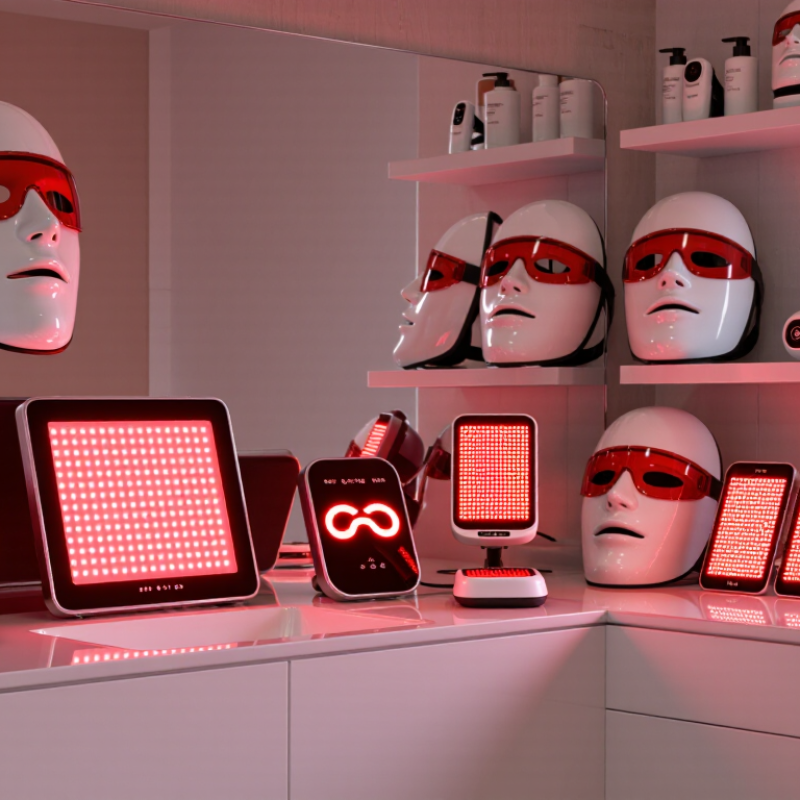
Top 10 Red Face Light Therapy Devices for Global Buyers

What Red Face Light Therapy Is and How It Works

Red face light therapy uses low-intensity red and near-infrared light on facial skin. Red wavelengths commonly range from 620 to 700 nanometres. Near-infrared wavelengths usually extend beyond 700 nanometres. These wavelengths can reach different skin depths.

Photobiomodulation may stimulate cellular activity around mitochondria. Researchers often discuss cytochrome c oxidase and increased ATP production. This process may support collagen formation and reduce temporary inflammatory signals. A 2023 systematic review in Photodermatology, Photoimmunology & Photomedicine found promising improvements in skin texture and fine lines, but study methods varied. The evidence is encouraging, not magical.

Use requires consistency. Many home devices suggest several sessions weekly, often lasting 10 to 20 minutes. Follow the measured instructions, protect your eyes, and stop if irritation appears. Check irradiance, wavelength, treatment distance, and safety testing before buying. A 2024 Grand View Research analysis identified home-use light therapy as a growing device segment. The Global Wellness Institute valued the wider wellness economy at 6.3 trillion dollars in 2023. Market growth does not prove clinical effectiveness. I would not treat every glowing claim as proof.

Some users notice smoother-looking skin after weeks, not minutes. Results may depend on age, pigmentation, medication, and daily sun exposure. People with photosensitive conditions should ask a qualified dermatologist before treatment. Research still needs larger, longer trials. That part matters.

Key Features to Compare in Light Therapy Devices

When comparing red light therapy devices for facial redness, start with wavelength data, not attractive photographs. A commonly studied range is about red and near-infrared light, but manufacturers should state exact output clearly. Irradiance matters too. A bright-looking panel may still deliver inconsistent energy across the skin. Ask for measured power density, treatment distance, and session duration.

Fit matters. A flexible mask should sit evenly without pressing sensitive areas. Larger panels may offer better coverage, while handheld devices require slower, careful movement. Check timer accuracy, heat control, and eye protection. Warmth can feel soothing, but excessive heat may worsen visible redness for some users. Not always. Choose adjustable intensity when possible.

Reliable information includes independent safety testing, clear electrical specifications, and instructions written for your market. Look for guidance on contraindications, cleaning, storage, and replacement parts. A transparent seller should explain testing methods instead of promising instant results. Clinical evidence is still uneven, and red light does not diagnose or treat every cause of facial redness. Patch testing can reveal irritation, although it cannot predict every reaction. Keep photographs and usage notes, because memory is unreliable. If flushing, burning, swelling, or persistent irritation appears, stop using the device and seek qualified medical advice. Some comparison tables omit comfort and consistency; that omission deserves more attention.

Top 10 Red Face Light Therapy Devices for Global Buyers

Choosing among the top 10 red face light therapy devices for global buyers requires more than comparing prices. A reliable device should state its wavelengths, treatment time, irradiance, and coverage area. Red light commonly uses about 630–660 nanometers, while near-infrared light may reach 810–850 nanometers. These ranges are often studied for skin appearance, but results differ between users.

The leading options may include flexible masks, rigid panels, handheld tools, and compact travel devices. Masks offer convenient facial coverage, while panels may provide stronger, wider exposure. Check whether the device sits evenly on the skin. Uneven distance can create inconsistent treatment. Eye protection matters, especially with bright LEDs. Buyers should also review warranty terms, electrical compatibility, and safety documentation for their country. Regulatory labels are useful, but they do not guarantee dramatic results.

Tips: Choose clear instructions over impressive promises. Start with shorter sessions and observe redness, dryness, or discomfort. Clean the contact surface after use, and avoid combining treatment with irritating products. People using photosensitizing medicine or managing eye conditions should ask a qualified healthcare professional first. Small improvements may appear slowly, and some devices may not suit every face shape. One overlooked detail is comfort; a technically strong device becomes useless when it feels heavy after five minutes.

Safety, Skin Types, and Proper Usage Guidelines

Top 10 Red Face Light Therapy Devices for Global Buyers

Safety, Skin Types, and Proper Usage Guidelines

Red light therapy devices usually use non-ultraviolet light to support calmer-looking skin and gradual improvements in texture. However, every device differs in wavelength, intensity, treatment area, and heat. Promising research exists, but results are not identical for everyone. Treat product claims carefully. A brighter face after one session may reflect temporary circulation, not lasting skin repair.

Most skin tones can tolerate properly used red light, including deeper tones. Sensitive skin still needs caution. Heat may worsen rosacea, flushing, or melasma in some users. Avoid treatment over open wounds, active infections, or unexplained rashes. Stop if you feel burning, sharp discomfort, swelling, or persistent redness. It is not a cure for acne, pigmentation, or a medical condition.

Clean, dry skin is usually the safest starting point. Follow the stated distance and exposure time; longer sessions are not automatically better. Wear the recommended eye protection, especially with bright panels or masks. Patch-test a small area first. People using photosensitizing medicines, or managing eye disorders, should ask a qualified clinician before treatment. Keep a simple record of session length, redness, and skin changes. That habit can reveal patterns. I would not ignore irritation just because a device is expensive. Skin can react unpredictably, and professional advice is sometimes more useful than another online review.

Top 10 Red Face Light Therapy Devices for Global Buyers - Safety, Skin Types, and Proper Usage Guidelines
Rank Device Type Typical Light Output Common Use Suitable Skin Types Recommended Session Key Safety Guidance Global Buyer Checklist
1 Flexible LED Face Mask Red: red light around 620–660 nm Optional NIR: around 810–850 nm General cosmetic skin rejuvenation, temporary improvement in the appearance of fine lines, and support for a more even-looking complexion. Generally suitable for all skin tones, including sensitive skin, when the device is comfortable and used as directed. Usually 10–15 minutes, 3–5 times weekly. Follow the device-specific schedule. Use the supplied eye protection if required. Stop if there is persistent heat, pain, rash, or eye discomfort. Do not use over photosensitive medication without medical advice. Check facial fit, irradiance data, charging certification, language instructions, and compatibility with local electrical standards.
2 Rigid LED Face Panel Red: 630–660 nm NIR: 810–850 nm Broad facial coverage for cosmetic skin appearance and post-routine light therapy. All skin tones; useful for buyers who prefer adjustable distance and a non-contact treatment format. Commonly 5–15 minutes per area, 3–5 times weekly, at the specified distance. Keep the panel at the stated distance. Avoid staring directly at high-output LEDs. Allow the skin to cool if warmth develops. Look for published wavelength, irradiance at a stated distance, timer controls, ventilation, and a universal voltage rating or suitable adapter.
3 Handheld Red-Light Wand Red: approximately 630–660 nm Some models include NIR Targeted treatment of small facial areas, such as the cheeks, forehead, or jawline. All skin tones, provided the treatment head is moved or positioned according to the instructions. Usually 3–10 minutes per area, several times per week. Avoid excessive repeated passes. Do not press firmly on irritated or broken skin. Clean the treatment head before and after use. Avoid using on active eye areas. Confirm battery safety, charging port standards, contact-surface cleaning instructions, and whether output changes with battery level.
4 Red and Blue LED Acne Mask Red: approximately 620–660 nm Blue: commonly around 405– blue 420 nm Red light is used for general skin appearance; blue light is commonly included in devices intended for blemish-prone skin. Most skin tones. People with very sensitive or reactive skin should begin with shorter sessions. Often 10–15 minutes, 3–5 times weekly; use the separate mode or combined mode specified by the manufacturer. Blue light may cause visual discomfort and may aggravate light sensitivity. Use eye protection and discontinue if irritation occurs. Check blue-light safety instructions, photosensitivity warnings, independent testing, and whether claims are cosmetic or medically cleared in the destination market.
5 Neck-and-Face LED Panel Red: approximately 630–660 nm NIR: approximately 810–850 nm Extended-area cosmetic treatment for the face, neck, and upper chest. All skin tones; suitable for users seeking larger coverage rather than portability. Commonly 10–15 minutes per session, 3–5 times weekly. Keep the device away from the front of the throat if the instructions prohibit that area. Do not use over suspicious lesions or undiagnosed skin changes. Measure available treatment area, confirm stand or mounting stability, and check voltage, plug type, timer, and heat management.
6 Cordless LED Face Mask Red: commonly 630–660 nm NIR may be included Portable red-light sessions during travel or daily routines. All skin tones, including many users with sensitive skin, if the mask does not create excessive pressure or heat. Usually 10–15 minutes, 3–5 times weekly, with a fully charged battery. Inspect the mask and battery before use. Do not charge while wearing it. Avoid use if the battery, cable, or housing is damaged. Check battery capacity, transport restrictions, charging certification, replacement policy, and plug or USB requirements for the destination.
7 Adjustable-Intensity LED Panel Red: approximately 620–660 nm NIR: approximately 810–850 nm Customizable cosmetic sessions for users who want to adjust intensity or treatment distance. All skin tones. Lower intensity is appropriate for initial testing on sensitive or reactive skin. Begin with 5–10 minutes at low intensity; increase only according to the instructions and skin response. Higher irradiance is not automatically better. Avoid combining long duration, close distance, and maximum intensity without manufacturer guidance. Require clear irradiance measurements, intensity levels, timer accuracy, thermal controls, and electrical safety documentation.
8 Travel-Size LED Facial Device Red: commonly 630–660 nm Output may be lower than full-size panels Compact facial treatment for occasional use and travel. All skin tones; a practical option for users who prefer shorter, targeted routines. Follow the supplied exposure time; many compact devices use approximately 5–15 minute sessions. Do not compensate for lower output by extending sessions substantially. Keep the device clean and avoid sharing without disinfection. Check packed dimensions, battery or USB operation, airline transport rules, local plug compatibility, and warranty coverage.
9 LED Roller or Contact Applicator Red: approximately 620–660 nm Some models combine massage or cooling Targeted cosmetic treatment combined with gentle movement across selected facial areas. All skin tones, but not recommended over open wounds, active infections, severe irritation, or recently aggressive procedures. Typically 5–10 minutes per area, several times weekly, using light pressure only. Disinfect the contact surface as directed. Avoid dragging across inflamed skin. Do not use immediately after procedures unless cleared by a qualified professional. Verify waterproofing claims, cleaning compatibility, surface materials, battery protection, and instructions for use around skincare products.
10 Multi-Mode LED Facial System Red: approximately 630–660 nm May include NIR or blue light Flexible cosmetic routines using separate red, near-infrared, or blue-light modes. All skin tones, subject to the specific mode. Users with photosensitivity should avoid relevant wavelengths unless medically advised. Use one mode at a time initially; commonly 5–15 minutes per session, 3–5 times weekly. Read each mode’s warnings separately. Do not assume that a red-light setting has the same safety profile as a blue-light setting. Check independent testing, mode-specific wavelength data, eye protection, software or charger requirements, and destination-market compliance.
General safety note: Red and near-infrared LED devices are non-ultraviolet light sources, but individual reactions vary. Follow the supplied instructions, perform a short patch test when appropriate, protect the eyes as directed, and seek professional advice before use if you take photosensitizing medication, have a light-sensitive condition, are pregnant, or have an undiagnosed skin lesion. Product specifications and regulatory status vary by model and country.

International Buying Factors: Certifications, Power, and Support

Choosing among the top 10 red face light therapy devices requires more than comparing brightness or design. Global buyers should check the exact certification documents, not just printed symbols. CE, FCC, UKCA, RoHS, or equivalent approvals may apply in different markets. However, a certificate does not prove treatment performance. Verify the issuing body, model number, and testing scope. Medical claims also need careful review.

Power compatibility can prevent frustrating returns. Look for a 100–240V input range, the correct plug type, and a clearly rated adapter. Confirm wavelength, irradiance, treatment time, and heat output. A device that feels powerful may simply run hot. I once overvalued appearance and underestimated cable quality. That was a useful mistake. Product manuals should state cleaning steps, eye-safety guidance, operating distance, and expected use limits.

Tips: Ask for digital certificates before payment. Request photos of the label and adapter. Check whether replacement cables are available locally. Support matters after delivery. Reliable sellers provide responsive technical assistance, warranty terms, user instructions, and realistic spare-part timelines. Test whether support answers specific questions before buying. A fast reply is not always a useful reply. Buyers should also confirm return procedures, regional service coverage, and language options. These details can matter more than a small price difference, especially when customs delays or voltage issues occur. Recheck every specification against the final invoice. Mistakes happen.

Scroll to Top