
China Top 10 EVA Machine Manufacturers for Global Buyers?

Choosing the right EVA Machine manufacturer in China can shape production quality, delivery reliability, and long-term operating costs. Global buyers often compare equipment prices first. That approach can miss important details.

A serious evaluation should examine machine structure, heating control, hydraulic stability, automation, and after-sales support. It should also consider the manufacturer’s experience with EVA foam, footwear components, packaging materials, or other applications. Factory visits, video inspections, sample trials, and customer references can reveal more than polished brochures. Look closely at welding quality, control-panel layout, spare-parts access, and safety protection. Small details matter.

This guide introduces China’s top 10 EVA Machine manufacturers for global buyers. The selection focuses on manufacturing capability, export experience, technical communication, customization capacity, and service responsiveness. Certifications and test reports are useful, but they should not replace practical verification. A certificate alone cannot prove consistent production performance.

The ranking is not absolute. Buyer requirements differ by output, material density, mold size, energy limits, and local compliance rules. Some suppliers may perform strongly in standard machines but struggle with unusual specifications. That distinction deserves attention. Prices may also change with steel costs, automation features, shipping conditions, and installation needs.

Our assessment combines available company information with realistic purchasing considerations. Still, no online article can replace a factory audit or technical meeting. Buyers should request current specifications, production videos, warranty terms, installation plans, and complete quotations before making a decision. A careful comparison reduces surprises after shipment. That is the practical purpose of this guide.
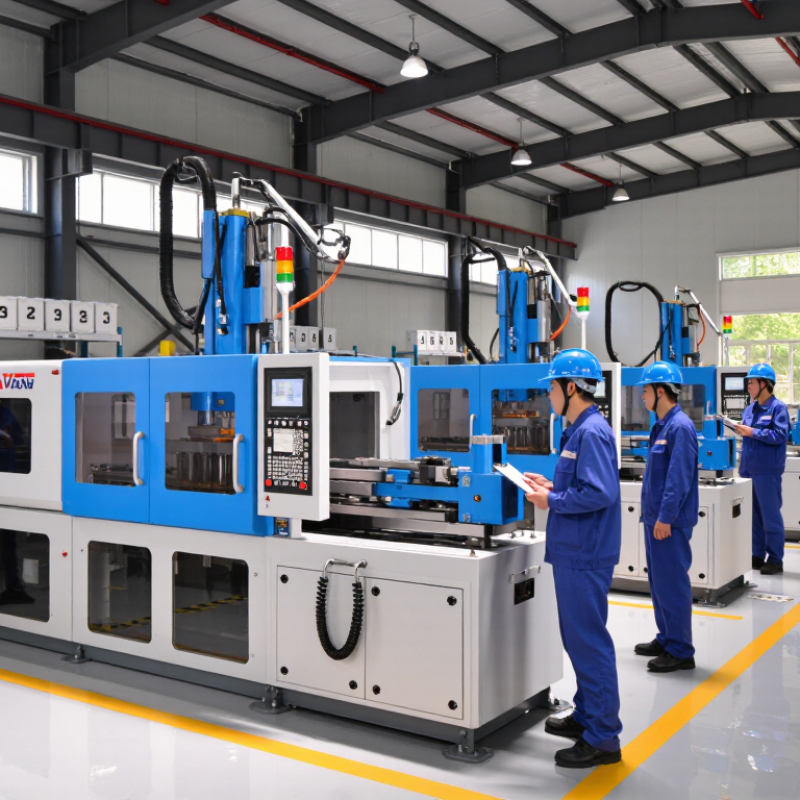
China Top 10 EVA Machine Manufacturers for Global Buyers?

EVA Machine Market Scope: 160–190°C Molding and 20–60× Expansion Ratios

For global buyers comparing China’s top ten EVA machine manufacturers, the practical question is process fit, not catalog size. EVA molding commonly runs between 160 and 190°C, depending on formulation, mold design, and curing time. A machine should hold temperature evenly across the platen, not merely display a high setpoint. Ask for platen mapping, pressure stability records, and sample data from comparable shoe, foam, or protective-product molds. Small deviations matter. A five-degree swing can change cell structure, surface finish, and demolding behavior. Buyers should also verify cooling control, hydraulic response, mold compatibility, and electrical documentation before placing an order.

Expansion ratios from 20× to 60× require different control priorities. Lower expansion may reward stable filling and compact cycle control, while higher expansion demands accurate pre-expansion management and reliable venting. Do not judge capacity from expansion ratio alone. Density uniformity, recovery, shrinkage, and edge definition deserve equal attention. Request trial runs using your own EVA compound, because supplier pellets can hide practical problems. An experienced technical team should explain settings in measurable terms, including temperature tolerance, pressure range, cycle time, and maintenance intervals. Factory audits are useful, but they are not perfect. A polished demonstration may omit long-run wear. Include acceptance tests, spare-part lists, operator training, and remote troubleshooting in the purchase agreement. Some buyers overlook installation utilities, then lose weeks adjusting water flow, voltage, or mold alignment.

China EVA Machine Market Scope for Global Buyers

Reference operating ranges for EVA molding equipment: 160–190°C molding temperature and 20–60× expansion ratio. The data is organized by buyer-relevant application segments and does not represent company or brand rankings.

EVA Machine Types: Compression, Injection, Foaming, and CNC Cutting Systems

China’s top 10 EVA machine manufacturers should be compared by process fit, not catalogue size. Compression systems suit dense soles, seals, and molded sheets requiring stable pressure. Injection machines support repeatable, high-volume parts with controlled filling. Foaming systems create lightweight midsoles, but cell structure depends on temperature, pressure, and curing time. CNC cutting systems handle EVA sheets, prototypes, and custom patterns with limited tooling.

PlasticsEurope reported global plastics production of 413.8 million tonnes in 2023, showing the scale of material processing worldwide. The report also highlights rising pressure for efficiency and responsible production. Buyers should therefore check hydraulic or electric energy use, cooling demand, cycle data, and scrap rates. A machine rated at 1,000 pairs per day may perform differently with thick molds and uneven foam density. Specifications alone do not guarantee output.

For compression lines, inspect mold pressure uniformity and platen parallelism. For injection equipment, request sample parts and filling curves. Foaming buyers should examine density variation across a finished sheet. CNC users need cutting accuracy, dust extraction, software compatibility, and operator training. ISO 9001 certification supports process control, but it does not replace factory testing. A low purchase price can become expensive after installation. I would also question unusually fast delivery promises; spare-part access and service response often matter more than the initial quotation.

China Top 10 EVA Machine Manufacturers for Global Buyers? - EVA Machine Types: Compression, Injection, Foaming, and CNC Cutting Systems

Anonymous technical comparison of common EVA production systems and typical specifications

No. EVA Machine Type Typical Application Typical Capacity / Force Usable Product Size Typical Cycle / Speed Energy / Heating Method Main Buyer Consideration
1 Hydraulic EVA Compression Molding Press EVA shoe soles, sandals, slippers, and molded components 300–1,500 metric tons Approx. 300 × 400 mm to 600 × 700 mm mold area Approximately 5–15 minutes per molding cycle Electric, thermal-oil, or steam platen heating Suitable for durable molded products and multi-cavity molds
2 Automatic Multi-Station Compression System High-volume footwear production with loading and ejection automation 400–1,200 metric tons per station Commonly 2–8 cavities per mold About 6–12 minutes per station cycle Hydraulic drive with programmable platen temperature control Labor reduction, repeatability, and stable mold-change procedures
3 Vacuum-Assisted EVA Compression Press Lightweight soles, sports components, and products requiring reduced internal voids 250–800 metric tons Approx. 250 × 350 mm to 500 × 600 mm mold area Approximately 6–15 minutes, depending on density and mold design Heated platens with vacuum evacuation before molding Useful for improving surface quality and material expansion consistency
4 Vertical EVA Injection Molding Machine Direct-injected soles, midsoles, and small molded EVA parts 100–400 metric tons clamping force Small to medium sole molds; typically 1–6 cavities Approximately 4–10 minutes per injection cycle Heated screw or plunger injection with mold temperature control Direct injection reduces preform handling and can improve material utilization
5 Rotary EVA Injection Molding System Continuous production of footwear and multi-color EVA articles 150–500 metric tons per injection station Typically 2–12 cavities per mold, depending on rotary layout Approx. 5–12 minutes per indexed cycle Hydraulic or servo-hydraulic injection with heated mold stations High throughput, color flexibility, and floor-space efficiency
6 EVA Foam Sheet Extrusion Line Sheets, rolls, insoles, packaging inserts, and laminated foam products Approximately 100–500 kg/h output Typical sheet width 1,000–2,000 mm; thickness 1–12 mm Line speed commonly 5–30 m/min, depending on thickness Single- or twin-screw extrusion with electric barrel heating Important factors include density control, thickness tolerance, and cooling layout
7 EVA Chemical Foaming and Expansion System Closed-cell foam blocks, thick sheets, cushioning, and sports padding Common chamber volume 20–100 m³ Block dimensions vary; many systems process blocks around 1–2 m³ Expansion and stabilization may require several hours Steam, hot air, or controlled thermal expansion Density uniformity, cell structure, cooling time, and chemical formulation are critical
8 EVA Foam Block Slicing Machine Converting foam blocks into sheets for footwear and industrial applications Typical block width 1,000–2,000 mm Cut thickness commonly 1–20 mm Cutting speed often 10–40 m/min, subject to density and thickness Continuous band knife with adjustable feed and tension control Blade stability and thickness tolerance determine sheet quality
9 CNC Oscillating-Knife EVA Cutting System Gaskets, insoles, prototypes, packaging, and custom foam components Working table approximately 1,300 × 2,500 mm to 2,000 × 4,000 mm Material thickness commonly 1–100 mm Cutting speed typically up to 500–1,500 mm/s Electric oscillating knife with vacuum hold-down Best for digital workflows, low tooling cost, and short production runs
10 CNC Router and Knife Combination System EVA engraving, grooving, trimming, contour cutting, and mixed-material processing Working area commonly 1,300 × 2,500 mm to 2,000 × 4,000 mm EVA sheets and blocks generally 2–150 mm thick Routing speed commonly 10–30 m/min; knife speed varies by material High-speed spindle plus oscillating or tangential knife Provides process flexibility but requires dust extraction and tool-change management

Buyer note: The specifications above represent typical industry ranges rather than guaranteed specifications for a particular supplier or model. Actual output, cycle time, energy consumption, mold size, and material thickness depend on EVA grade, density, formulation, product geometry, mold design, and factory conditions.

Top-10 Selection Criteria: ±1°C Temperature Control and 0.1–2.0 MPa Pressure

China Top 10 EVA Machine Manufacturers for Global Buyers?

For global buyers, EVA machine selection should begin with measurable process control. A reliable unit should maintain temperature within ±1°C across the working surface. This matters when EVA sheets need even melting, bonding, and curing. A small thermal drift can create cloudy edges, weak adhesion, or uneven thickness. Check sensor positions, heating-zone design, and calibration records. Do not trust accuracy claims without test data.

Pressure control also deserves close inspection. A useful operating range is 0.1–2.0 MPa, covering delicate laminating work and higher-pressure forming. Ask whether pressure remains stable during the full cycle, not only at startup. Review hydraulic response, gauge accuracy, emergency release, and platen parallelism. In factory evaluations, I would request a sample run using the buyer’s actual EVA material. A perfect brochure cannot replace this test.

Tips: Confirm ±1°C performance at several platen locations. Request pressure graphs from 0.1 to 2.0 MPa. Check results after repeated cycles, because early tests may look better than long production runs. Also inspect maintenance access and calibration procedures. Some machines meet specifications only under ideal workshop conditions, which is easy to overlook.

China’s Top 10 EVA Machine Manufacturers: Capacity, Certifications, and Export Data

China’s top 10 EVA machine manufacturers should be assessed through capacity, certification records, and export evidence.

Factory capacity is not only a large workshop. Buyers should check installed production lines, monthly output, testing equipment, and delivery performance. A machine floor with finished presses, foam systems, and spare-part shelves gives stronger evidence than a polished website. Ask for recent production records.

Certification also needs careful checking. ISO 9001 can indicate controlled quality procedures, but it does not prove every machine is safe or durable. For overseas sales, buyers may require CE documentation, electrical test reports, risk assessments, and material compliance files. Certificates should match the exact model, voltage, and control system. Old documents create risk.

Export data can reveal practical experience. Customs records, shipment frequency, destination markets, and repeat orders are useful indicators. However, public data is often incomplete. Different trading companies may hide the actual factory. Some shipment descriptions are also vague. Independent audits, video factory inspections, reference installations, and sample testing provide better evidence. Buyers should compare cycle time, energy use, temperature stability, and after-sales response. Small details matter. A missing spare part can stop production for days. This is where many rankings become less certain, and a transparent scoring method deserves more attention.

Global Buyer Checklist: CE/ISO Compliance, Energy Use, Lead Time, and ROI

For global buyers comparing China’s top EVA machine manufacturers, compliance should come before price. CE marking indicates conformity with applicable European safety requirements, but it is not an ISO certification. Ask for the EU Declaration of Conformity, risk assessment, electrical drawings, and machine test records. ISO 9001 supports process control, yet it does not guarantee stable lamination quality. Verify calibration records and traceability instead. The IEA PVPS Trends 2024 report recorded more than 400 GW of new photovoltaic capacity in 2023. That expansion increases pressure on reliable equipment and documented quality systems.

Energy figures need practical testing. Request kWh per cycle, standby consumption, heating time, and results under your actual panel size. A supplier’s “low-energy” claim means little without a defined load. Compare cycle output, not only rated power. Faster heating can increase consumption or shorten component life. Small details matter. Check vacuum pump efficiency, insulation thickness, cooling control, and maintenance access. The Fraunhofer ISE Photovoltaics Report 2024 highlights continuing pressure to reduce module costs and improve production efficiency, making energy waste a measurable ROI risk.

Lead time should include factory acceptance testing, export preparation, installation support, and spare-parts availability. Ask for penalties or remedies when delivery slips. For ROI, calculate usable panels per hour, scrap reduction, labor needs, electricity cost, and expected downtime. Include replacement heaters and pumps. Many spreadsheets look impressive. Some assumptions are too optimistic. A site trial with sample EVA film and real operating data is more reliable than a polished quotation. Sources: IEA PVPS Trends 2024; Fraunhofer ISE Photovoltaics Report 2024; ISO 9001:2015.

Article Source:

Scroll to Top