
China Best HVAC Drier Manufacturers for Global Buyers?
Choosing the right HVAC drier supplier in China requires more than comparing catalog prices. A reliable drier protects refrigeration circuits from moisture, acid, and fine particles. It can prevent blocked expansion valves and costly compressor damage.
This guide examines China Drier Hvac Manufacturers through practical purchasing criteria. These include desiccant capacity, shell material, connection size, pressure ratings, leak testing, and production consistency. A supplier may offer copper shells, steel bodies, or custom fittings for residential, commercial, and transport refrigeration systems. Buyers should request technical datasheets, sample units, batch records, and clear packaging details. Small details matter. A crushed box can damage flare threads.
Experienced sourcing teams also check factory capability rather than trusting polished websites. They may review production lines, brazing controls, testing equipment, and quality procedures. Certifications such as ISO 9001 can support credibility, but they should not replace independent verification. Ask whether reported test results match the exact model being purchased. This step is often missed.
No supplier list stays perfect. Product quality, lead times, and export support can change during the year. Some published information may age quickly. That deserves attention. The strongest manufacturers usually communicate clearly about minimum order quantities, private labeling, replacement policies, and inspection arrangements. They also explain how their driers perform under different refrigerants and operating temperatures. Global buyers can use this guide to compare suppliers more fairly, reduce technical uncertainty, and build a dependable HVAC component supply chain. Just do not choose by price alone.
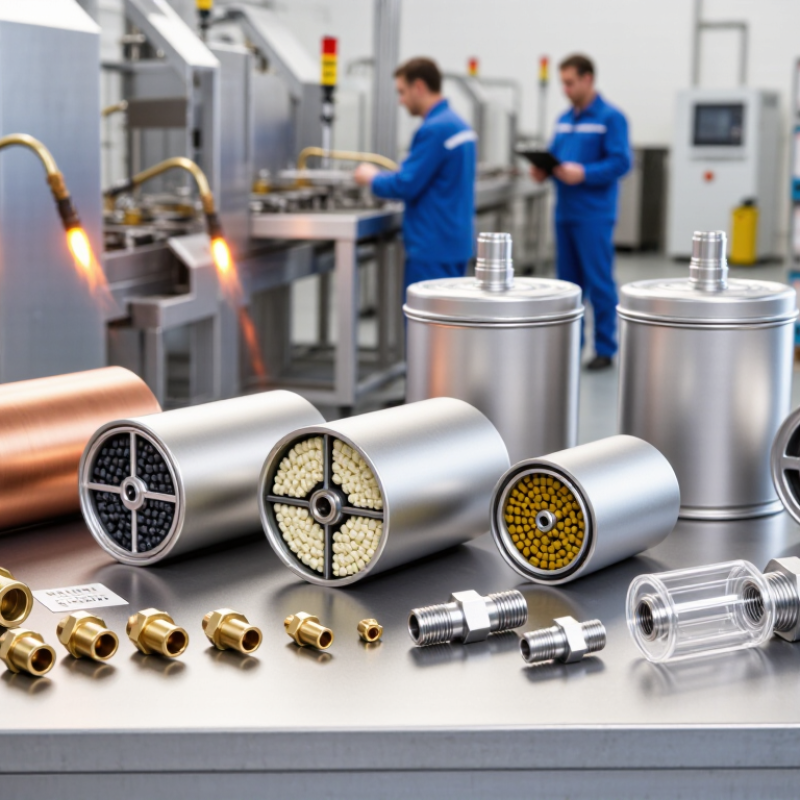
HVAC Driers: Purpose, Types, and Key Performance Features
An HVAC drier protects refrigeration circuits from moisture, acids, and solid contaminants. These impurities can freeze near expansion devices or damage compressor surfaces. In field service, a small moisture problem often appears as unstable cooling, not an obvious leak. A properly selected drier helps maintain clean refrigerant flow and supports longer equipment life.
Common types include liquid-line filter-driers, suction-line driers, and bi-flow driers for reversible systems. Replaceable-core models suit larger systems and repeated maintenance.
Key performance features include moisture capacity, acid removal, filtration efficiency, pressure drop, and refrigerant compatibility. Check rated flow carefully. A large drier is not automatically better.
Excessive size can increase cost, while an undersized unit may restrict flow. Connection size, temperature range, burst pressure, and installation direction also deserve attention. Some models include indicators that show moisture conditions, but field readings still need professional interpretation.
Tips: Keep the drier sealed until installation. Use clean tools and avoid prolonged heating during brazing. Replace the drier after major compressor failure or severe system contamination. Confirm the arrow direction before charging. Selection is sometimes imperfect. Actual pipe length, refrigerant condition, and climate can change performance, so technicians should review operating data after startup.

How to Evaluate Chinese HVAC Drier Manufacturers
China’s HVAC drier manufacturers deserve evaluation beyond unit price. The IEA’s The Future of Cooling report projects space-cooling electricity demand will more than triple by 2050. That growth increases demand for stable moisture control and reliable refrigeration components.
Start with technical evidence. Request desiccant type, refrigerant compatibility, pressure ratings, flow capacity, and pressure-drop curves. Confirm whether each batch receives leak testing and contamination control. ASHRAE Handbook—Refrigeration explains that moisture and acids can damage compressors and reduce system reliability. A capable manufacturer should explain its drying performance with test conditions, not vague claims. Ask for sample units from different production batches. One sample is insufficient.
Audit the factory’s quality system and traceability. Check incoming material records, production checkpoints, calibration certificates, and corrective-action reports. ISO 9001 certification helps, but it does not replace a factory visit or independent inspection. UNEP’s 2023 Cooling Emissions and Policy Synthesis Report indicates cooling demand could more than triple by 2050. Export experience therefore matters, especially for documentation, packaging, and changing refrigerant requirements. Review pressure-test records and carton protection closely. Small dents can become costly failures. A polished catalog is not proof. I would also compare three suppliers under identical test conditions. Price still matters, but the cheapest option may hide inconsistent desiccant filling or weak traceability. Expect imperfections, document them, and judge how quickly the manufacturer responds.
China Best HVAC Drier Manufacturers for Global Buyers? - How to Evaluate Chinese HVAC Drier Manufacturers
| Evaluation Dimension | Practical Benchmark for Global Buyers | Recommended Verification Data | Suggested Weight | Buyer Scoring Guide |
|---|---|---|---|---|
| Refrigerant Compatibility | Product documentation should clearly identify compatible refrigerants, lubricants, temperature ranges, and application limits. Compatibility must be confirmed separately for HFC, HFO, CO2, hydrocarbon, and blended refrigerants. | Model-specific compatibility chart, material declaration, lubricant compatibility statement, and written confirmation for the intended refrigerant. | 15% | 0–5 points |
| Pressure Rating and Safety | The declared maximum allowable working pressure should exceed the HVACR system design pressure with an appropriate engineering margin. The rating must be stated separately for the high-temperature and low-temperature operating conditions where applicable. | Maximum allowable working pressure, burst-pressure test data, hydrostatic or pressure-test procedure, safety standard references, and traceable test records. | 15% | 0–5 points |
| Moisture Removal Capacity | Moisture capacity should be reported using a recognized test method rather than only a general claim such as “high absorption.” Ratings should be compared at the same refrigerant, temperature, and moisture condition. | Water-capacity test results, test conditions, desiccant type, desiccant mass, and reference to AHRI 710 or an equivalent documented method. | 15% | 0–5 points |
| Flow Capacity and Pressure Drop | The drier should meet the required system flow without creating excessive pressure drop. Compare capacity at the intended refrigerant, liquid temperature, and pressure-drop condition. | Rated flow capacity, pressure-drop curves, test refrigerant, connection size, and capacity data at several operating conditions. | 12% | 0–5 points |
| Filtration Performance | Many HVACR liquid-line filter driers use fine filtration to capture contaminants, but the actual filtration rating varies by construction. A nominal or absolute micron rating should always be identified. | Micron rating, filtration test method, particle-removal data, internal screen material, and evidence that the filter remains secure during vibration and pressure cycling. | 8% | 0–5 points |
| Connection Options | Common HVACR connection sizes include approximately 1/4 to 1 1/8 inch ODF in inch-based markets and approximately 6 to 28 mm in metric markets. Flare, solder, and other connection types must match the installation design. | Dimensional drawings, connection tolerances, wall thickness, port configuration, and compatibility with the buyer’s tubing and brazing process. | 8% | 0–5 points |
| Construction Materials | Common housing materials include copper, steel, or copper-plated steel, while internal components may include molecular sieve, activated alumina, filter media, and screens. Materials must be suitable for the specified refrigerant and lubricant. | Bill of materials, material certificates, corrosion-resistance information, desiccant specification, and compatibility statement for internal adhesives or coatings. | 8% | 0–5 points |
| Leak and Cleanliness Control | Reliable filter driers should be internally clean, sealed against atmospheric moisture, and tested for leakage before shipment. Cleanliness is especially important for systems using expansion valves, capillary tubes, or electronic controls. | Helium or pressure-decay leak-test method, acceptance limit, vacuum-drying procedure, internal cleanliness specification, and sealed-end packaging details. | 10% | 0–5 points |
| Quality Management | A documented quality system should control incoming materials, production processes, pressure testing, dimensional inspection, and final release. ISO 9001 certification is useful, but it should not replace product-level evidence. | Valid ISO 9001 certificate, inspection plan, calibration records, nonconformance procedure, corrective-action reports, and batch traceability. | 8% | 0–5 points |
| Regulatory and Market Compliance | Export compliance depends on the destination market and product construction. Materials and products may need to address requirements such as RoHS, REACH, pressure-equipment rules, or market-specific safety approvals. | Declaration of conformity, RoHS and REACH documentation where applicable, safety certificates, technical file, and destination-market compliance statement. | 6% | 0–5 points |
| Production Capacity and Lead Time | Capacity should be evaluated using actual monthly output, available production lines, peak-season utilization, and realistic lead time. A short quoted lead time is valuable only when supported by production records. | Monthly capacity by model family, standard lead time, peak-season lead time, production schedule, and on-time delivery performance for recent orders. | 6% | 0–5 points |
| Sample and Pre-Shipment Testing | The supplier should provide samples from normal production rather than specially prepared demonstration units. Approval should include dimensional, pressure, leakage, flow, and packaging checks where relevant. | Sample inspection report, approved sample reference, pre-shipment inspection checklist, batch number, and retention-sample policy. | 5% | 0–5 points |
| Packaging and Moisture Protection | Filter driers should remain hermetically sealed until installation. Packaging should protect connection ends from damage and reduce exposure to humidity during ocean or air transport. | Sealed-cap design, desiccant packaging where appropriate, carton specifications, palletization method, humidity protection, and transport-drop test results. | 4% | 0–5 points |
| Technical Support and Warranty | International buyers should receive complete datasheets, installation guidance, application support, and a clearly defined warranty and claim process. Technical response time should be measured rather than assumed. | Response-time commitment, warranty period, replacement policy, installation manual, troubleshooting guide, and availability of engineering support. | 3% | 0–5 points |
Manufacturing Standards, Materials, and Quality Control
China Best HVAC Drier Manufacturers for Global Buyers?
Manufacturing Standards, Materials, and Quality Control
A dependable HVAC filter-drier starts with controlled manufacturing, not attractive packaging. Experienced factories normally inspect copper tubes, steel shells, caps, and desiccant before assembly. Copper should resist corrosion and support reliable brazing. Molecular sieve, activated alumina, or blended media must match the refrigerant and oil system. Wrong media can restrict flow or reduce moisture absorption.
Details matter. During production, technicians should control brazing temperature and keep internal passages clean. Moisture and metal particles can damage compressors after installation. Pressure testing helps reveal weak joints, while leakage testing confirms sealing performance. Quality teams should record batch numbers, test pressure, holding time, and inspection results. These records give global buyers evidence, not promises. Manufacturing systems aligned with recognized quality-management practices can improve consistency, but buyers should still verify product-specific testing.
No factory is free from variation. That matters. A realistic supplier explains its limits and corrective process. I would request material certificates, desiccant specifications, sample test reports, and traceability documents before placing a large order. Independent sample checks may also expose differences between laboratory results and production units. Small errors, such as an uneven braze ring or loose filter screen, can become expensive field failures. Packaging deserves attention too. Sealed bags, dry storage, and impact-resistant cartons help protect driers during long international transport. Some manufacturers provide detailed records, yet their inspection frequency may remain unclear. Ask how rejected units are isolated and reviewed. Reliability grows when answers are specific.
Export Services, Certifications, and Global Compliance
China Best HVAC Drier Manufacturers for Global Buyers?
For global buyers, export capability matters as much as product performance. Reliable HVAC drier manufacturers should provide batch traceability, pressure-test records, and clear technical datasheets. Each drier should match the refrigerant, system capacity, connection size, and operating pressure. Small details matter. A loose label can delay customs clearance or field installation.
Certifications support trust, but buyers must verify their scope and validity. ISO 9001 reflects quality management, while CE or RoHS may apply to specific markets and product configurations. Ask for current certificates, material declarations, test reports, and a commercial invoice matching the shipment. Experienced exporters also prepare accurate HS codes, packing lists, certificates of origin, and moisture-resistant packaging. Export compliance is not automatic. Requirements can change by destination.
Tips: Request a pre-shipment inspection and sample approval. Check carton markings, valve protection, desiccant condition, and serial numbers before loading. Confirm whether the factory or buyer handles destination compliance. A certificate alone is not proof of consistent quality. Some suppliers communicate quickly but document poorly; that is a warning sign. We have seen minor paperwork errors create expensive delays. A careful supplier should welcome questions, provide evidence, and admit limitations when a requirement needs further review.
The chart shows the Kigali Amendment's HFC phase-down targets for different country groups. These internationally agreed reduction schedules are relevant to HVAC drier exporters because product design, refrigerant compatibility, documentation, and market access must support the refrigerant requirements of the destination country. The figures represent reductions from each group's baseline, not individual manufacturer performance.
Source: United Nations Environment Programme, Kigali Amendment to the Montreal Protocol.
Comparing Suppliers by Price, Capacity, and Technical Support
Choosing a China HVAC drier manufacturer requires more than comparing the lowest quotation. A cheaper unit may use less desiccant, thinner steel, or weaker brazed connections. Request a complete price breakdown, including packaging, testing, tooling, and shipping terms. In field purchasing, these details often change the final cost.
Capacity should be checked against real production evidence. Ask for monthly output, available lines, lead times, and peak-season plans. A factory producing 100,000 filter driers monthly may still struggle with a sudden 30,000-unit order. Review sample consistency, pressure-test records, and batch traceability. One overlooked detail is warehouse control. Moisture exposure can reduce desiccant performance before installation.
Technical support separates a dependable supplier from a simple exporter. Experienced teams should help match drier size, refrigerant compatibility, flow direction, and pressure-drop limits. Useful support includes drawings, selection tables, inspection reports, and prompt answers from qualified engineers. Test several samples under practical operating conditions, not only laboratory paperwork. I have seen specifications look excellent while installation feedback revealed fitting problems. Supplier comparisons should leave room for doubt, because the cheapest offer is rarely the least expensive decision.

