Top Color TFT LCD Screen Manufacturers for Global Buyers
Choosing the right Color Tft Lcd Screen manufacturer requires more than comparing prices or product photographs. Global buyers must examine panel brightness, viewing angles, color consistency, touch compatibility, operating temperature, and long-term supply stability. A screen that looks impressive in a showroom may perform poorly under direct sunlight. Small differences matter.
Ross Young, a longtime display-market analyst, has often stated, “The display industry is very cyclical.” His observation remains useful for buyers planning large projects. Market cycles can affect panel pricing, production schedules, component availability, and replacement support. Reliable manufacturers should provide clear specifications, stable quality records, responsive engineering support, and practical samples before volume orders begin.
This guide introduces leading Color Tft Lcd Screen manufacturers serving international customers. It considers more than factory scale. Production experience, quality control, customization capability, certification practices, and communication standards also deserve attention. Buyers should request measured data, not broad promises. Ask for brightness reports, viewing-angle results, lifetime estimates, and sample testing under real working conditions.
The process is not perfectly predictable. Even established suppliers can face delays or inconsistent batches. That possibility deserves honest consideration. A strong manufacturer explains risks early and offers workable solutions. This overview helps purchasing teams compare suppliers with greater confidence, while remembering that the best choice depends on application, budget, environment, and expected service life.
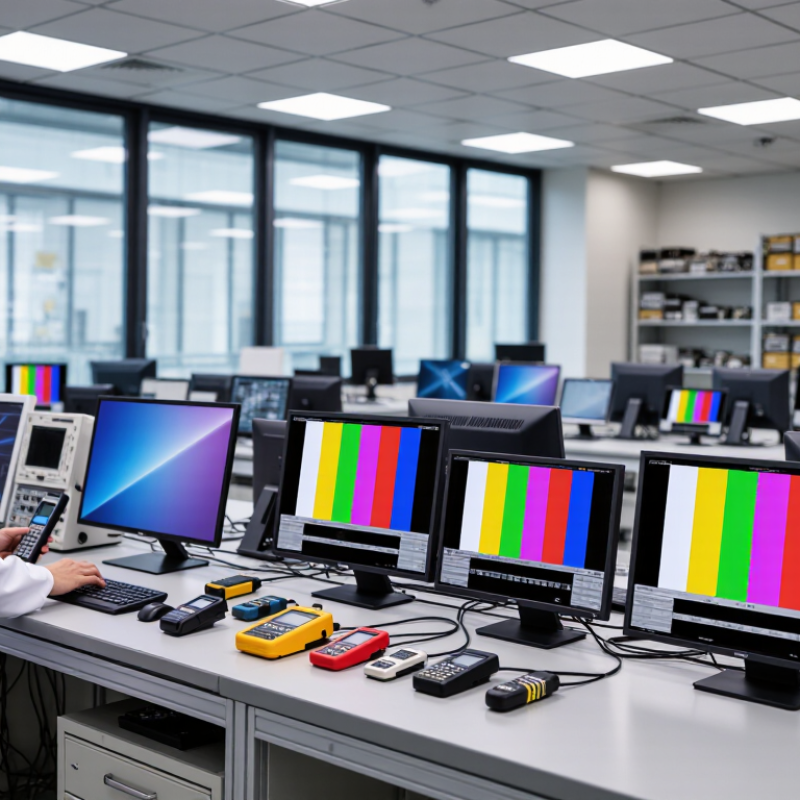
Color TFT LCD Technology and Core Display Characteristics
Top Color TFT LCD Screen Manufacturers for Global Buyers
Color TFT LCD technology uses thin-film transistors to control individual pixels. Each pixel passes light through liquid crystals and RGB color filters. An LED backlight provides the visible illumination. This structure supports sharp images, stable color, and compact product designs.
Core characteristics deserve careful comparison. Resolution affects text clarity, especially on medical panels and industrial interfaces. Brightness matters in sunlight, while contrast improves dark image detail. Viewing angle depends strongly on the panel mode, such as IPS, VA, or TN. Response time influences motion performance. Color gamut and calibration determine whether images look natural or overly vivid. Interface compatibility also matters, including HDMI, LVDS, MIPI, or embedded control boards. Some specifications look impressive, but real performance can change after installation.
Tips: Request samples and measure them under actual lighting. Check brightness uniformity near the corners. Test touch accuracy with gloves if required. Review operating temperature ranges carefully. A panel may meet its datasheet targets but perform differently inside a sealed enclosure. Power consumption is another practical concern. Lower power can reduce heat, yet it may limit brightness. My experience suggests viewing angle is often underestimated. It can affect usability more than a small resolution increase. Still, every application has different priorities, and no single panel specification guarantees the best result.
Leading Manufacturer Profiles by Region and Market Focus
Top Color TFT LCD Screen Manufacturers for Global Buyers
East Asia remains the core manufacturing region for color TFT LCD screens. Omdia’s 2024 display forecast indicates that LCD will retain a dominant role in large-area display shipments through 2030. Regional suppliers typically offer strong glass-substrate capacity, stable driver integration, and competitive pricing. Their profiles differ, however. Some focus on industrial panels, while others specialize in automotive clusters, medical monitors, or high-volume consumer devices. Production scale alone is not enough.
European manufacturers often emphasize automotive qualification, optical accuracy, and long operating life. North American suppliers usually compete through engineering support, ruggedized designs, and integration services. In India and Southeast Asia, buyers can find growing assembly capacity and shorter delivery routes for regional programs. UN Comtrade data shows continued movement in global electronic display trade, but trade value does not always reveal panel quality. That assumption deserves testing. A cheaper quotation may hide higher inspection costs.
Tips: Ask for recent uniformity data, not only a sample photograph. Check brightness after extended operation, viewing-angle consistency, connector availability, and firmware support. Request ISO 9001 records and product change notifications. For automotive or medical applications, verify the relevant qualification evidence before approval. Keep at least one compatible second source; supply forecasts can change quickly.
Quality, Customization, and Production Capability Comparison
Top Color TFT LCD Screen Manufacturers for Global Buyers
Quality, Customization, and Production Capability Comparison
Selecting a color TFT LCD manufacturer requires more than comparing price lists. Buyers should inspect panel uniformity, viewing angles, brightness stability, and dead-pixel controls. A practical evaluation begins with engineering samples, not catalog images. Check the display under direct light, low brightness, and rapid temperature changes.
Customization capability often separates a suitable supplier from a difficult one. Ask whether the manufacturer can adjust dimensions, backlight intensity, touch functions, connectors, and protective glass. Review the drawing carefully. Small changes, such as a 0.5-millimeter bezel difference, can affect enclosure assembly. Firmware support also matters when displays use customized interfaces. Some suppliers promise flexibility but rely heavily on outside partners. That may increase revision time and communication errors.
Production capability should be measured through evidence. Request capacity data, quality-control procedures, material traceability, and realistic lead times. A stable factory can explain its inspection stages, aging tests, and response process for defective batches. Certifications help, but they do not replace production records. During one earlier comparison, I focused too much on resolution and missed connector availability. The result was an avoidable redesign. A stronger review includes sample approval, pilot-run results, minimum order quantities, and after-sales response time. No manufacturer leads in every category. The best choice depends on required quality, customization depth, delivery risk, and long-term technical support.
Global Purchasing Factors for Selecting a Reliable Supplier
Selecting a TFT LCD supplier requires more than comparing unit prices. Omdia’s 2024 display research shows LCD remains a high-volume technology across industrial, automotive, and consumer applications. Buyers should match panel size, brightness, viewing angle, response time, and operating temperature to the real product environment. A sunny dashboard needs different performance from a warehouse scanner. Ask for recent test records, not only a polished specification sheet.
Supplier quality systems also matter. The ISO Survey 2022 recorded more than 1.2 million ISO 9001 certificates worldwide, but certification alone proves little about one factory’s daily discipline. Request process-control plans, batch traceability, inspection standards, and change-notification procedures. Check whether samples come from mass production. They often do not. A small pilot order can reveal dead pixels, uneven backlights, connector weaknesses, or unstable touch performance before a larger commitment.
Logistics deserves equal attention. UNCTAD’s Review of Maritime Transport 2024 estimates that about 80% of global merchandise trade by volume moves by sea. Buyers should therefore confirm packaging strength, humidity protection, shipping terms, insurance, customs documents, and realistic lead times. Hold safety stock for seasonal demand. I have seen purchasing teams focus heavily on price, then absorb expensive delays caused by unclear forecasts and weak communication. A reliable supplier should provide production updates, corrective-action reports, and measurable warranty terms. The cheapest quote may still be the costliest decision.

