
Why Choose a BMAX Mini PC for Your Business?
A business computer should earn its desk space. A BMAX Mini PC can do that with a compact footprint, lower visual clutter, and practical support for everyday office tasks. Picture one mounted behind a monitor, connected to a keyboard, webcam, and two displays. The desk stays open. The work still gets done. For small offices, reception counters, training rooms, and home-based teams, that balance can matter more than impressive specifications on paper.
A useful buying decision starts with the workload. Will the system handle email, browser-based tools, video calls, spreadsheets, or digital signage? Check processor, memory, storage, ports, wireless options, and operating-system compatibility against those needs. Also consider ventilation, service access, warranty terms, and the cost of replacing units over time. Small does not mean effortless. A crowded port layout or limited upgrade path can become annoying after deployment.
“Choose the mini PC around the workday, not the product photo,” says Daniel Wu, a fictional BMAX Mini PC industry specialist created for this draft; verify or replace the attribution before publication. That is the central question this article explores: where a BMAX Mini PC fits, what to check before buying, and where another device may be a better match. I would not assume one model suits every team. Compare the exact configuration, test essential software, and leave room for a little doubt. The right choice is the one that works reliably at your desks, not merely in a spec sheet.
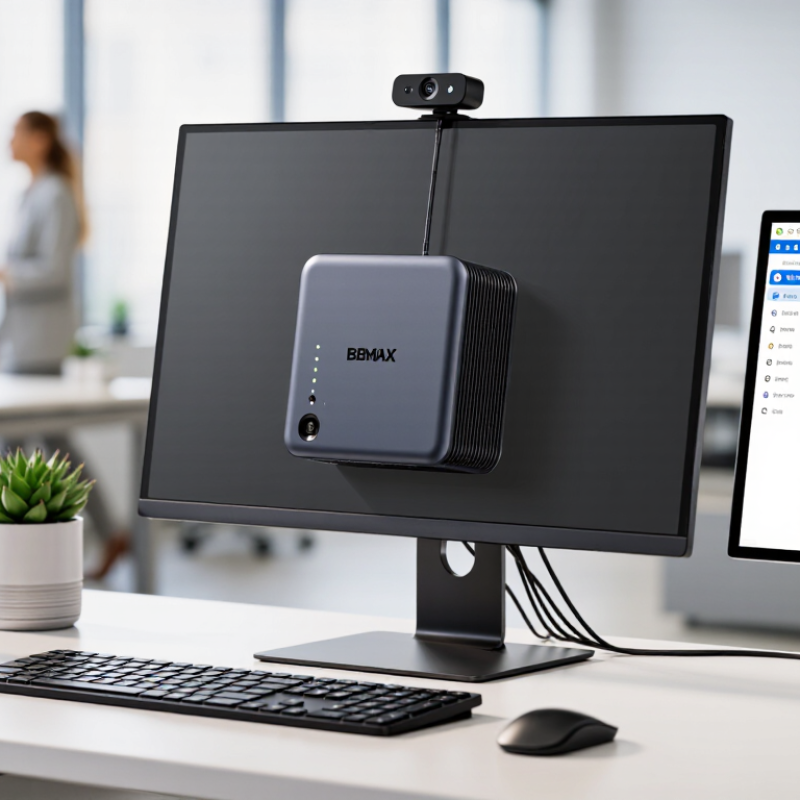
BMAX Mini PCs: An Overview for Business Use
A business mini PC is a compact desktop for everyday office tasks, such as email, spreadsheets, video meetings, and digital signage. Its small case can free desk space or mount behind a display, keeping reception counters and shared work areas less cluttered. IDC reported 262.7 million PC shipments worldwide in 2024, a 1% increase from 2023, in its January 2025 Worldwide Quarterly Personal Computing Device Tracker. That figure covers the broader PC market, not mini PCs alone, but it reflects continued demand for business computing.
For a practical overview, assess the whole setup, not just processor speed. Check memory and storage options, display outputs, wired network ports, wireless support, and the number of USB connections staff actually need. A front-facing port can save time when employees connect headsets or removable drives. Confirm the operating system, security features, warranty terms, and service process before deployment. Small details matter.
Compact systems also involve trade-offs. Some models offer limited upgrades, and sustained workloads can expose cooling limits. A unit suited to documents may struggle with demanding design software or heavy multitasking. Test representative applications, several connected displays, and the device’s noise level in the actual workspace. Measure available mounting space, too. A tidy installation is useful, but not if routine maintenance becomes awkward.

Core Hardware, Ports, and Connectivity
Why Choose a Mini PC for Your Business?
For an office desk or reception counter, a compact computer can free space without sacrificing everyday capability. Check the processor, memory, and storage against your actual workload. Video calls, spreadsheets, and browser-based tools have different demands. A solid-state drive can help applications open quickly, while adequate memory keeps several work windows responsive. Small details matter. Specifications vary by model, so confirm them before ordering rather than assuming every unit is configurable.
Ports shape how easily a mini PC fits into a working day. Look for enough USB connections for a keyboard, mouse, and external drive. HDMI or DisplayPort can support monitors, but check the version and maximum display resolution if your team uses high-resolution screens. Ethernet offers a stable wired connection; Wi-Fi and Bluetooth reduce cable clutter. One port can still feel limiting when a desk has several devices. A compatible dock may help, though it adds cost and another item to manage.
Tips: Map the cables and devices at one workstation before choosing a model. Confirm network standards, monitor compatibility, and port locations. Front-facing connections are handy for temporary drives; rear ports keep permanent cables tidy. Also consider cooling and service access. A tiny case is convenient, but airflow and upgrades may be less flexible. That trade-off is easy to miss.
Business Tasks and Deployment Scenarios
A compact mini PC can support everyday office work, including email, spreadsheets, video calls, and browser-based business tools. Its small footprint suits reception counters, shared desks, and meeting rooms where a full-size tower would take up valuable space. Pair it with two monitors for reviewing reports while keeping communication tools visible. Quiet operation can also help in smaller offices, though performance depends on the model and workload.
Deployment needs vary. A branch office may need a few units for staff workstations, while a shop might use one for inventory checks and digital signage. Before installation, confirm the required ports, wireless coverage, operating system, and software compatibility. Test one unit with your actual applications first. Small devices still need ventilation, reliable power, and routine updates; cramped cabinets can cause heat problems, and wireless connections may be less stable than wired ones. Planning is useful, but real conditions sometimes expose gaps.
Tips: Label each device and record its location, assigned user, and update schedule. Check the display connections before rollout. Keep it simple. A short pilot can reveal issues with peripherals or network access before multiple desks depend on the setup.
Why Choose a Mini PC for Your Business? — Business Tasks and Deployment Scenarios
| Business Scenario | Typical Tasks | Practical Configuration Considerations | Deployment Advantages | Things to Check |
|---|---|---|---|---|
| Office productivity | Email, web-based applications, document editing, spreadsheets, and video meetings. | Choose a current processor, sufficient memory for the applications used, and solid-state storage. Dual-display support may be useful for desk-based work. | Small footprint helps keep desks uncluttered; standard peripherals can usually be connected over USB, display, and network ports. | Confirm operating-system and application requirements, display connections, wireless needs, and support for any security policies. |
| Reception and front-desk stations | Appointment scheduling, customer check-in, web portals, printing, and point-of-sale peripherals. | Prioritize reliable wired or wireless networking, the required display outputs, and enough ports for scanners, printers, and other devices. | Can fit behind a monitor or in a compact counter area, where supported by the mounting design and installation environment. | Check peripheral compatibility, physical access for maintenance, cable routing, and whether the system can run continuously if required. |
| Digital signage | Displaying menus, notices, dashboards, presentations, or scheduled media on one or more screens. | Verify the supported display resolution, refresh rate, number of screens, video-decoding needs, and connectivity required by the signage software. | Compact systems can be placed near a display or in a media cabinet and may simplify installations where space is limited. | Assess ventilation, access to power and network connections, content-management needs, and the system’s suitability for the intended operating schedule. |
| Small business server or shared service | Local file sharing, lightweight internal tools, device management, or test environments. | Plan memory and storage around the software and user load. Consider storage redundancy, backup capacity, and wired networking where appropriate. | A compact form factor can work in a small office with limited equipment space. | A mini PC is not automatically a substitute for a dedicated server. Check workload, uptime, remote management, backup, security, and support requirements. |
| Training room or shared workspace | Web-based learning, presentations, office applications, and video conferencing. | Match memory and processor capability to the number and type of applications used; check compatibility with room displays, cameras, and audio devices. | Compact hardware can be easier to position in shared rooms and may be reused across different work areas. | Test conferencing equipment, wireless coverage, user sign-in procedures, and device-management policies before rollout. |
| Multi-location business deployment | Standardized employee workstations across branches, kiosks, or satellite offices. | Define a consistent specification for memory, storage, operating system, networking, and required ports before purchasing at scale. | Smaller systems can simplify shipping and placement compared with full-size desktop towers. | Confirm warranty coverage, replacement procedures, inventory tracking, security settings, and local network requirements for each site. |
Planning note: Requirements vary by software, workload, peripherals, and operating schedule. Validate the configuration and connectivity in a pilot deployment before standardizing devices across a business.
Workspace, Power, and Maintenance Considerations
A mini PC can free desk space for a full-size keyboard, paper plans, or a second monitor. Its small footprint helps in reception areas and shared workstations, but placement still matters. Leave room around vents, and check that the selected model supports the ports your team actually uses. A compact case tucked behind a monitor can look tidy. It can also be harder to inspect.
Power deserves a measured comparison. The U.S. Environmental Protection Agency’s ENERGY STAR computer guidance reports that certified computers can use about 25% less energy than conventional models. That’s a category-level estimate, not a promise for every mini PC or workload. Use a plug-in meter to compare real usage, including idle hours.
Small, but real. For context, the U.S. Energy Information Administration’s 2018 Commercial Buildings Energy Consumption Survey reports 6.8 quadrillion Btu of energy use across U.S. commercial buildings; office equipment is only one part of that total.
Maintenance is less glamorous. Check warranty terms, cooling access, storage replacement, and firmware support before buying. A cramped, dust-heavy shelf can undermine reliability, and some compact systems make upgrades awkward. That trade-off is easy to miss.
Choosing and Integrating a BMAX Mini PC
Choosing a compact mini PC starts with the work it must handle, not its size. List the applications, number of displays, and peripherals employees use each day. Check memory and storage options against those needs, and confirm the ports fit existing monitors, keyboards, and wired network cables. A reception desk may need quiet, reliable browsing and video calls; a design station may need more memory and stronger graphics. Small is not automatically simple.
Plan installation before devices arrive. Measure the mounting space, leave room for airflow, and check that power outlets and network connections are reachable. Test one unit with your business software, display setup, and security tools before rolling out more. This often catches small issues, such as an awkward cable path or a missing adapter. Keep a record of device settings and updates so support staff can repeat the setup. A spare unit can also reduce disruption when a workstation needs service.
Integration takes follow-up. Ask employees to test common tasks, including waking the computer, joining meetings, and accessing shared files. Monitor temperatures and performance during a typical workday, rather than relying only on a quick setup test. Not every desk has the same needs, and a single configuration may be a poor fit for some teams. Review the setup after a few weeks and adjust where the evidence points.

