2026 Top Electrical Controls Suppliers for Global Buyers

Selecting reliable electrical controls suppliers in 2026 requires more than comparing prices and product catalogs. Global buyers must examine technical capability, manufacturing consistency, service coverage, and documented compliance. A supplier may offer an impressive website, yet still struggle with lead times or regional support. That gap matters.

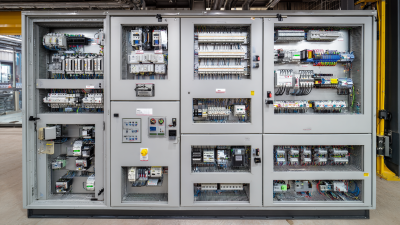
This guide introduces leading suppliers serving industrial automation, energy, building systems, transportation, and process equipment markets. It considers control panels, programmable logic controllers, motor controls, sensors, safety systems, and related engineering services. Each supplier should be assessed against practical evidence, including certifications, factory capacity, testing procedures, warranty terms, and customer references. Clear documentation remains essential.

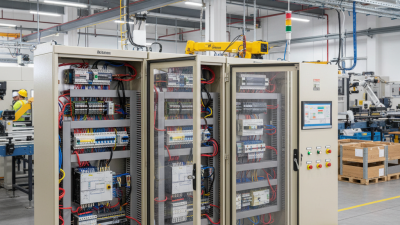
Real projects reveal the difference. A control cabinet shipped across borders may face voltage variations, language barriers, spare-parts delays, or installation problems. Strong suppliers prepare for these details before purchase orders are signed. They provide accurate drawings, responsive engineers, traceable components, and realistic delivery schedules. Not every supplier performs equally in every region. That is worth remembering.

The 2026 market also brings pressure to improve cybersecurity, energy efficiency, system integration, and lifecycle support. Buyers should ask difficult questions about firmware updates, remote access, obsolete components, and emergency service. Some evaluations may still depend on incomplete public information. This guide therefore encourages verification, not blind trust. Independent audits and direct technical discussions can expose weaknesses early. The best choice is not always the largest company. It is the supplier that consistently matches proven expertise with the buyer’s application, risk level, and long-term operating needs.
2026 Top Electrical Controls Suppliers for Global Buyers

Electrical Controls Scope: PLCs, HMIs, VFDs, SCADA, and Safety Relays

In 2026, global buyers are evaluating electrical controls as one connected system, not isolated components. A PLC should manage machine logic reliably, while the HMI presents clear alarms, recipes, and production data. During commissioning, technicians often discover that confusing screen layouts create more downtime than slow hardware. Simple navigation matters.

VFD selection requires attention to motor rating, overload capacity, braking needs, and local power conditions. A correctly sized drive can reduce mechanical stress and energy waste. However, efficiency claims should be tested against real duty cycles, not copied from a catalog. Field measurements tell a different story sometimes. SCADA platforms add wider visibility through trends, event logs, and remote diagnostics. Buyers should verify protocol support, data retention, user permissions, and recovery procedures before purchase.

Safety relays deserve equal attention. They must match emergency stops, guard switches, light curtains, and the machine’s required safety architecture. A supplier with documented testing, traceable components, clear manuals, and responsive technical support offers stronger long-term value. Ask for sample wiring diagrams and commissioning records. Check how spare parts are identified. Request training for maintenance teams. These details expose weak preparation quickly. No shortlist is perfect. Even experienced engineers can overlook network latency, cabinet heat, or poor cable routing. A practical supplier will discuss those risks openly and help correct them before production starts.

2026 Top Electrical Controls Suppliers for Global Buyers

Electrical Controls Scope: PLCs, HMIs, VFDs, SCADA, and Safety Relays

The chart compares representative ingress protection ratings commonly specified for industrial electrical control equipment. HMIs are often designed with higher front-panel protection for operator-facing environments, while PLCs, SCADA hardware, and safety relays are frequently installed inside control cabinets. Actual ratings vary by product, enclosure, installation method, and application requirements.

2026 Supplier Landscape: Global OEMs, Regional Specialists, and Integrators

Electrical controls sourcing in 2026 is less about finding one universal winner. Global OEMs offer broad product families, established quality systems, and multi-country service networks. Their controls often support standardized architectures across several factories. Scale brings consistency. It can also create slower engineering changes and less flexible commercial terms.

Regional specialists compete through local knowledge and practical responsiveness. They may understand voltage practices, labor conditions, and compliance expectations in nearby markets. A specialist can modify a control panel after a site walk, not several weeks later. Buyers should inspect wiring samples, test records, spare-parts policies, and technician availability. A lower purchase price means little if a replacement relay waits at a distant warehouse.

Integrators connect equipment, software, sensors, and production workflows. Their value appears during commissioning, especially when devices from different suppliers must exchange reliable data. Ask for factory acceptance test procedures, network diagrams, alarm lists, and documented change control. Integration quality is often visible in small details, such as labeled terminals and clear fault messages. Not every integrator has equal cybersecurity or maintenance depth. That weakness deserves direct questioning. Supplier rankings also remain imperfect because project size, region, and internal engineering capability change the result. The strongest choice is usually the supplier whose technical habits match the buyer’s operating reality.

2026 Top Electrical Controls Suppliers for Global Buyers - 2026 Supplier Landscape: Global OEMs, Regional Specialists, and Integrators

Supplier Category Primary Value Proposition Typical Product Scope Common Voltage Coverage Relevant Standards and Certifications Typical Customization Level Typical Project Lead Time Best-Fit Buyer Profile Main Geographic Strength
Global automation OEM Broad product portfolios, international support, standardized engineering documentation, and established supply chains. PLC systems, remote I/O, HMI, variable-frequency drives, motor controls, safety systems, industrial networking, and control-panel components. Typically 24 VDC control circuits and 208–480 VAC low-voltage industrial systems; higher-voltage solutions may be project-specific. IEC 60204-1, IEC 61131-2, IEC 61439, functional-safety requirements, ISO 9001, and region-specific UL or CE requirements. Medium; configurable platforms with defined engineering rules and approved component lists. Approximately 6–16 weeks, depending on component availability, panel complexity, and testing requirements. Multinational OEMs, large manufacturers, process industries, and buyers requiring global service continuity. North America, Europe, and Asia-Pacific through established regional channels.
Regional panel builder Local engineering access, shorter communication cycles, site knowledge, and cost-effective panel production. Motor-control centers, distribution boards, PLC panels, junction boxes, machine-control cabinets, and operator stations. Commonly 120/208 VAC, 230/400 VAC, and 480 VAC systems, with control power commonly at 24 VDC. IEC 61439, IEC 60204-1, local electrical codes, ISO 9001 where certified, and UL 508A where serving the North American market. High; enclosure layout, wiring, labeling, thermal management, and interface design are often adapted per project. Approximately 3–10 weeks for standard low-voltage assemblies; complex projects may require longer. Machine builders, factories, utilities, commercial facilities, and regional engineering contractors. Strongest within the supplier’s home country and neighboring markets.
Industrial systems integrator End-to-end responsibility for controls architecture, programming, commissioning, cybersecurity, and operational handover. SCADA, PLC and DCS integration, robotics interfaces, MES connectivity, historian systems, control panels, and plant-wide networks. Usually integrates 24 VDC control systems with 230/400 VAC or 480 VAC plant equipment. IEC 61131-3, IEC 62443 practices, IEC 60204-1, ISO 9001, cybersecurity controls, and applicable local electrical regulations. Very high; software, networks, safety functions, data interfaces, and commissioning plans are tailored to each facility. Approximately 8–24 weeks, excluding major civil, process, or shutdown constraints. Process plants, warehouses, utilities, life-science facilities, food production, and brownfield modernization projects. Country or region where the integrator maintains engineering and commissioning teams.
Machine-control specialist Fast application engineering for repeatable machine platforms and high-performance motion or sequencing control. Motion controllers, servo drives, PLCs, safety relays, machine HMIs, sensors, distributed I/O, and pre-engineered control cabinets. 24 VDC controls with 200–240 VAC or 380–480 VAC machine power, depending on the equipment design. IEC 60204-1, ISO 13849-1, IEC 62061, IEC 61800-5-2, CE requirements, and applicable workplace-safety regulations. Medium to high; optimized for machine templates, repeat orders, and defined safety architectures. Approximately 4–12 weeks for repeatable machine-control packages. Packaging, material handling, printing, machine tools, assembly equipment, and discrete manufacturing. Industrial manufacturing clusters in Europe, East Asia, and North America.
Process-control specialist Expertise in continuous processes, instrumentation, regulatory documentation, and high-availability control environments. DCS and PLC systems, process instrumentation, analyzers, safety instrumented systems, control rooms, and plant historians. 24 VDC instrumentation and control, with plant distribution commonly at 400–480 VAC; medium-voltage interfaces are project-dependent. IEC 61508, IEC 61511, IEC 61131-3, IEC 62443 practices, hazardous-area requirements, and industry-specific codes. Very high; control narratives, cause-and-effect logic, alarm management, and validation documents are project-specific. Approximately 12–36 weeks for engineered process-control projects. Chemical, pharmaceutical, water treatment, energy, food processing, and bulk-material operations. Regions with established process industries and local compliance engineering capacity.
North American certified control-panel shop Domestic production, inspection-ready documentation, and alignment with North American panel and installation practices. Industrial control panels, MCC sections, pump panels, HVAC controls, disconnect assemblies, and retrofit cabinets. 120/208 VAC, 240 VAC, 480 VAC, and 600 VAC assemblies are common; 24 VDC is widely used for control circuits. UL 508A, NFPA 79, NFPA 70, SCC or CSA requirements where applicable, and customer-specific inspection requirements. High; designs are frequently built to approved drawings, field conditions, and authority-having-jurisdiction requirements. Approximately 4–14 weeks, subject to enclosure, breaker, drive, and control-component availability. North American machinery, utilities, building services, water systems, and industrial retrofit buyers. United States and Canada, particularly near manufacturing and infrastructure projects.
European low-voltage assembly specialist Strong compliance with European design practices, compact cabinet engineering, and export-ready technical files. Switchboards, machine-control cabinets, motor starters, automation panels, safety circuits, and industrial distribution assemblies. 230/400 VAC and 24 VDC are common; 480 VAC and other ratings are available for export-oriented designs. IEC 61439, IEC 60204-1, Low Voltage Directive requirements, EMC requirements, CE marking, and ISO 9001 where certified. High; cabinet dimensions, busbar systems, thermal calculations, and documentation are frequently customized. Approximately 5–16 weeks for low-voltage assemblies, depending on design approval and testing. European OEMs, export machinery manufacturers, infrastructure contractors, and industrial plants. European Union, United Kingdom, and nearby export markets.
Asia-Pacific cost-competitive OEM or assembler Competitive production economics, scalable manufacturing capacity, and support for high-volume equipment programs. PLC panels, machine cabinets, motor-control assemblies, electrical enclosures, power distribution panels, and OEM subassemblies. 220/380 VAC, 230/400 VAC, and 24 VDC are widely used; 480 VAC designs are supplied for export applications. IEC 60204-1, IEC 61439, ISO 9001 where certified, CE-related requirements, and UL 508A capability for qualified export projects. Medium to high; most effective when drawings, bills of materials, inspection criteria, and test procedures are clearly defined. Approximately 4–14 weeks, excluding international freight, approval cycles, and component shortages. Global OEMs, contract manufacturers, renewable-energy projects, infrastructure suppliers, and volume buyers. East Asia, Southeast Asia, South Asia, and export-oriented manufacturing corridors.

Note: Lead times and technical coverage are typical market ranges for 2026 planning and should be confirmed against the supplier’s current quotation, component availability, applicable codes, and project scope.

Standards Benchmark: IEC 61131-3, IEC 60204-1, UL 508A, and IP69K

For global buyers, electrical controls should be judged against four practical benchmarks. IEC 61131-3 defines common programming languages for programmable controllers, including ladder logic and structured text. This improves maintenance across international teams. However, compliant code can still be poorly documented. That gap creates expensive delays during commissioning.

IEC 60204-1 addresses the electrical equipment of machinery. It covers protective bonding, emergency stops, control circuits, and verification testing. In factory inspections, clear terminal labels and measured fault-loop values often matter more than attractive drawings. Small omissions become serious risks. Buyers should request test records, wiring schedules, and evidence of design review before shipment.

UL 508A focuses on industrial control panels and their construction practices. It helps buyers evaluate component suitability, enclosure design, and short-circuit considerations. Yet panel compliance does not automatically prove machine-wide safety. IP69K concerns resistance to high-pressure, high-temperature washdown, especially in food and hygienic production areas. Look for stainless construction, sealed cable entries, protected interfaces, and documented ingress testing. A smooth enclosure may still fail around a poorly fitted gland. Suppliers should explain the test method, operating limits, and maintenance requirements. I would also challenge vague claims such as “fully compliant.” Standards interact, but they are not interchangeable. Local installation rules, environmental conditions, and the final machine risk assessment still require careful review.

Technical Scorecard: 24 VDC I/O, 4–20 mA, SIL 1–4, and MTBF

A credible controls supplier should publish more than a nominal 24 VDC label. Buyers should check voltage tolerance, current consumption, reverse-polarity protection, channel isolation, and terminal temperature ratings. Field reviews often reveal mismatched assumptions between the control cabinet and the I/O datasheet.

A 4–20 mA input should state accuracy, loop-power limits, open-wire detection, and behavior below 3.6 mA or above 21 mA. Those details affect commissioning time.

For safety functions, IEC 61508:2010 defines probability-of-dangerous-failure-on-demand ranges from 10⁻² to below 10⁻¹ for SIL 1, down to 10⁻⁵ to below 10⁻⁴ for SIL 4. However, a claimed SIL rating is not enough.

Buyers need the safety manual, diagnostic coverage, proof-test interval, systematic capability, and hardware fault tolerance. IEC TR 62380 also shows why MTBF comparisons can mislead. Temperature, duty cycle, component stress, and installation conditions change predicted reliability. MTBF is useful, but it is not a safety certificate. This distinction is sometimes missed.

Tips:

Request test conditions behind every MTBF figure.

Compare identical temperatures and mission profiles.

Ask for independent assessment evidence, not marketing language.

Confirm whether 4–20 mA accuracy includes wiring resistance and calibration drift.

A practical scorecard should record evidence, not only numbers.

Some suppliers may provide excellent laboratory data, yet weak field feedback. That gap deserves careful review.

Global Buyer Checklist: Lead Time, MOQ, TCO, Warranty, and Lifecycle

2026 Top Electrical Controls Suppliers for Global Buyers

Global Buyer Checklist: Lead Time, MOQ, TCO, Warranty, and Lifecycle

A reliable supplier should state production lead time in writing. Ask whether it includes testing, export packing, and documentation. A quoted eight-week schedule may become twelve weeks during peak demand. Request a realistic production calendar, not a hopeful promise. Confirm the minimum order quantity before approving technical drawings. One hundred control units may suit a large project, but not a pilot installation. Smaller MOQs can reduce excess inventory and reveal quality problems earlier.

Compare total cost of ownership, not only the purchase price. Include freight, commissioning, energy use, spare parts, training, and disposal. A cheaper panel can become expensive after repeated service calls. Ask for warranty coverage, response time, exclusions, and repair procedures. Photographing serial labels and test records can simplify future claims.

It is a small habit.

Lifecycle support deserves equal attention. Verify component availability, firmware policies, maintenance instructions, and replacement compatibility. Ask how long technical support remains available after the last shipment. Suppliers should provide traceable inspection records and clear change notices. In my sourcing reviews, I have seen teams overlook obsolete relays because the initial quotation looked attractive. That mistake is easy to make. Build a five-year cost model, then challenge every assumption. Market forecasts can be wrong, and your own demand estimate may be worse.

Scroll to Top