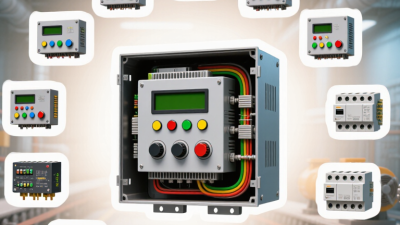
Top 10 VFD Control Panel Manufacturers for Global Buyers
Selecting a reliable vfd control panel manufacturer requires more than comparing factory prices. Global buyers must examine engineering capability, production consistency, certifications, and after-sales support. A panel may look impressive in photographs, yet fail under heat, dust, vibration, or unstable power conditions. Practical evaluation matters.
This guide introduces ten manufacturers serving international industrial markets. The comparison considers enclosure design, drive integration, PLC compatibility, thermal management, documentation, and customization. It also reviews experience with pumps, conveyors, compressors, HVAC systems, and water treatment equipment. These applications reveal how a supplier handles real operating demands.
Details matter.
A dependable manufacturer should provide clear wiring diagrams, tested components, traceable quality procedures, and responsive technical assistance. Buyers should also confirm voltage ranges, protection ratings, communication protocols, spare-part availability, and local service coverage before placing an order. Factory audits, sample inspections, and reference projects can reduce avoidable risks.
No ranking is permanently perfect. Supplier capabilities change, projects differ, and regional requirements may affect the final decision. That limitation deserves attention. The strongest choice is not always the largest manufacturer or the lowest-priced offer. It is the supplier that can document performance, communicate accurately, and support the vfd control panel throughout its working life. This overview offers a practical starting point for informed comparison, while encouraging buyers to verify every critical claim independently.
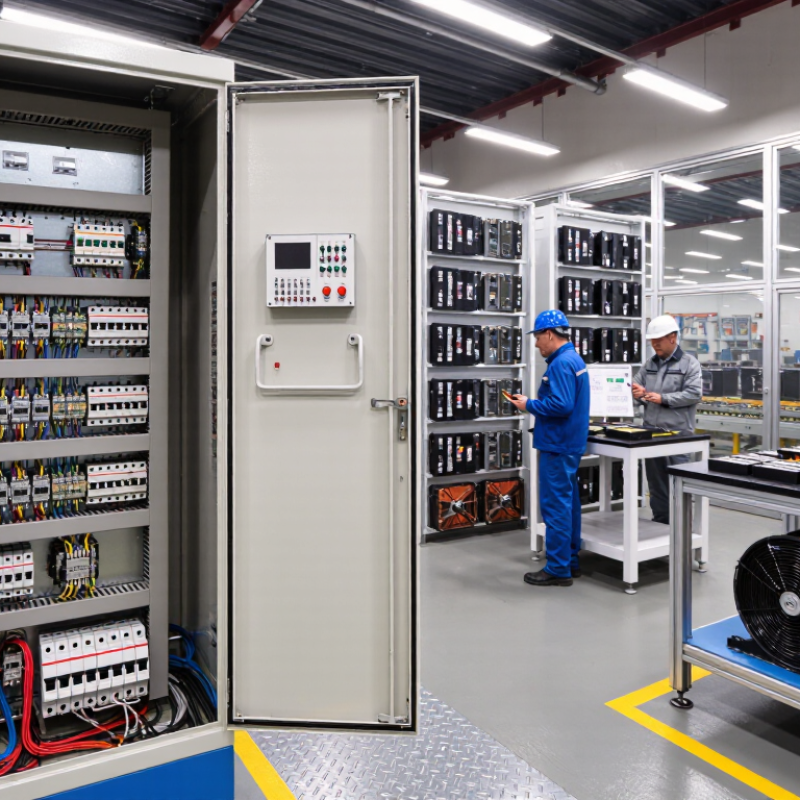
What Is a VFD Control Panel and Why Does It Matter?
A VFD control panel combines a variable frequency drive, circuit protection, switching devices, cooling components, and control terminals. It regulates motor speed by changing electrical frequency and voltage. In a pump room, this means a motor can slow during low demand instead of repeatedly starting and stopping. The result is smoother operation, lower mechanical stress, and more precise process control.
The International Energy Agency reports that motor-driven systems use nearly half of global electricity. That figure explains why speed control matters to factories, buildings, and water facilities. The U.S. Department of Energy notes that variable speed operation can reduce energy use in fan and pump applications by 20% to 50%, depending on load conditions. The savings are not automatic. A poorly sized drive, blocked air filter, or incorrect acceleration setting can waste energy and shorten equipment life. Small details matter.
A reliable panel also improves maintenance visibility. Technicians can read fault codes, motor current, temperature, and running frequency from the enclosure or remote interface. Proper grounding and thermal design remain essential. They are easy to overlook. IEC 61800-5-1 addresses safety requirements for adjustable speed electrical power drive systems, giving buyers a useful technical reference. However, compliance documents do not replace site experience. Cable length, humidity, dust, and harmonic distortion can change performance. A panel that works well in a clean workshop may struggle beside a hot compressor.
Key Criteria for Evaluating Global VFD Panel Manufacturers
Choosing among the top VFD control panel manufacturers begins with evidence, not glossy product images. A reliable supplier should provide clear wiring diagrams, component specifications, test procedures, and traceable quality records. Ask whether engineers verify thermal performance, enclosure protection, cable spacing, and fault isolation before shipment. Paper is not enough. Request photographs of completed panels and factory acceptance testing.
Technical experience separates a panel builder from a catalog reseller. Review the team’s experience with pumps, conveyors, compressors, or other loads similar to yours. Check whether the manufacturer can calculate motor starting current, harmonic effects, ventilation needs, and braking requirements. Their documentation should support local electrical codes and accepted international standards. Vague answers often signal weak engineering control. Still, standards alone do not guarantee a suitable design.
Global projects also depend on communication and after-sales support. Confirm response times, spare-part availability, remote troubleshooting methods, and training for maintenance staff. Ask for references from installations operating in similar climates. A coastal site may require different corrosion protection than an indoor warehouse. A supplier should explain that difference in practical terms. Do not ignore manufacturing consistency: inspect labeling, terminal tightening, grounding points, and cabinet cleanliness. I have seen technically strong proposals fail because delivery updates were unclear. Cost comparisons can also mislead when commissioning, freight, and replacement parts are excluded. A careful evaluation leaves room for these uncomfortable questions.
Top 10 VFD Control Panel Manufacturers for Global Buyers - Key Criteria for Evaluating Global VFD Panel Manufacturers

| No. | Evaluation Criterion | Key Data to Request | Recognized Reference or Evidence | Why It Matters to Global Buyers |
|---|---|---|---|---|
| 1 | Applicable Electrical Standards | Supported voltage, frequency, short-circuit rating, enclosure rating, and country-specific compliance options | IEC 61439 for low-voltage assemblies; IEC 60529 for IP ratings; UL 508A where applicable | Reduces customs, inspection, installation, and certification risks in the destination market |
| 2 | VFD Compatibility | Supported drive ratings, motor-control modes, overload capability, bypass arrangements, and communication interfaces | VFD manufacturer integration documents, wiring diagrams, FAT records, and approved component lists | Ensures the panel is properly matched to the selected drive, motor, and process requirements |
| 3 | Power and Environmental Design | Rated ambient temperature, altitude limits, humidity conditions, cooling method, thermal calculations, and corrosion protection | Thermal calculation, derating data, enclosure specification, and environmental test documentation | Prevents overheating and premature failure in hot, humid, dusty, or high-altitude installations |
| 4 | Protection and Safety Functions | Main isolation, circuit protection, emergency-stop interface, surge protection, grounding, interlocks, and door safety provisions | Single-line diagrams, risk assessment, protection coordination study, and routine test records | Improves operator safety and helps protect motors, drives, cables, and upstream equipment |
| 5 | Harmonic and EMC Management | Input reactors, DC chokes, passive filters, line reactors, EMC filters, cable requirements, and harmonic study results | IEC 61000 series documentation, site power-quality requirements, and measured or calculated data | Helps limit electrical interference, nuisance trips, transformer stress, and communication problems |
| 6 | Engineering and Customization Capability | Experience with PLCs, HMIs, bypass systems, multiple drives, pump and fan applications, drawings, and control logic | Approved drawings, control narratives, sample project documentation, and engineering change procedures | Allows the panel to fit the buyer’s process, operating sequence, and plant automation architecture |
| 7 | Factory Testing and Quality Control | Continuity, insulation resistance, dielectric, functional, sequence, communication, and alarm testing procedures | IEC 61439 routine verification records, inspection and test plans, FAT reports, and calibration certificates | Identifies wiring, programming, protection, and communication issues before shipment |
| 8 | Documentation and Traceability | Bill of materials, electrical drawings, terminal schedules, software backups, manuals, labels, and serial-number records | Document register, revision history, component certificates, and final as-built drawings | Simplifies commissioning, maintenance, spare-parts planning, and future modifications |
| 9 | After-Sales and Technical Support | Warranty terms, remote troubleshooting, spare-parts availability, commissioning support, response time, and training options | Written service-level terms, support contacts, escalation process, and reference projects | Reduces downtime and improves lifecycle support for overseas installations |
| 10 | Delivery, Logistics, and Total Cost | Lead time, production capacity, packaging method, Incoterms, shipment dimensions, payment terms, warranty cost, and spare-parts pricing | Formal quotation, manufacturing schedule, packing specification, commercial references, and landed-cost calculation | Provides a more accurate comparison than purchase price alone and helps prevent project delays |
Buyer note: Manufacturer performance should be verified through current technical documents, project references, factory acceptance testing, and destination-market compliance requirements rather than price or marketing claims alone.
Top 10 VFD Control Panel Manufacturers by Product Strengths
Top 10 VFD Control Panel Manufacturers for Global Buyers
Top 10 VFD Control Panel Manufacturers by Product Strengths
The strongest VFD control panel manufacturers distinguish themselves through engineering depth, not attractive brochures. Their panels match motor ratings, load profiles, and site conditions with careful calculation. Experienced teams consider starting torque, braking demand, harmonics, and ambient temperature before selecting components. The details matter.
Product strength also appears in enclosure design. Reliable manufacturers offer suitable protection levels, copper busbars, organized wiring, and efficient cooling paths. Clear labeling helps technicians trace circuits quickly during maintenance. Some suppliers provide stainless steel cabinets for humid areas, while others develop compact panels for limited plant space. Customization is useful when standard layouts create installation problems.
Testing separates capable manufacturers from ordinary fabricators. Factory inspections should include insulation checks, functional trials, terminal verification, and simulated operating conditions. Strong suppliers also provide wiring diagrams, parameter lists, manuals, and remote commissioning support for international projects. Certification alignment matters, but documentation quality matters just as much. It reduces delays at customs, installation, and site acceptance.
Buyers should examine service capacity, spare-part availability, and response times before placing large orders. A low initial price may hide weak ventilation, difficult programming, or poor after-sales support. No panel is perfect. Even a well-designed system may require adjustments after real load data becomes available. This is why transparent communication and practical field experience remain valuable when comparing the top ten manufacturers.
How the Leading Manufacturers Compare Across Key Buyer Needs
Global buyers compare VFD panel manufacturers on more than motor speed control. Across a top-ten shortlist, the real test is fit: voltage range, enclosure, cooling, documentation, and local service. The International Energy Agency reports that motor-driven systems consume roughly 53% of global electricity. That makes efficiency measurable, not decorative. A 2024 MarketsandMarkets report projects the VFD market to grow from about $22 billion in 2023 to $31 billion by 2028. Growth attracts capable suppliers, but capability remains uneven. Some offer strong engineering yet weak after-sales coverage. Others ship quickly but provide limited harmonics data. Buyers should request efficiency curves, overload ratings, short-circuit coordination, and heat-rise test records. Check the evidence.
Leading manufacturers separate themselves through repeatable commissioning and practical documentation. IEC 61800-based records, functional-safety options, and tested communication protocols reduce integration risk. A panel surviving a dusty 45°C plant room matters more than a polished brochure. Service response also matters. Can engineers troubleshoot remotely? Are critical fans, fuses, and control boards stocked locally? The U.S. Department of Energy identifies motor systems as a major share of industrial electricity use, so small losses become operating costs. Price remains important, especially for large fleets. Still, comparing only the cabinet quotation is a common mistake. A cheaper panel may require extra filters, cooling, or field labor. I have seen specifications look complete until installers ask about grounding and cable length. That gap is uncomfortable, but useful. No ranking is perfectly universal. The best choice depends on site conditions, maintenance skills, and downtime costs.
Top 10 VFD Control Panel Manufacturers for Global Buyers
How Leading Manufacturers Compare Across Key Buyer Needs
This anonymous benchmark shows a practical procurement weighting model for comparing VFD control-panel suppliers. Compliance and safety, reliability, customization, delivery capability, and lifecycle support typically receive the greatest emphasis in global industrial purchasing decisions. The percentages represent evaluation priorities rather than company-specific performance claims.
A Step-by-Step Guide to Selecting a Global VFD Panel Supplier
Selecting a global VFD panel supplier should begin with the duty, not the brochure. Define motor power, supply voltage, output frequency, starting torque, ambient temperature, altitude, and enclosure rating. These details prevent a 400 V design from reaching a 480 V site. Small errors become costly. The U.S. Department of Energy reports that motor systems consume more than 70% of industrial electricity in the United States. Therefore, compare efficiency, cooling design, standby losses, and harmonic performance.
Request a complete technical submittal before discussing price. It should include single-line diagrams, component specifications, protection settings, wiring schedules, and control protocols. Check compliance with the IEC 61800 series and confirm electromagnetic compatibility requirements for the installation. Ask for factory acceptance testing, documented burn-in procedures, and inspection photographs. A useful test is simple: can an engineer understand the panel without calling the supplier? If not, the documentation is weak.
Evaluate service capability across borders. Confirm spare-parts availability, remote troubleshooting, response times, English-language support, and commissioning assistance. Review at least three comparable project references, preferably in similar climates and industries. The IEA estimates that electric motor systems use roughly 45% of global electricity, making reliable speed control a serious energy decision. Still, no checklist is perfect. Site data is often incomplete. Require the supplier to identify assumptions, calculate expected losses, and explain what changes could affect the final cost. A low quotation may hide missing filters, cooling upgrades, or programming work.
Related Posts
-
Top 10 VFD Control Panel Manufacturers for Global Buyers
-
2025 Top Power Control Systems: Innovations Driving Efficiency and Reliability
-

How to Choose the Right Electrical Control Panel?
-

Essential Tips for Effective PLC Programming Techniques?
-
2026 Best Pneumatic Control Panel for Global Buyers?
-

Top 10 Electrical Control Systems Revolutionizing Industrial Automation