Why Are Control Panels Essential for Global Buyers?
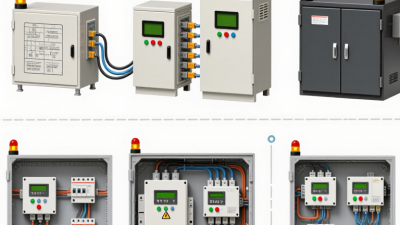
For global buyers, control panels are more than metal enclosures filled with switches. They are the operating center of industrial equipment, connecting sensors, drives, safety devices, and human controls. A well-designed panel can make a production line easier to monitor, maintain, and expand. It can also reduce confusion when operators work across different languages and technical backgrounds.
Details matter. A clearly labeled terminal block can shorten troubleshooting during a late-night service call. Proper cable routing can prevent heat buildup inside a crowded cabinet. Reliable components, documented wiring, and tested protection devices support safer, more consistent operation. Buyers should also review voltage requirements, enclosure ratings, environmental conditions, certification needs, and after-sales support before placing an order. These checks help prevent costly redesigns after delivery.
Experience often reveals problems that product brochures overlook. A panel may meet its basic function but still be difficult to inspect. That weakness matters. Global projects involve shipping delays, local technicians, replacement parts, and changing production demands. Good suppliers explain design choices, provide accurate drawings, and record test results. They do not promise that every installation will be effortless. No system is perfect. Even experienced teams can miss a small compatibility issue. For this reason, careful communication and independent verification remain essential when selecting control panels for international applications.
What Are Control Panels and What Functions Do They Perform?
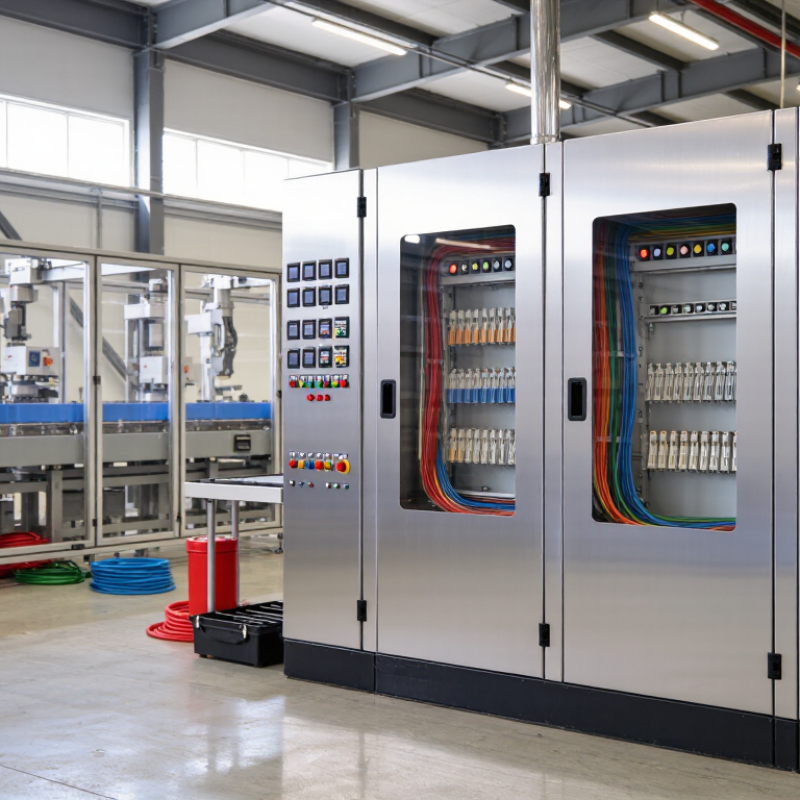
Control panels are organized enclosures that manage electrical equipment, machines, and automated processes. They usually contain circuit breakers, switches, relays, terminals, controllers, and communication devices. An operator may use a touchscreen to start a pump, adjust temperature, or check an alarm. The panel turns complex electrical signals into controlled actions.
Their main function is safe power distribution. Protective devices can isolate faults and reduce equipment damage. Control components also receive information from sensors, such as pressure, speed, or liquid level. A controller processes those signals and sends commands to motors, valves, and actuators. Clear wiring labels matter. So does logical layout. During maintenance, technicians may work under poor lighting or tight schedules.
Control panels also support monitoring and data collection. They can record operating conditions, display warnings, and communicate with external systems. For global buyers, enclosure protection, voltage compatibility, documentation, and local installation requirements deserve close attention. A panel designed for a dry factory may perform poorly in a humid processing area. It is not a magic box. Incorrect sensor settings or unclear drawings can still cause downtime.
In practical projects, buyers should request wiring diagrams, component lists, test records, and maintenance instructions. Factory testing can reveal loose terminals, incorrect signals, or confusing screen labels before shipment. However, specifications are sometimes incomplete, even in professional projects. Reviewing them with an experienced electrical engineer remains worthwhile. Small details often decide whether commissioning takes hours or several days.
How Control Panels Support Industrial System Management
Control panels are the working interface between operators and industrial equipment. They gather signals from sensors, motors, pumps, and safety devices. Operators can then view conditions, adjust settings, and respond to alarms from one location. Clear layouts reduce confusion during busy production periods. Small details matter.
A dependable panel uses correctly rated components, organized wiring, and readable labels. Protective enclosures help limit damage from dust, moisture, vibration, and temperature changes. Proper ventilation also prevents heat from shortening component life. Field technicians often check terminal tightness, cable routes, alarm history, and emergency functions during maintenance. These checks expose problems before they interrupt production. Documentation supports reliable service across different countries. It should include wiring diagrams, component ratings, inspection records, and operating instructions in suitable languages. Local electrical requirements must also be reviewed before installation.
However, control panels are not automatically reliable after assembly. A crowded cabinet may look efficient but become difficult to repair. A poorly chosen screen can slow operators during an alarm. These weaknesses deserve honest review. Factory testing should simulate realistic loads, signal failures, power changes, and communication interruptions. Buyers can request test evidence and maintenance guidance before accepting a system. Remote monitoring may improve visibility, but it cannot replace physical inspections in every environment. Good management depends on practical design, trained personnel, and disciplined records. Controls must remain understandable when conditions become noisy, urgent, or unexpected.
Why Are Control Panels Essential for Global Buyers?
Control panels connect power distribution, machine protection, environmental control, electromagnetic compatibility, and industrial cybersecurity in one manageable system layer.
The chart maps core control-panel functions against five recognized industrial management needs: power distribution, functional safety, environmental protection, EMC performance, and cybersecurity. The mapping references IEC 60204-1, IEC 61439-1, IEC 60529, IEC 61000-6-2/-4, and IEC 62443-3-3.
Why Global Buyers Need Reliable Control Panel Solutions
Global buyers need reliable control panel solutions because every production delay crosses borders. A panel may regulate motors, sensors, safety circuits, and energy distribution. One loose terminal can stop an entire line.
The 2024 Smart Manufacturing and Operations Survey by Deloitte reported that 86% of manufacturing leaders see smart manufacturing as a major competitiveness driver within three years. That ambition requires stable control hardware, clear documentation, and predictable maintenance.
The 2024 Cost of a Data Breach Report recorded an average breach cost of 4.88 million dollars. Control panels now need stronger access controls, segmented networks, and secure remote diagnostics. This is often overlooked.
Reliability also depends on practical details. Buyers should request factory test records, wiring diagrams, component traceability, and protection ratings. They should confirm compliance with relevant IEC standards and local electrical rules. A supplier’s response time matters, especially when spare parts cross customs borders. No panel is perfect. Even a well-tested system can fail after poor installation, rushed commissioning, or unclear operator training.
Tips: Compare total ownership cost, not only the purchase price. Ask for thermal calculations and load margins. Test alarm signals before shipment. Keep critical spare parts locally. Require change records for every revision. These small controls reduce uncertainty, although they cannot replace experienced technicians and regular inspections.
Which Standards and Features Matter in International Purchasing?
Why Are Control Panels Essential for Global Buyers?
International purchasing depends on more than enclosure size and attractive pricing. Buyers should verify applicable standards before comparing suppliers. IEC 61439 can guide low-voltage assembly design and verification. IEC 60204-1 matters when panels control industrial machinery. The required standard may change by destination, voltage, industry, or installation method.
Check the panel’s rated voltage, frequency, short-circuit withstand, and temperature range. An IP rating, tested under IEC 60529, helps confirm protection against dust and water. Ask for wiring diagrams, terminal labels, component specifications, routine test records, and a clear bill of materials. Documentation is not decoration. It supports customs reviews, installation work, maintenance, and future replacement. Confirm electromagnetic compatibility requirements, too. They are easy to overlook.
Tips: Request sample certificates and test reports before ordering. Confirm whether documents match the exact panel configuration. Ask how changes will be approved after purchase. A familiar certificate may not cover every country or application. No checklist catches every mismatch. Procurement teams sometimes trust a polished datasheet too quickly. That is a weakness worth correcting. Real reliability comes from traceable testing, practical service access, and communication that leaves little room for interpretation.
Why Are Control Panels Essential for Global Buyers? - Which Standards and Features Matter in International Purchasing?
| Purchasing Dimension | Relevant Standard or Requirement | What the Requirement Controls | International Purchasing Importance | Recommended Buyer Verification | Typical Evidence or Deliverable |
|---|---|---|---|---|---|
| Panel assembly safety | IEC 61439 series | Design verification, temperature rise, dielectric properties, short-circuit withstand, clearances and protection of low-voltage switchgear and controlgear assemblies. | High Important for many IEC-oriented markets and projects. |
Confirm the applicable part of the series, rated current, short-circuit rating and environmental conditions. | Design verification records, routine verification records and assembly technical file. |
| North American market access | UL 508A; local electrical codes and inspection requirements | Construction and wiring practices for industrial control panels, including component suitability, conductor sizing and marking. | High Often requested for projects installed in the United States. |
Identify the installation country and authority having jurisdiction before finalizing the design. | Panel construction documentation, component certifications and field inspection support documents. |
| Machinery electrical design | IEC 60204-1 | Electrical equipment of machines, protective bonding, control circuits, emergency stop functions, isolation and documentation. | High Relevant when the control panel is part of industrial machinery. |
Define the machine boundary, supply characteristics, safety functions and required performance levels. | Electrical schematics, protective bonding test results, emergency-stop test records and operating instructions. |
| Ingress protection | IEC 60529 IP Code | Protection provided by the enclosure against solid objects, dust and water under defined test conditions. | High Critical for outdoor, washdown, dusty or humid installations. |
Match the IP rating to the actual environment, cable entries, door seals, ventilation and maintenance practices. | Enclosure rating declaration, test information and installation instructions. |
| Enclosure classification | NEMA 250 enclosure types | Enclosure protection classifications commonly used in North American specifications for indoor and outdoor environments. | Medium to High Especially important where project specifications use NEMA terminology. |
Do not assume that an IP rating is automatically equivalent to a NEMA enclosure type; request the specified classification. | NEMA type declaration, enclosure construction details and applicable test documentation. |
| Electromagnetic compatibility | IEC 61000 series | Immunity and emissions performance, including electrostatic discharge, electrical fast transients, surges and conducted or radiated disturbances. | High Essential where control reliability and regulatory conformity are required. |
Review grounding, shielding, cable segregation, filtering and variable-speed-drive installation requirements. | EMC assessment or test report, wiring layout and installation guidelines. |
| Short-circuit protection | Prospective short-circuit current and available fault-current requirements | The panel’s ability to withstand or interrupt fault currents through correctly selected protective devices and coordination. | High Directly affects personnel safety, equipment damage and approval. |
Provide supply voltage, available fault current, protective-device data and coordination requirements. | Short-circuit calculation, protective-device schedule and coordination study where required. |
| Environmental suitability | Ambient temperature, humidity, altitude, corrosion and hazardous-area requirements | Material selection, thermal management, condensation control, corrosion resistance and permissible operating limits. | High Conditions vary significantly between countries and installation sites. |
State the complete site profile, including temperature range, altitude, pollution level and exposure to chemicals or salt. | Environmental design statement, derating calculations and enclosure material specification. |
| Energy efficiency and heat management | Thermal design based on equipment losses and enclosure conditions | Prevention of excessive internal temperature that could shorten component life or cause nuisance trips. | High Important for reliability, operating cost and compact panel layouts. |
Check total heat dissipation, ventilation, air-conditioning, spacing and component derating. | Thermal calculation, heat-load schedule and cooling-system maintenance requirements. |
| Materials and restricted substances | RoHS Directive 2011/65/EU and Delegated Directive (EU) 2015/863, where applicable | Restrictions on specified hazardous substances in electrical and electronic equipment within the applicable product scope. | Medium to High Relevant for products placed on markets that adopt or reference these requirements. |
Confirm product scope, exemptions and documentation responsibilities for the complete panel assembly. | Supplier declarations, material compliance records and technical documentation. |
| Documentation and lifecycle support | Project specification, local regulations and customer documentation requirements | Traceability, installation, commissioning, troubleshooting, spare-parts planning and safe maintenance. | High Reduces delays caused by language, customs, approval and service issues. |
Specify document language, drawing format, revision control, nameplate data and remote-support expectations. | As-built drawings, bills of materials, terminal schedules, manuals, test certificates and spare-parts lists. |
How to Evaluate, Customize, and Maintain Control Panels
For global buyers, evaluating a control panel starts with the machine, not a catalog image. Define voltage, current, motor loads, enclosure location, ambient temperature, and communication needs. Ask for wiring diagrams, component datasheets, test records, and clear terminal labels. A panel may look polished yet hide poor heat management. Inspect spacing, ventilation, cable routing, grounding, and maintenance access. Confirm the short-circuit rating and protection devices match the installation conditions. Independent inspection can expose details that factory photographs never show.
Customization should solve a measured problem, not add features for appearance. Specify enclosure material, ingress protection, cooling method, operator interface, alarms, and spare terminals. For different regions, verify applicable electrical requirements with qualified local professionals. Keep standard components where possible; unusual parts can delay replacement. I have seen buyers request dense layouts to save space, then struggle with heat and access. That compromise is easy to regret. Test under load.
Maintenance begins before shipment. Request an as-built drawing, parameter backup, inspection checklist, and recommended spare list. After installation, tighten connections according to documented torque values. Check fans, filters, cable glands, and visible discoloration. Use thermal scans during loaded operation when qualified technicians can perform them safely. Record faults, temperature trends, and replacement dates in a shared log. Do not assume a clean cabinet is a healthy one. Small omissions matter. Review the design after six months; field conditions often reveal assumptions that factory testing missed.
Related Posts
-
Top 10 Control Panel Solutions for Global Buyers?
-
Best Automation Control Panel for Efficient Operations?
-
Exploring Innovative Control Panel Examples for Enhanced Industrial Efficiency
-
What is a control panel and how does it work?
-
Top Control Panels Trends for 2026 What Buyers Should Know
-
How to Optimize Your Electrical Control Panel Design for Maximum Efficiency and Safety