Best PLC Control System Manufacturers in China

China’s PLC market serves factories that need dependable control, clear diagnostics, and support after installation. A plc control system may coordinate conveyor motors, monitor tank levels, or stop a packaging line when a guard opens. These tasks look simple on a screen. Their reliability depends on hardware quality, programming tools, communication options, and the supplier’s engineering response.

Dick Morley, widely known as the “father of the PLC,” is often associated with this observation: “The PLC is the heart of industrial automation.” The phrase captures an important point, though the controller alone cannot guarantee a stable process. Good results also require careful system design, suitable components, tested logic, and practical maintenance documentation. Buyers should ask manufacturers for product specifications, certification details, sample programs, and evidence of support in their target market. A polished catalog is not enough.

This guide examines leading PLC control system manufacturers in China through product range, application fit, technical support, and export experience. It also considers whether a supplier can provide clear wiring diagrams and dependable replacement parts. Small details matter. A mislabeled terminal or delayed spare module can interrupt production. No ranking can replace a factory trial, and supplier claims deserve verification. That caution is useful, even if it makes the choice less tidy.
Best PLC Control System Manufacturers in China

PLC Control Systems: Core Functions and Industrial Role

PLC control systems translate machine conditions into reliable actions. A PLC reads signals from sensors, switches, and meters, then runs programmed logic. It may start a pump when tank levels fall or stop a conveyor when a guard opens. These responses happen in milliseconds, helping equipment operate consistently across long shifts.

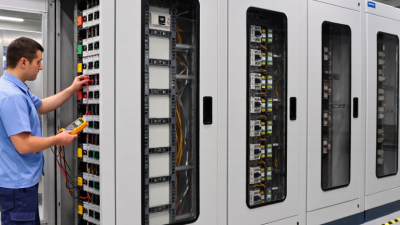
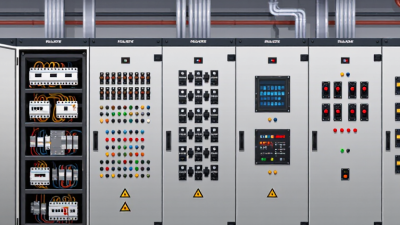
A typical system includes a processor, input and output modules, a power supply, and communication ports. Operators can view alarms and adjust settings through a human-machine interface. For example, a packaging line may track motor speed, count finished units, and flag a jam near a transfer point.

Clear alarms matter. Vague messages slow troubleshooting. In practical installations, technicians also check wiring, grounding, and network settings before blaming the program.

The PLC’s industrial role is broader than switching equipment on and off. It coordinates sequences, records operating data, and supports controlled responses to changing conditions. Properly designed logic can reduce avoidable downtime, but it cannot fix worn bearings or poor maintenance. That distinction is easy to overlook. Selecting a system involves matching processor capacity, I/O count, environmental ratings, and communication needs to the actual process. Plants often discover that future expansion was underestimated. Careful testing under realistic operating conditions helps expose such gaps before production depends on the system.

Criteria for Evaluating Chinese PLC Manufacturers

Best PLC Control System Manufacturers in China
Criteria for Evaluating Chinese PLC Manufacturers

Choosing a PLC manufacturer starts with the machine, not the catalogue. List the required I/O points, expansion needs, scan-time demands, and communication protocols. Ask whether the controller can handle the expected workload without slowing during peak operation. A supplier should explain these limits clearly. Request a sample configuration and test it with your own sensors, drives, and HMI. Test it live. Check technical support, too: how quickly can an engineer answer a fault report, and are manuals available in clear English? A polished brochure is not proof of dependable service.

Review environmental ratings against the actual installation site, including cabinet temperature, vibration, and electrical noise. Confirm how firmware updates are managed and whether replacement modules remain available. Ask for documented test procedures and relevant certificates, then verify that they apply to the exact product model. For a fair comparison, request a factory acceptance test using realistic operating sequences. Record response times and error handling. I would still question vague claims about “high reliability”; they need evidence from defined tests or operating records. Small details matter. Clear wiring diagrams and a useful troubleshooting guide can save hours during commissioning. Availability and support terms deserve the same scrutiny as price.

Leading Chinese PLC Manufacturers and Their Product Lines

China’s PLC sector now serves packaging, logistics, water treatment, and battery production. Fortune Business Insights valued the global PLC market at USD 13.79 billion in 2023. It projects USD 20.06 billion by 2032. This growth supports stronger domestic product development. Chinese manufacturers typically offer compact PLCs, modular PLCs, motion controllers, safety units, remote I/O, and industrial communication modules.

Product lines increasingly cover complete control layers. Compact controllers suit conveyors, filling machines, and small assembly cells. Modular systems handle larger cabinets, multiple expansion racks, and analog process signals. Motion-focused models coordinate servo axes with millisecond-level response. Many suppliers also provide touch-panel HMIs, engineering software, and gateway modules for Ethernet-based networks. The offer is broad.

Factory demand is pushing this expansion. The International Federation of Robotics reported 276,288 industrial robot installations in China during 2023, representing 51% of global installations. PLC manufacturers are responding with faster motion control and simpler robot integration. During equipment evaluation, engineers should check scan time, protocol support, spare-part availability, and software language options. A low purchase price can hide training costs.

Documentation remains uneven across some product lines. That matters during night-shift maintenance. Buyers should request wiring examples, lifecycle statements, firmware policies, and tested communication lists. Independent verification is still necessary, especially for safety-related applications. Product specifications may look impressive, yet commissioning performance depends on programming tools, electrical design, and local technical support.

Key Industries and Applications for Chinese PLC Systems

Chinese PLC systems serve a wide range of industrial settings, from factory floors to municipal infrastructure. In manufacturing, they coordinate conveyors, packaging lines, machine tools, and robotic work cells. A technician can use input signals from photoelectric sensors to stop a belt when a carton reaches a filling station. Timing matters. Even a small delay may cause jams or inconsistent output.

Water treatment plants use PLCs to manage pumps, valves, and filtration stages. Operators can monitor tank levels and flow readings from a control room, while local panels provide access during maintenance. In food processing, PLCs help regulate mixing, filling, and temperature control. Clear alarms and accessible wiring diagrams make faults easier to trace. They also reduce guesswork.

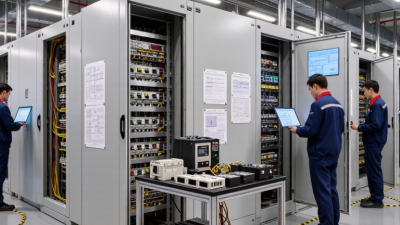
Chinese PLC suppliers often configure systems for different production scales and communication needs. Buyers should check I/O capacity, environmental ratings, programming support, and compatibility with existing equipment. A dusty workshop or a humid pump room can expose weaknesses that a clean test bench will not reveal. Site trials are useful. Still, commissioning can take longer than planned, especially when old machines have incomplete documentation. That is worth admitting early. Careful testing, operator training, and spare-parts planning help keep systems dependable after installation.

PLC Control Applications Across Key Industries in China

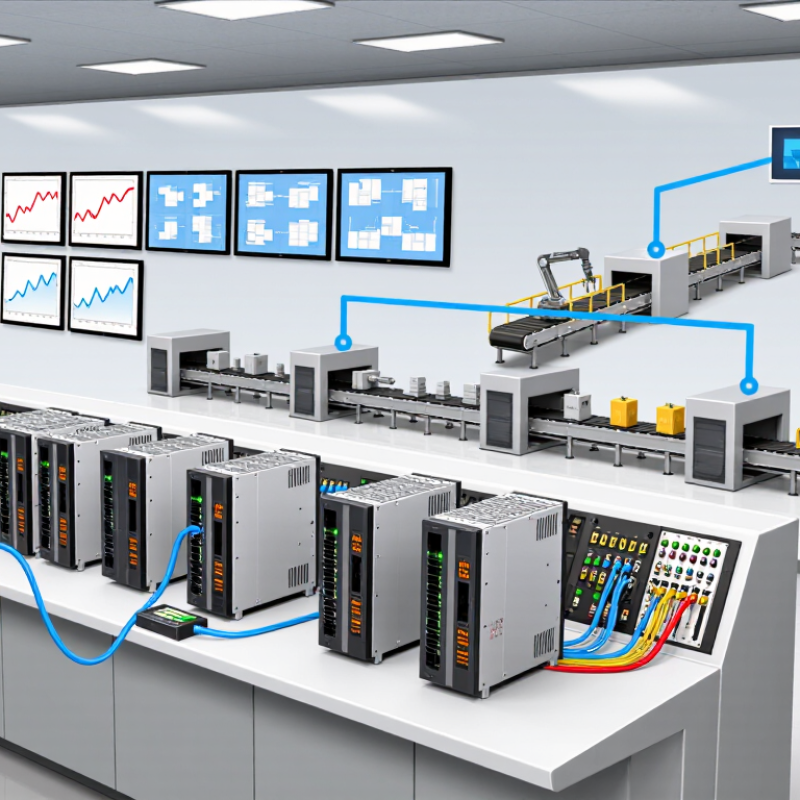
PLCs are commonly used in manufacturing, food and beverage processing, water and wastewater treatment, energy, and logistics. The chart shows an illustrative packaging-line control sequence, not industry market data.

Example sequence: a photoeye detects a product, the conveyor pauses, and a pusher activates before the conveyor restarts. The safety permissive remains on throughout this sample cycle.

Comparing Manufacturers by Performance, Support, and Cost

Choosing among Chinese PLC control system manufacturers means comparing verified performance, local support, and total cost—not just the controller’s purchase price. The International Federation of Robotics reported 276,288 industrial robot installations in China in 2023, about 51% of global installations. That scale makes dependable PLC communication and commissioning support especially important. Ask suppliers to demonstrate scan time under your actual I/O load, communication recovery after a network interruption, and compatibility with your drives and sensors.

Support can decide whether a small fault becomes a long shutdown. Request a sample fault-response workflow, spare-parts lead times, and clear warranty terms. For cost, compare the full five-year bill: hardware, engineering hours, software tools, training, and replacement parts. A low quotation may hide integration work. Still, test plans cannot capture every factory condition; that limitation deserves attention. Run a pilot on one machine and record alarm recovery time, programming changes, and downtime before scaling up.

Tips: Bring a real sequence and I/O list to the evaluation. Ask each manufacturer to solve the same task on a test bench, then compare results and documentation. Keep one awkward edge case in the test; polished demos rarely expose the gaps.

Scroll to Top