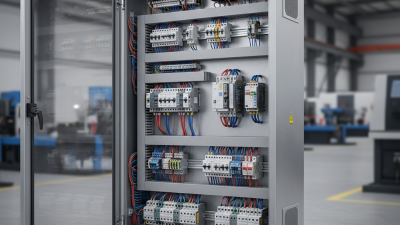
How to Choose the Right Control Cubicles?
Choosing the right control cubicles is not just a matter of fitting components into a metal enclosure. The choice affects safety, uptime, maintenance access, and the ability to expand a system later. Demand for dependable electrical infrastructure is rising. The International Energy Agency’s Electricity 2024 report says global electricity demand grew by 2.2% in 2023 and is expected to grow by an average of 3.4% annually through 2026. Its Electricity Grids and Secure Energy Transitions report also estimates that annual grid investment must exceed $600 billion by 2030, up from about $300 billion in recent years. These figures are not cubicle specifications, but they show why reliable control and distribution equipment matters.
A sound selection starts with the actual installation: supply voltage, short-circuit levels, heat-producing devices, cable entry, and the surrounding environment. A dusty workshop, for example, calls for different enclosure protection and cooling decisions than a clean, temperature-controlled room. Consider access for testing, space for future circuits, and compatibility with the project’s wiring and communication requirements. IEC 61439 provides a key framework for low-voltage switchgear and controlgear assemblies; confirm the applicable requirements with the project engineer and assembly manufacturer. Details matter. A tidy layout can still make routine servicing awkward. That is easy to miss on a drawing. Before choosing, compare documented ratings, temperature-rise evidence, enclosure protection, and maintenance needs—not just price or appearance. The best control cubicles fit the operating conditions, and leave practical room for what may change. Even careful planning has limits; actual site conditions deserve a final review.
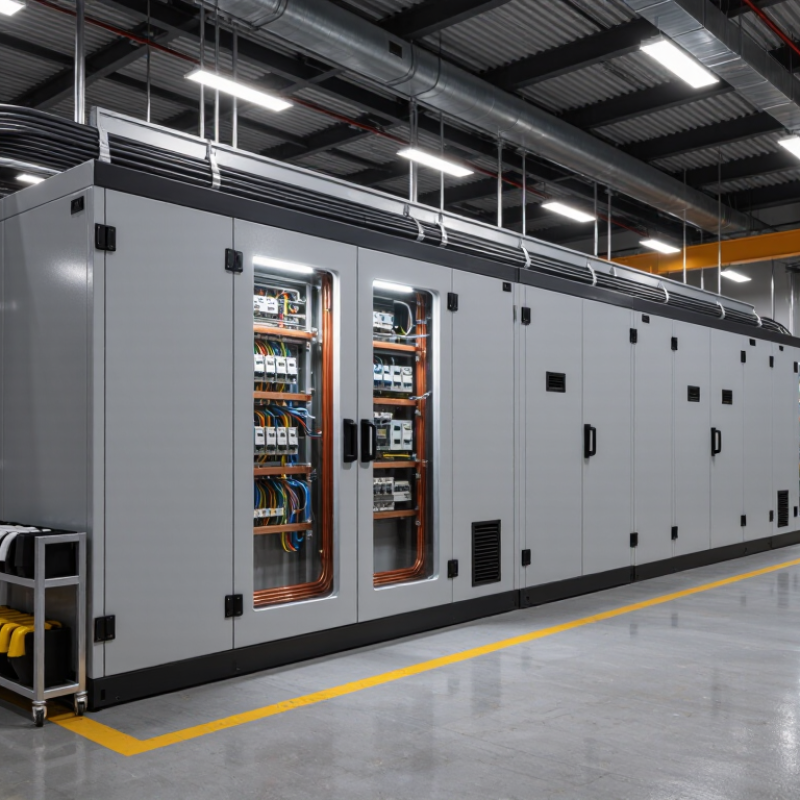
Define System Ratings Within IEC 61439 Limits: 1,000 V AC or 1,500 V DC
How to Choose the Right Control Cubicles?
Define System Ratings Within IEC 61439 Limits: 1,000 V AC or 1,500 V DC
The IEC 61439 series covers low-voltage switchgear and controlgear assemblies rated up to 1,000 V AC or 1,500 V DC. Treat these figures as scope limits, not recommended operating targets. Start with the actual system voltage and frequency, then confirm the assembly’s rated operational voltage. A 690 V AC system, for example, needs equipment selected and verified for that service—not merely a label showing “below 1,000 V.” Small distinction. Big consequences.
Check more than voltage. Insulation coordination, clearances, creepage distances, fault-current withstand, and the installed environment all affect suitability. DC applications need particular care: switching and protection devices must be appropriate for the circuit’s voltage and current, since DC arcs behave differently. Confirm that the complete cubicle assembly has been designed and verified under the applicable IEC 61439 requirements; component ratings alone do not establish assembly performance. In practice, project drawings sometimes omit the final operating voltage or fault level. That gap deserves a question before the cubicle is specified.
Choose Ingress Protection Under IEC 60529: IP54 or IP65 by Exposure
Choosing between IP54 and IP65 starts with the cubicle’s actual exposure, not the harshest condition imaginable. Under IEC 60529, the first digit describes protection against solid particles; the second addresses water ingress. IP54 is dust-protected, though some dust may enter, and resists splashing water from any direction. IP65 is dust-tight and tested against water jets from any direction. That difference matters near grinding dust, outdoor spray, or routine hose cleaning. Details matter.
For a dry control room with occasional airborne dust and no direct washdown, IP54 may be adequate. At a loading bay, dusty workshop, or exposed plant area, IP65 can provide a stronger enclosure barrier. Still, an IP rating does not certify resistance to corrosion, condensation, heat, or sunlight. Check the door seals, cable glands, viewing windows, and ventilation openings; one poorly fitted entry can weaken the whole assembly. Match every accessory to the required rating, and confirm the assembled cubicle retains it after installation. It is tempting to specify IP65 everywhere, but that may add cost without solving condensation or corrosion. IP65 is not a promise for pressure washing or immersion.
Size Thermal Capacity for IEC 61439 Ambient Limits: 40°C Max, 35°C Daily Mean
How to Choose the Right Control Cubicles?
IEC 61439-1:2020, clause 7.1.1, sets normal ambient limits for indoor assemblies: 40°C maximum and 35°C average over 24 hours. These are design conditions, not a promise that every cubicle can carry full rated current at those temperatures. Check the manufacturer’s declared ratings and temperature-rise verification. A sunlit plant room, blocked ventilation slots, or tightly packed components can raise internal temperatures quickly. Small details matter.
Size thermal capacity using the actual load, enclosure layout, installation method, and expected room temperature. IEC TR 60890:2022 describes a calculation method for assessing temperature rise in low-voltage assemblies; use it only within its stated limits. For example, a cubicle in a 38°C room has little ambient margin before reaching the 40°C limit. Review conductor losses, device heat dissipation, and any required current derating. Keep clearance around vents, and avoid assuming that a larger enclosure automatically solves heat buildup. A calculation can look reassuring on paper. I would still verify its assumptions against site conditions, especially where loads vary or dust restricts airflow.
Verify Short-Circuit Ratings: Icw, Ipk, and Icc Against Fault Levels
A control cubicle must withstand the fault current at its installation point, not just the value printed on a general equipment schedule.
IEC 60909-0:2016 sets out methods for calculating maximum and minimum short-circuit currents; use a site-specific study rather than assuming a standard fault level. Then compare the result with the assembly’s declared ratings under IEC 61439-1:2020.
Icw is the short-time withstand current, tied to a stated duration.
Ipk is the peak withstand current.
Icc is a conditional rating, valid only with the specified upstream protective device.
Not interchangeable.
For example, if a study gives 25 kA rms at the cubicle terminals, check whether its Icw covers that current for the required clearing time. Check Ipk separately against the calculated peak, which depends on system conditions such as the X/R ratio. For Icc, confirm the exact fuse or circuit-breaker type, rating, and installation conditions used for the declaration.
Small details matter. A device substitution can change the protection coordination and invalidate the assumed conditional rating.
Record the fault-study source, voltage, duration, peak value, and protective-device assumptions in the selection file. A tidy spreadsheet can still hide a bad assumption; have the design engineer verify the figures against the final network study.
Confirm Assembly Design and Verification Compliance With IEC 61439
How to Choose the Right Control Cubicles?
Confirm Assembly Design and Verification Compliance With IEC 61439
A suitable control cubicle must fit the installation and meet the applicable IEC 61439 requirements. Start by defining rated current, operating voltage, fault level, ingress protection, and the environment. A dusty workshop or warm plant room can affect enclosure and cooling choices. Confirm which part of IEC 61439 applies to the assembly; requirements depend on its intended function. Details matter.
Ask how the assembly’s design has been verified. IEC 61439 allows specified verification methods, including testing, comparison with a verified reference design, or assessment where permitted. Check evidence for temperature rise, short-circuit withstand, clearances, and protective circuits. The busbar arrangement and enclosure can influence several results. A familiar layout is not proof: even small changes may affect performance. Also request routine verification records for the completed cubicle, not just generic design documents.
Tips: Match drawings, ratings, and verification records to the exact assembly supplied. Check wiring access, cable entry space, and ventilation before approval. Keep records. If a modification seems minor, ask whether it changes the verified design.