
Who Are the Top Control Panel Manufacturers in China?
Control panels sit at the point where electrical power, automation, and daily operations meet. Their quality affects machine uptime, operator safety, and maintenance work. The International Energy Agency’s Electricity 2024 report projects global electricity demand will grow by an average of 3.4% annually between 2024 and 2026. That outlook makes dependable electrical distribution and control equipment increasingly important. The forecast does not, by itself, measure demand for control panels, but it helps explain why buyers scrutinize panel design and manufacturing capability.
China has a broad supplier base, from regional fabricators to established automation and electrical-equipment companies. A useful comparison looks beyond price and catalogue claims. Check enclosure construction, component selection, wiring quality, thermal management, documentation, and factory testing. Ask whether the manufacturer can provide drawings, inspection records, and support for the destination market’s applicable standards. Small details matter: a clear terminal label can save hours during commissioning.
This guide examines leading control panel manufacturers in China through practical criteria, including product range, engineering services, production capacity, and export experience. It also considers how suppliers address IEC 61439 requirements where relevant; buyers should confirm the exact standard and configuration for each project. Rankings can simplify a crowded market, but they cannot replace technical review. A polished website is not proof of consistent quality. Some supplier information may also be difficult to compare directly, so independent verification remains essential.
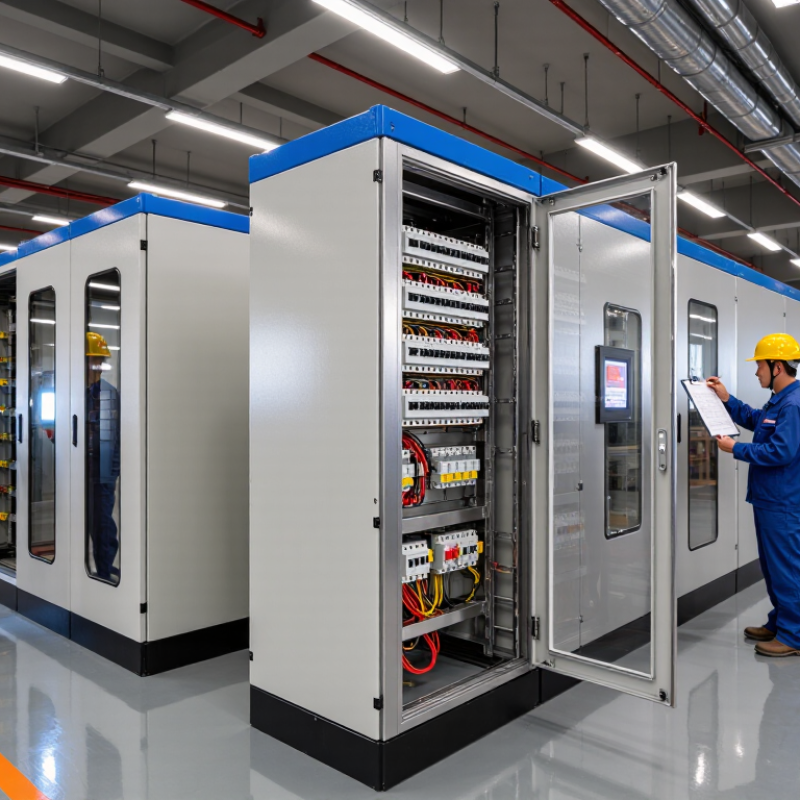
Define Control Panels: IEC 61439 Covers Assemblies up to 1,000 V AC
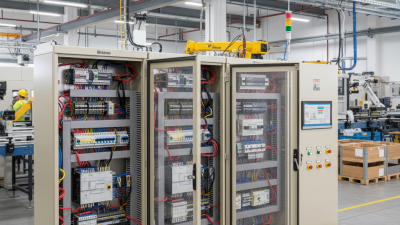
A control panel is an assembled system of electrical devices, not simply a metal enclosure. It may contain circuit breakers, busbars, terminals, relays, and control equipment arranged to distribute or manage power. IEC 61439 covers low-voltage switchgear and controlgear assemblies, including AC assemblies rated up to 1,000 V. The standard’s requirements concern the completed assembly and its performance.
For buyers comparing Chinese manufacturers, the distinction matters. An enclosure’s appearance does not prove that the finished panel meets the standard. Design verification addresses factors such as temperature rise, dielectric properties, and short-circuit withstand. Routine verification checks each completed assembly for workmanship and function. Labels, wiring diagrams, and test records should match the delivered equipment. Details count.
A practical review can start with the intended load, installation environment, and required protection rating. Ask how the manufacturer verifies the design and tests production units. Check that busbar sizing and clearances suit the stated operating conditions. A neat drawing can still leave questions about heat or future expansion. Easy to miss. I would treat clear evidence and direct technical answers as more useful than a polished catalogue.
| Evaluation Dimension | Typical Industry Benchmark or Fact | Relevant Standard or Reference | What to Verify in a Manufacturer’s Documentation |
|---|---|---|---|
| Low-voltage assembly scope | IEC 61439 applies to low-voltage switchgear and controlgear assemblies with rated voltage up to 1,000 V AC or 1,500 V DC. | IEC 61439-1; applicable product-specific part | Confirm the assembly’s rated operational voltage and the applicable part of the IEC 61439 series. |
| Power switchgear and controlgear assemblies | Assemblies used for power distribution and control are commonly designed and verified under the relevant assembly requirements of IEC 61439-2. | IEC 61439-1 and IEC 61439-2 | Check the declared assembly type, rated current, short-circuit withstand data, and design verification records. |
| Distribution boards for ordinary operation | Distribution boards intended to be operated by ordinary persons may fall within the scope of IEC 61439-3 when its conditions are met. | IEC 61439-1 and IEC 61439-3 | Verify the intended operator, installation conditions, ratings, and product classification. |
| Rated current | Rated current is selected for the assembly’s intended load and design; there is no single current rating that applies to all control panels. | IEC 61439 series; project specifications | Compare the declared assembly and circuit ratings with the load schedule, protective devices, and temperature-rise verification. |
| Short-circuit performance | Short-circuit withstand capability depends on the assembly design, protective devices, and installation conditions. | IEC 61439 series | Request the declared short-circuit ratings and supporting design verification for the specified configuration. |
| Ingress protection | IP ratings describe protection against access to hazardous parts and ingress of solid objects and water; the required rating depends on the installation environment. | IEC 60529; project specifications | Confirm the IP rating applies to the completed assembly, including doors, cable entries, ventilation openings, and installed accessories. |
| Design and routine verification | IEC 61439 distinguishes design verification of the assembly design from routine verification of each manufactured assembly. | IEC 61439-1 and the applicable product-specific part | Request relevant design-verification evidence and routine-verification records for the delivered assembly. |
| Project-specific customization | Enclosure size, component layout, wiring, environmental protection, and control functions are typically specified for the application rather than defined by one universal panel configuration. | Applicable IEC 61439 part; project drawings and specifications | Review approved drawings, bill of materials, wiring diagrams, terminal schedules, and change-control records. |
Note: These are general selection and verification points, not a ranking of manufacturers. Applicable requirements and ratings depend on the assembly type, intended use, and project specifications.
Related Posts
-
How to Choose the Best Control Panel Solutions?
-
Best Automation Control Panel for Efficient Operations?
-

Top 10 PLC Control Panels You Must Consider for Global Sourcing?
-

Top Control Panels Trends for 2026 What Buyers Should Know
-
Top 10 Control Panel Solutions for Global Buyers?
-
Top 10 Benefits of Using PLC Control Panels in Industrial Automation
