Top 10 PLC Control Systems for Industrial Automation
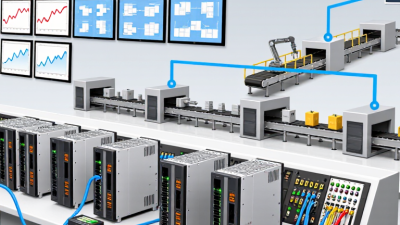
A programmable logic controller sits between a machine’s sensors and its actions. It may read a photoelectric sensor, check a motor interlock, and update a conveyor sequence in milliseconds. In industrial automation, choosing the right plc control system affects uptime, maintenance effort, and how easily equipment can adapt. The strongest option is not always the most powerful one. A small packaging line and a distributed water-treatment plant have very different demands.
This guide reviews ten widely used PLC control systems, including platforms from Siemens, Rockwell Automation, Mitsubishi Electric, Schneider Electric, Omron, and other established suppliers. It considers practical factors such as processor capacity, I/O options, programming environment, network support, safety features, and lifecycle services. These details matter when a technician is diagnosing a fault at a cabinet or planning a controlled expansion. Real installations also depend on operator skills, spare-part access, and compatibility with existing drives and instruments. Specifications alone cannot settle every choice.
There are trade-offs. A feature-rich system can add cost and training needs, while a simpler controller may reach its limits as a process grows. Rankings also vary by region, application, and project requirements. This comparison is a starting point, not a substitute for engineering review. Before selecting a platform, check current manufacturer documentation and confirm that it fits the machine’s actual control, safety, and maintenance needs. Small details matter. A missed I/O requirement can become an expensive redesign.
How PLC Control Systems Support Industrial Automation
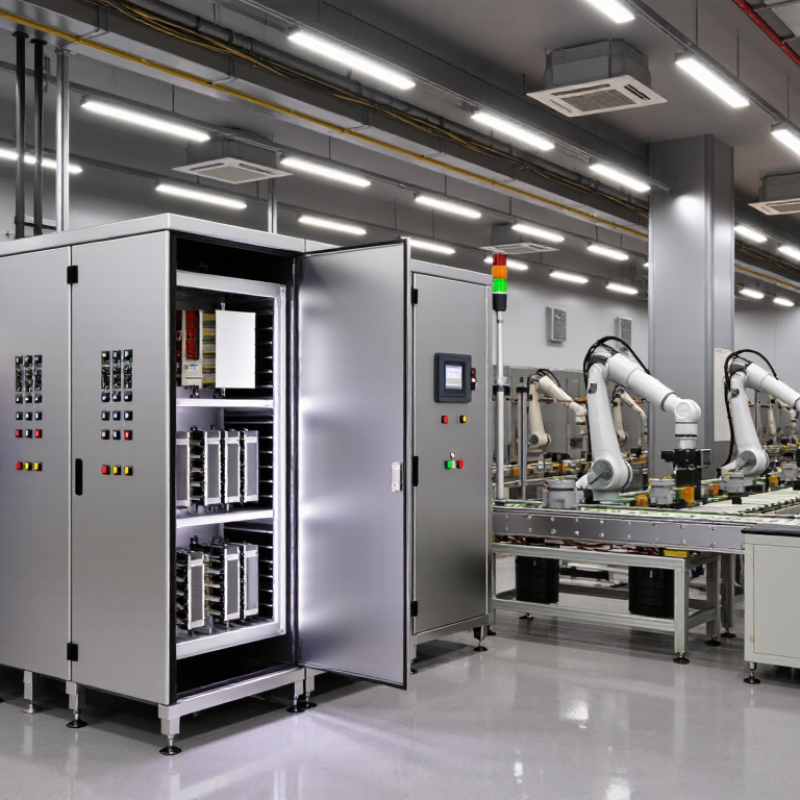
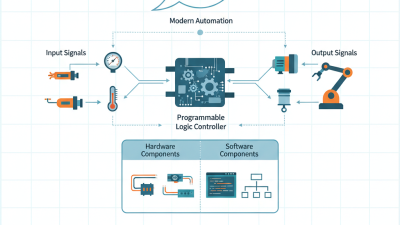
A programmable logic controller turns sensor signals into coordinated machine actions. On a packaging line, it can read a photoelectric sensor, stop a conveyor, and trigger a reject arm within a controlled sequence. The International Federation of Robotics’ World Robotics 2024 report recorded 4,281,585 industrial robots operating worldwide in 2023. That figure reflects the scale of automated production, where reliable coordination matters. PLCs connect field devices, execute logic, and provide operators with clear machine status. Small delays matter.
A well-designed control system also makes faults easier to isolate. If a motor overloads, the PLC can stop the affected section and display a specific alarm instead of leaving an operator to guess. Engineers can review event logs, adjust timing, and test changes during commissioning. But a PLC cannot fix poor sensor placement or unclear operating procedures. That part is easy to underestimate. Networked controllers also need careful access management and documented backups. In practice, the best setup is not always the most elaborate; it is the one technicians can understand at three in the morning, when a line stops and production pressure is real. These details deserve regular review, because settings that worked during installation may drift as equipment and processes change.
Top 10 PLC Control Systems for Industrial Automation
How PLCs Scale a Standard 4–20 mA Signal
PLCs convert analog sensor signals into values that control logic can use. This chart shows the linear mapping from 0–100% of a process range to a 4–20 mA signal, a common industrial instrumentation convention. Actual scaling depends on the sensor and PLC input configuration.
Key Criteria for Evaluating PLC Control Systems
A PLC control system should match the process, not just the equipment list. Start with the number and type of inputs and outputs, then allow room for future expansion. Check scan time under realistic conditions, especially when several machines share alarms or exchange data. Fast cycle times matter. So does stable operation. Review communication options, diagnostic tools, and how easily technicians can locate a failed sensor or module. A clear fault message can save more downtime than a small speed advantage.
Tips: Test the PLC with a sample sequence before purchase. Simulate a sensor failure, a stopped motor, and a lost network connection. Record how quickly the system identifies each fault.
Also evaluate installation conditions, including cabinet temperature, vibration, and available space. Confirm that programming and maintenance needs fit the skills of the people who will support the system. Ask about spare-part availability and service life, not only purchase cost. For equipment that must coordinate with existing controls, test data exchange early. Compatibility can look simple on paper and still become awkward in practice. Security features and access controls deserve review, too. One criterion is easy to overlook: how readable the project remains after years of small changes. A system may meet every specification yet frustrate the next technician. That trade-off deserves an honest discussion.
Top 10 PLC Control Systems for Industrial Automation
A PLC control system turns sensor signals into repeatable machine actions. In a packaging line, photoelectric sensors detect passing cartons, while the controller coordinates conveyors, gates, and alarms. The operator sees a clear status screen; the technician needs useful fault details behind it. Small details matter.
When comparing control systems, examine processor capacity, available input and output modules, communication options, and support for future expansion. A fast scan time can help with precise motion, but it cannot fix poor sensor placement or badly tuned equipment. Match the system to the process, not just a specification sheet. That distinction is easy to miss.
During commissioning, test normal cycles and awkward ones: a jammed carton, a disconnected sensor, or a restart after power loss. Check that alarms explain what happened and where to look. Review backup procedures, access controls, and documented program changes. These habits make troubleshooting more reliable. They also expose weak assumptions. A design may look tidy on a drawing and still confuse the night-shift operator. Keep the logic readable, label field wiring clearly, and leave room for measured changes as production needs evolve.
Features and Applications of the Leading PLC Systems
Top 10 PLC Control Systems for Industrial Automation: Features and Applications of the Leading PLC Systems
Leading PLC control systems combine dependable sequence control with flexible input and output modules. Compact units suit packaging lines, pumps, and small machines. Modular systems handle larger plants, where operators may need to add sensors or replace a faulty module without rewiring an entire cabinet. Fast processing helps coordinate conveyors and robotic cells; built-in diagnostics can pinpoint a failed input before it stops production. Safety-rated functions also support applications where a controlled stop matters. The right choice depends on the process, not the longest feature list.
Connectivity is equally important. Ethernet-based networks let PLCs exchange status with drives, operator panels, and supervisory systems, while remote I/O can reduce long cable runs across a plant floor. The International Federation of Robotics reported 4.28 million industrial robots in operation worldwide in 2023, up 10% from 2022, in its World Robotics 2024 report. PLCs often coordinate the surrounding equipment, including guards, feeders, and conveyor timing. Small delays add up. A system that is easy to troubleshoot may be more useful than one with impressive specifications. I would still verify network compatibility and spare-part availability before choosing; those details are easy to overlook, and comparisons between systems are not always straightforward.
How to Choose a PLC System for an Industrial Application
Top 10 PLC Control Systems for Industrial Automation: How to Choose a PLC System for an Industrial Application
Choosing a PLC begins with the process, not the product list. Count the required digital and analog inputs and outputs, then allow room for realistic expansion. A small packaging line may need fast counter inputs for an encoder, while a mixing tank may depend on accurate temperature readings. Check scan time, memory, and support for the sensors and actuators already in use. Extra capacity costs more, but running out of points during installation costs time.
Consider the factory floor, too. Dust, vibration, heat, and electrical noise can affect where a controller belongs and what enclosure it needs. Review communication requirements for drives, remote I/O, and supervisory systems. Clear diagnostics matter when a line stops during a night shift. So does maintainability: technicians should be able to find wiring diagrams, understand alarms, and restore a tested backup. For hazardous machine functions, use appropriately certified safety equipment rather than assuming a standard PLC is sufficient.
A spreadsheet helps, but it cannot reveal every commissioning problem. Simulate likely faults, such as a broken sensor wire or a stalled motor, before production begins. Check how the system behaves after power returns. A common mistake is choosing a controller around today’s exact I/O count; future changes are often less predictable than the budget suggests. Still, buying far more capacity than the process needs can add complexity without improving uptime. The right balance may take revision.
| Rank | PLC System Type | Typical I/O Scale | Key Strengths | Best-Fit Applications | What to Check Before Choosing |
|---|---|---|---|---|---|
| 1 | Modular PLC | From dozens to thousands of points, depending on rack and network design | Expandable I/O, flexible communications, and a broad range of control modules | Production lines, machine cells, and plants expected to grow or change | Module availability, rack capacity, network topology, spare-part strategy, and lifecycle support |
| 2 | Compact PLC | Typically tens to a few hundred points, with expansion options varying by system | Integrated CPU and I/O reduce panel space, wiring, and initial cost | Standalone machines, skids, packaging equipment, and small process units | Built-in analog channels, expansion limits, communications, memory, and spare capacity |
| 3 | Safety PLC | Small to large safety I/O systems; capacity is configuration-dependent | Designed for safety functions such as emergency stops, interlocks, and safe stopping | Machines and processes requiring documented functional-safety measures | Required safety integrity or performance level, certified components, validation, and separation of safety logic |
| 4 | Motion-Control PLC | Often dozens to hundreds of machine I/O points, plus multiple coordinated axes | Combines sequence logic with synchronized, deterministic motion control | Robotics, printing, converting, pick-and-place, and high-speed packaging | Axis count, update time, synchronization method, drive compatibility, and motion-function requirements |
| 5 | Process-Control PLC | Hundreds to thousands of mixed digital and analog points | Supports continuous control, analog measurements, PID loops, and process instrumentation | Water treatment, utilities, batch operations, and smaller process plants | Analog accuracy, loop count, signal isolation, alarm handling, historian connectivity, and uptime targets |
| 6 | Distributed PLC System | Hundreds to thousands of points across remote I/O stations | Places I/O near equipment to reduce long home-run wiring and simplify large layouts | Large machines, multi-area facilities, and geographically spread equipment | Network distance, redundancy, environmental ratings, response time, and behavior during communication loss |
| 7 | Redundant PLC System | Medium to very large systems, sized to the process and redundancy architecture | Paired or redundant components can maintain control through defined hardware failures | Continuous operations where unplanned downtime has a high operational cost | Failover time, coverage of redundant components, common-cause risks, testing procedures, and cost of downtime |
| 8 | Soft PLC | From machine-scale to larger systems, subject to the host and runtime design | Runs PLC logic on an industrial computer, enabling close integration with software and data services | PC-based machines, inspection systems, and applications needing computing integration | Real-time performance, operating-system management, hardware compatibility, cybersecurity, and recovery plan |
| 9 | PAC (Programmable Automation Controller) | Typically medium to large; exact capacity depends on platform and network design | Often combines PLC-style control with stronger data handling, networking, or multiple control domains | Complex machines, integrated production cells, and data-intensive automation | Task scheduling, programming tools, data capacity, motion support, interoperability, and maintainability |
| 10 | Remote I/O-Centered PLC System | Scales from a few remote modules to many distributed I/O stations | Uses networked I/O modules to connect sensors and actuators near the process | Retrofits, expansive equipment layouts, and systems with many remote field devices | Supported protocols, network loading, module diagnostics, wiring environment, and local versus central control needs |
Related Posts
-
Best PLC Control System Manufacturers in China
-
2026 Best PLC Control Systems for Industrial Buyers?
-

Understanding PLC Control Panels: Essential Components and Their Impact on Automation Efficiency
-

Enhancing Industrial Efficiency: The Future of PLC Control Systems in Smart Manufacturing
-
Top 10 Benefits of Using PLC Control Panels in Industrial Automation
-
What is a PLC Control System and How Does it Work?